Singapore Public Transport Guide: How To Travel Calmly, Easily, And Affordably
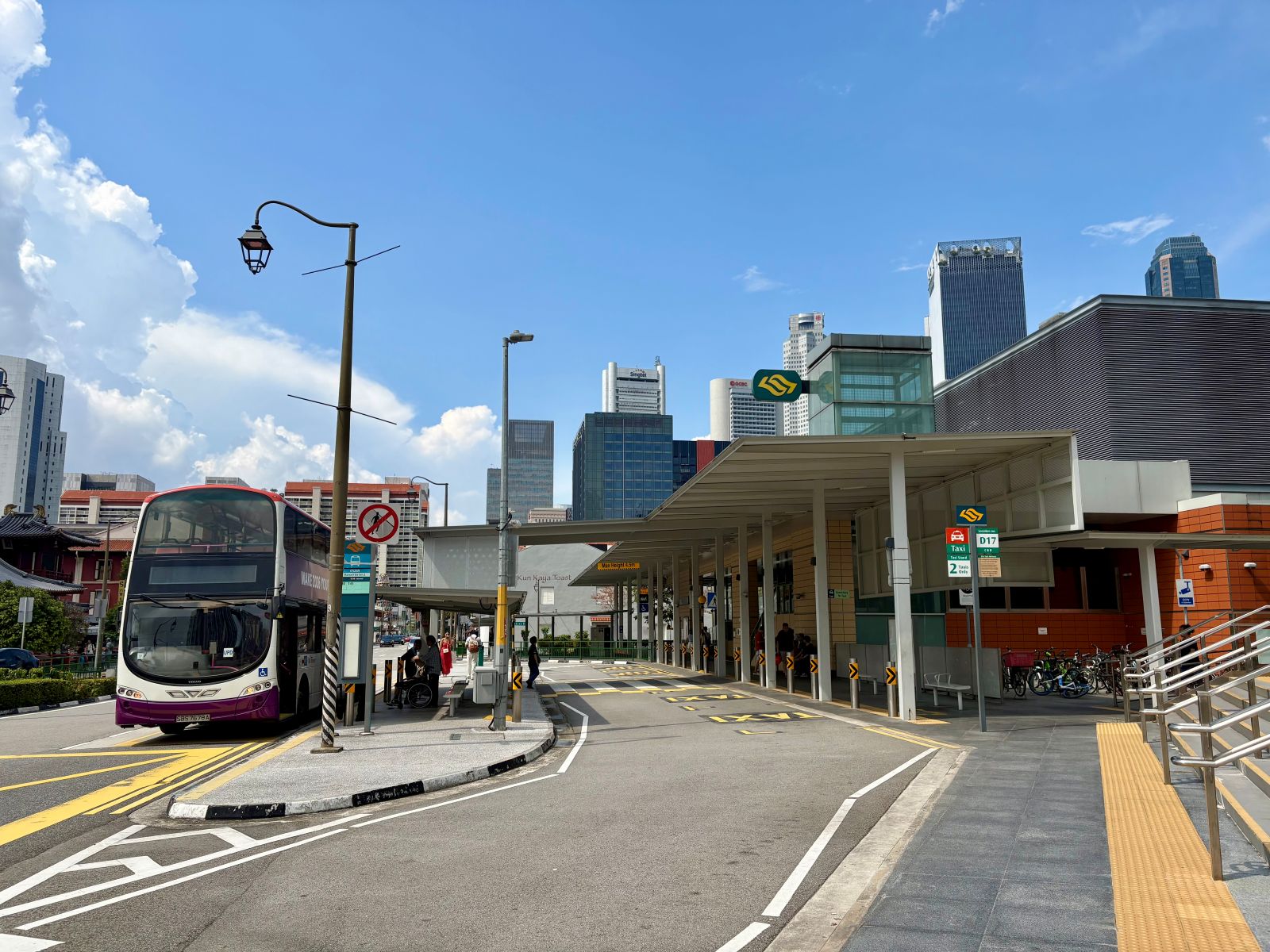
Singapore’s public transport system is one of the easiest places in the world to get around without overthinking it. It is efficient, safe, clean, and genuinely designed to make things simple for you as a traveller. If you are arriving in a new city already feeling a bit overstimulated, that makes a bigger difference than you might expect.
Using it feels easy in a way you only really notice once you’re there. You are not constantly second guessing routes or worrying about safety. You tap your payment, follow the signs, and get where you need to go. It gives you enough mental space to actually notice where you are, rather than just trying to get through the journey.
Here is how to use Singapore’s public transport system, including the MRT (train), buses, and monorail, and how to make each one work for you rather than against you.
Table of Contents
If you are wanting to read more about public transport options around the world, please see our Public Transport Guides section. If you are interested in overall travel wellbeing, return to Nomadic Balance.
Singapore Public Transport Overview (MRT, Buses, And System Basics)
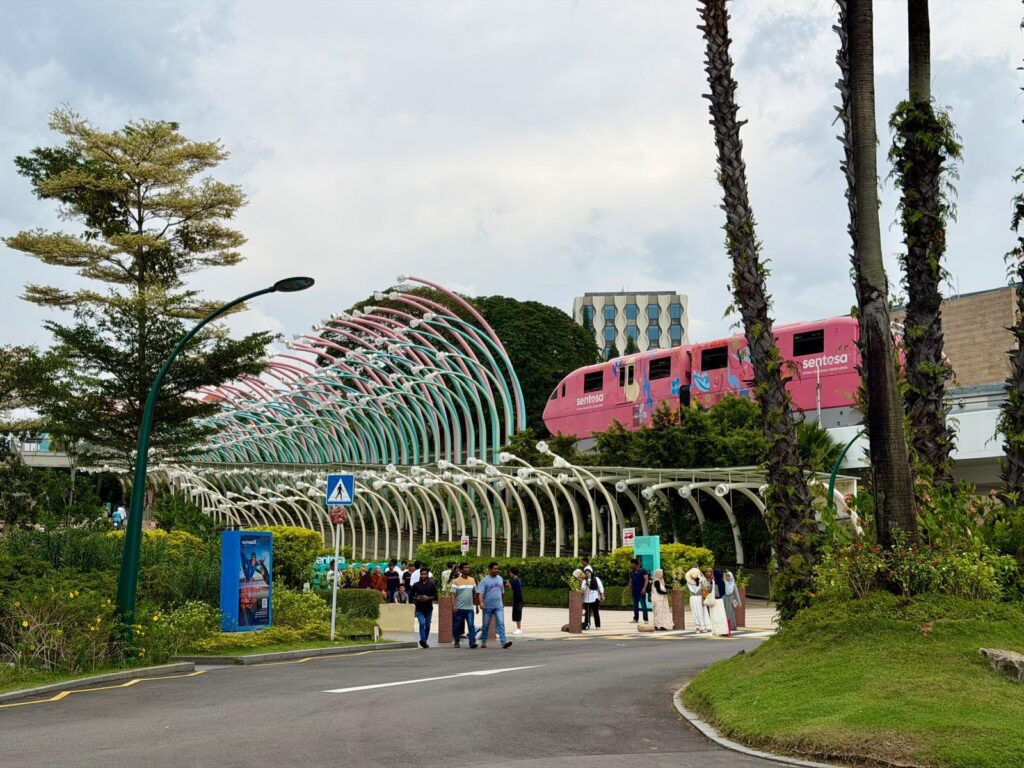
Singapore’s public transport system includes: MRT (Mass Rapid Transit trains), public buses, Sentosa monorail, and taxis or ride-hailing (as a secondary option).
The MRT forms the backbone of the network, supported by buses that extend coverage into neighbourhoods and local areas. Most travellers rely almost entirely on the Singapore MRT and bus system, as it is fast, affordable, and easy to navigate without prior experience.
You can rely on public transport for almost everything here. In practice, it is so good that I have never once considered hiring a car in Singapore.
Understanding The MRT: The Backbone Of The City
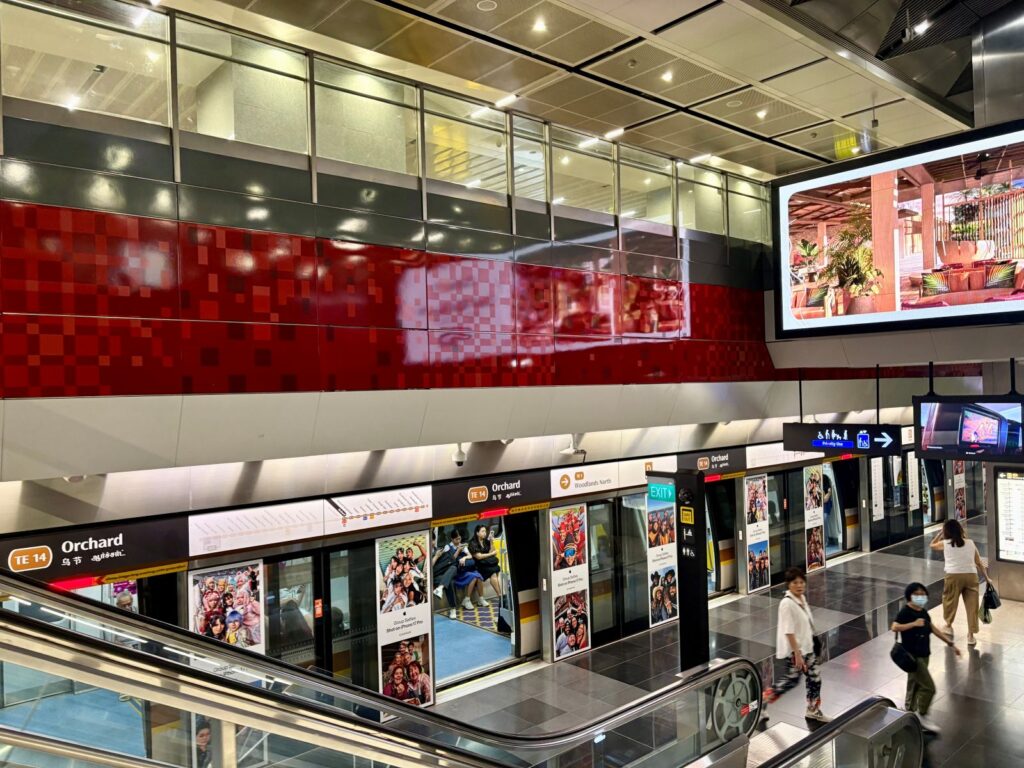
The MRT, or Singapore train system (Mass Rapid Transit), is the fastest and most reliable way to move around Singapore. It connects the airport, city centre, neighbourhoods, and most major attractions.
Stations are clearly signposted, routes are colour coded, and trains run frequently enough that you rarely need to check a timetable. Even during busy periods, the system feels controlled rather than chaotic. If you are new to the city, start here. It removes the need to make too many decisions.
There’s a reason this feels easier. Studies on decision fatigue show that even small repeated choices (routes, timing, ticketing) can gradually reduce cognitive capacity and increase irritability over time. When those decisions are reduced or taken away, people tend to feel more stable and less mentally drained across the day.
After the first couple of journeys, it becomes easier. You stop checking quite as much, and the system starts to feel predictable. Letting it guide you, rather than trying to optimise every route, tends to make the whole experience feel calmer.
Curious to explore the science behind this?
This blog draws on established behavioural science research and applies these principles to travel contexts. Sources are linked in our Evidence & Further Reading section.
Singapore MRT Map And Train Lines (What You Need To Know)
The Singapore MRT map is simple and colour-coded, making it easy to understand even on your first visit.
Key lines include: North-South Line (Red), East-West Line (Green – connects Changi Airport to the city), Downtown Line (Blue), Circle Line (Orange), and Thomson-East Coast Line (Brown).
Most tourist areas (Marina Bay, Orchard, Chinatown, Little India) are directly connected via MRT. You do not need to memorise the system; Google Maps integrates the Singapore train lines and will guide you step by step, or check the map when you enter the station.
How To Use Buses In Singapore: Slower, But More Grounded
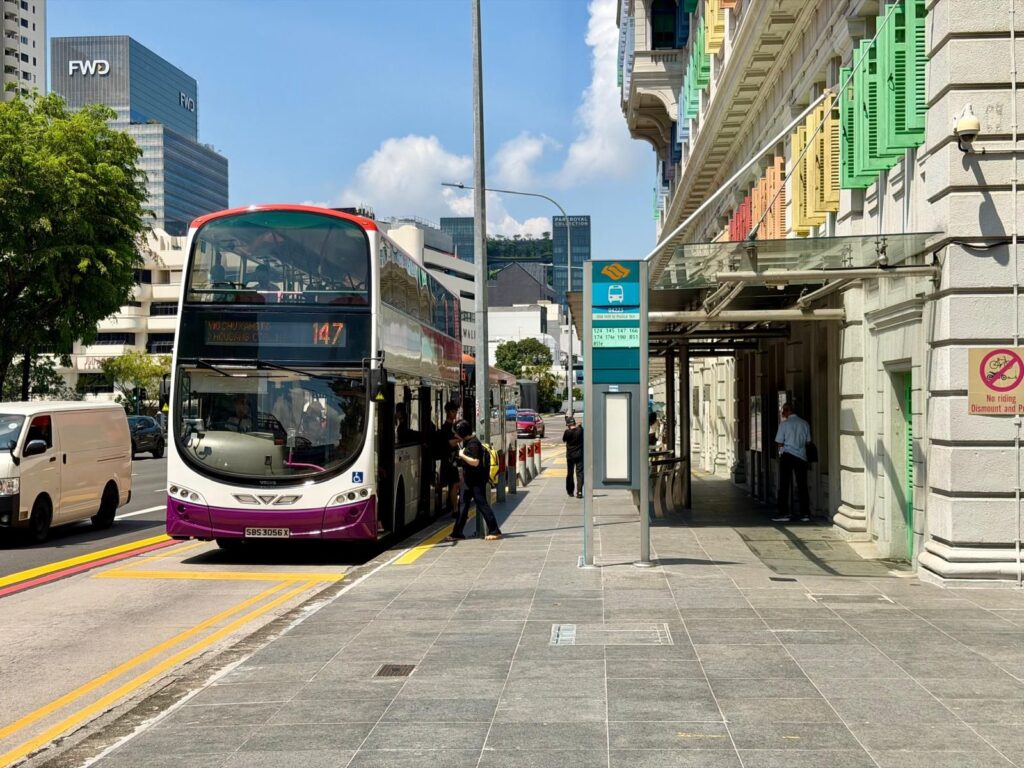
Singapore’s bus network fills in the gaps where the MRT does not reach. Buses are clean, air conditioned, and just as reliable, but they move at street level, which changes the experience.
If the MRT is about efficiency, buses are about perspective. You see neighbourhoods, local shops, and everyday life. On days where you feel overstimulated by dense areas like Marina Bay or Orchard Road, a bus ride can reset your pace.
There is also evidence that moving through environments at a slower, more observable pace can reduce stress compared to crowded, high-density commuting conditions. Studies on public transport have shown that crowding and lack of control are key drivers of stress responses, not just the journey itself.
So, how do you use the bus? You can search Google Maps for routes and times, then you board at the front of the bus and tap your card as you enter AND when you exit.
Monorail To Sentosa: The Easiest Island Access
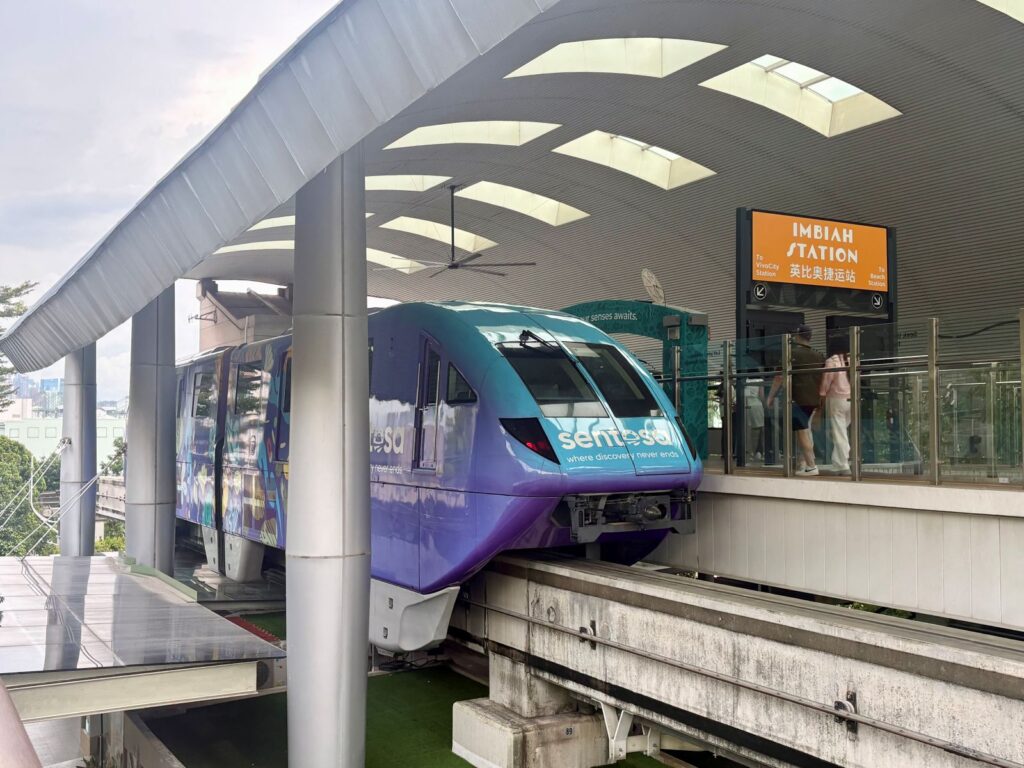
The Sentosa Express monorail connects VivoCity shopping mall to Sentosa Island. It is short, straightforward, and designed for visitors. There is very little decision making required. You follow the signs, tap your card, and ride across.
If you are heading to the beach, Universal Studios, or beach clubs, this is the easiest way to get there without adding stress to your day. If you need to get anywhere else on Sentosa, you can transfer to one of the free buses on the Island.
It is also a good example of how Singapore removes stress from travel transitions. You are guided through the process without needing to figure things out yourself.
How To Pay For MRT And Public Transport In Singapore
Whenever you land somewhere new, one of the first questions is how can you actually pay to use the public transport. In Singapore, you don’t need to buy tickets.
Instead, you can use a contactless credit or debit card, Apple Pay or Google Pay, or an EZ-Link card or NETS FlashPay card. I personally use Apple Pay with my Wise card. You simply tap in and tap out at MRT stations and on buses.
It sounds minor, but it adds up. Research on cognitive load shows that even minor “process frictions” (like buying tickets or navigating machines) accumulate and contribute to mental fatigue over time. Removing them helps preserve attention and reduces stress across the day.
How Much Does Public Transport Cost In Singapore? (MRT And Bus Fares)
Currently, the aproximate prices for Singapore public transport are:
MRT (Train):
- ~SGD $1.50 – $2.50 per journey (distance-based fare)
- Airport to city: ~SGD $2.00 – $2.50
- Daily average: ~SGD $5 – $8
Bus:
- ~SGD $1.50 – $2.20 per journey
- Slightly cheaper for short distances
- Daily average: ~SGD $4 – $7
Sentosa Express Monorail:
- ~SGD $4 entry fee (island access)
- Free buses within Sentosa
Taxi Comparison:
- Short ride: ~SGD $10 – $20
- Airport taxi: ~SGD $20 – $35
Singapore uses a distance-based fare system, so you only pay for how far you travel rather than a flat ticket price. For the quality of the transport, this is one of the best public transport systems in the world for the price you pay.
Singapore Tourist Transport Pass: Is It Worth It?
For visitors, you may come across the Singapore Tourist Pass. This offers unlimited travel on MRT and buses for a fixed daily price.
However, for most travellers pay-as-you-go is usually cheaper The system is already low cost, and contactless payment is easier than managing a pass
A tourist pass can be useful if you plan to take many trips in a single day, but it is not essential. We used public transport every day, on our recent trip and the most we spent in a single day was $9; the pass starts at $17 for one day, you would need to be making a high number of trips in a single day to make this worth buying.
Safety And Cleanliness: Why It Feels Different
Singapore’s public transport stands out because it feels predictably safe and clean. There is clear social order. People queue, give space, and follow rules. Stations and vehicles are well maintained. I have never felt unsafe using trains, buses, or the monorail in Singapore, and it’s always an enjoyable experience.
This matters: environmental psychology research shows that when spaces feel ordered and predictable, people experience lower background stress and reduced vigilance. You are not constantly scanning for risk or uncertainty.
That creates a quieter internal state, which is exactly what most people are looking for when they say they want to “travel well”.
Budget Travel Without Compromise
Public transport in Singapore is affordable relative to taxis and ride shares. You can reach almost anywhere in the city for a low cost, without sacrificing comfort.
This is especially useful if you are trying to manage financial stress while travelling. Knowing you can move around easily without spending much reduces one of the most common travel pressures.
How To Get From Changi Airport To The City By Train
When I first travelled to Singapore, one of my first questions was how could I get from the airport to the city, and can I use public transport? The answer is yes, you can very easily take the Singapore MRT from Changi Airport to the city:
- Board at Changi Airport MRT station (CG2)
- Take the East-West Line
- Change at Tanah Merah
- Continue towards the city (e.g. City Hall, Raffles Place)
- Change lines if required (clearly marked)
Journey time: ~30–40 minutes
Cost: ~SGD $2 – $2.50
This is one of the easiest and most affordable airport transfers in any major city. There is lots of space for your bags and lifts at all stations.
Walking In Singapore: Easy, But Plan Around The Heat
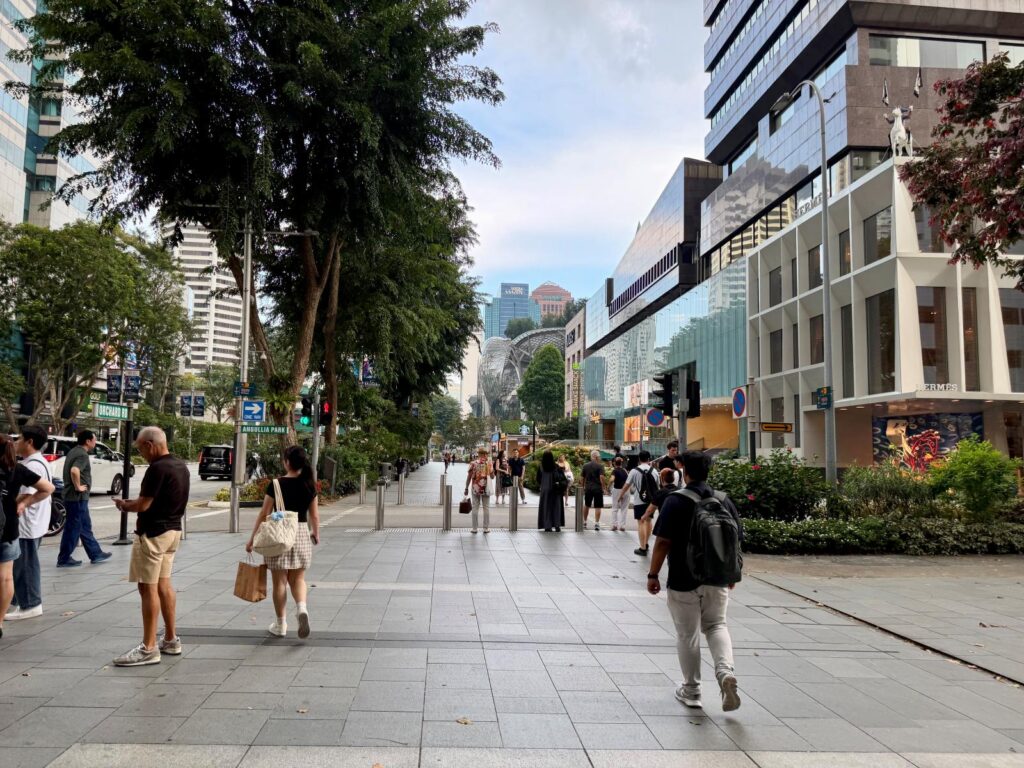
Singapore is one of the easiest cities to walk around. Pavements are well maintained, crossings are clear, and routes between places are usually more direct than they look on a map.
But the part that makes the biggest difference in practice is the heat. It is consistently hot and humid, and even short walks can feel more physically draining than expected, particularly in the middle of the day. Even a short walk that would usually feel easy could feel tiring (and sweaty), than expected.
The easiest way to manage this is not to avoid walking, but to break it up. In Singapore, that is quite easy to do. You can move between air-conditioned MRT stations, shopping centres, cafés, and covered walkways without needing to plan much in advance. On hotter days, it makes sense to alternate between walking and public transport rather than committing to longer stretches on foot.
This also helps from a mental perspective. You keep the benefits of walking, seeing more, slowing down slightly, without pushing into the point where it becomes uncomfortable or draining.
One practical note: Singapore is extremely clean and well maintained, and there is a strong expectation that you keep it that way. Avoid littering and follow local rules, it is part of why the environment feels so easy to move through in the first place.
Cycling In Singapore: Limited But Improving
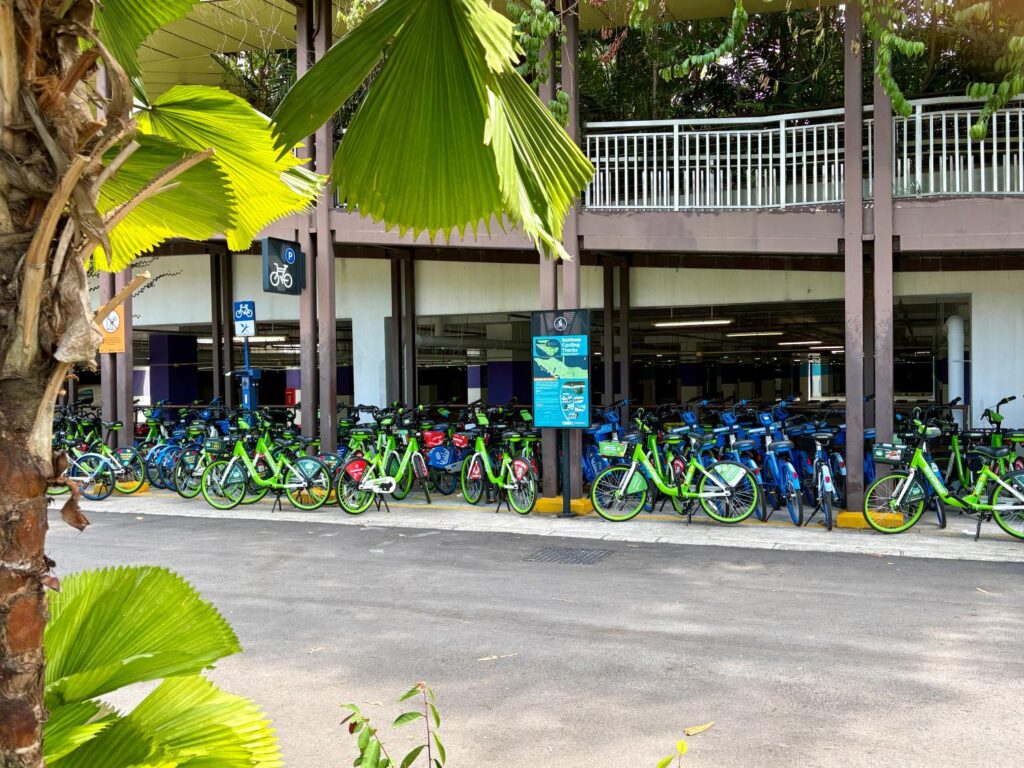
Cycling is possible in Singapore, but it is not the primary way most visitors get around. There are dedicated cycling paths in some areas (especially East Coast Park, Marina Bay, and Sentosa Island), and bike-sharing apps are available.
However, due to heat, humidity, and traffic in central areas, it is usually more of a leisure activity than a core transport method. We biked when we were on Sentosa Island which was a nice activity but it was extremely hot, so you may find you cycle for shorter periods than you would elsewhere around the world.
Grab And Taxis: When You Need A Simpler Option
If you are tired, short on time, or carrying heavy luggage, using Grab (Singapore’s main ride-hailing app) or a taxi is the easiest alternative.
Grab works similarly to Uber. You book through the app, see the price upfront, and avoid the need to navigate routes yourself. Taxis are also widely available and reliable, with metered pricing.
Typical costs:
- Short ride: ~SGD $10–$20
- Airport to city: ~SGD $20–$35
- Sentosa to airport: ~SGD $35–$50
While more expensive than public transport, this option can feel easier when your energy is low or decision fatigue has built up. If the heat is getting to you, this can also be a more comfortable way to move around, especially with luggage.
Frequently Asked Questions About Singapore Public Transport
How do tourists use public transport in Singapore?
Tourists can use Singapore public transport by tapping a contactless credit card, Apple Pay, or Google Pay. There is no need to buy tickets or set up anything in advance.
Is the MRT in Singapore easy to use?
Yes. The Singapore MRT system is one of the easiest in the world to navigate. Stations are clearly signposted, routes are colour coded, and Google Maps provides accurate directions.
Can you use the same card for buses and trains in Singapore?
Yes. The same contactless card or mobile payment can be used across MRT trains and buses. You simply tap in and tap out.
How much does public transport cost in Singapore per day?
Most travellers spend around SGD $5–$8 per day using MRT and buses, depending on distance and number of journeys.
What is the best way to get from Singapore Airport to the city?
The MRT is the easiest and most affordable option. It takes around 30–40 minutes and costs approximately SGD $2–$2.50.
Is public transport in Singapore safe at night?
Yes. Singapore’s MRT and buses are considered extremely safe, even late at night, with well-lit stations and a strong sense of order.
Why Singapore Public Transport Is So Good
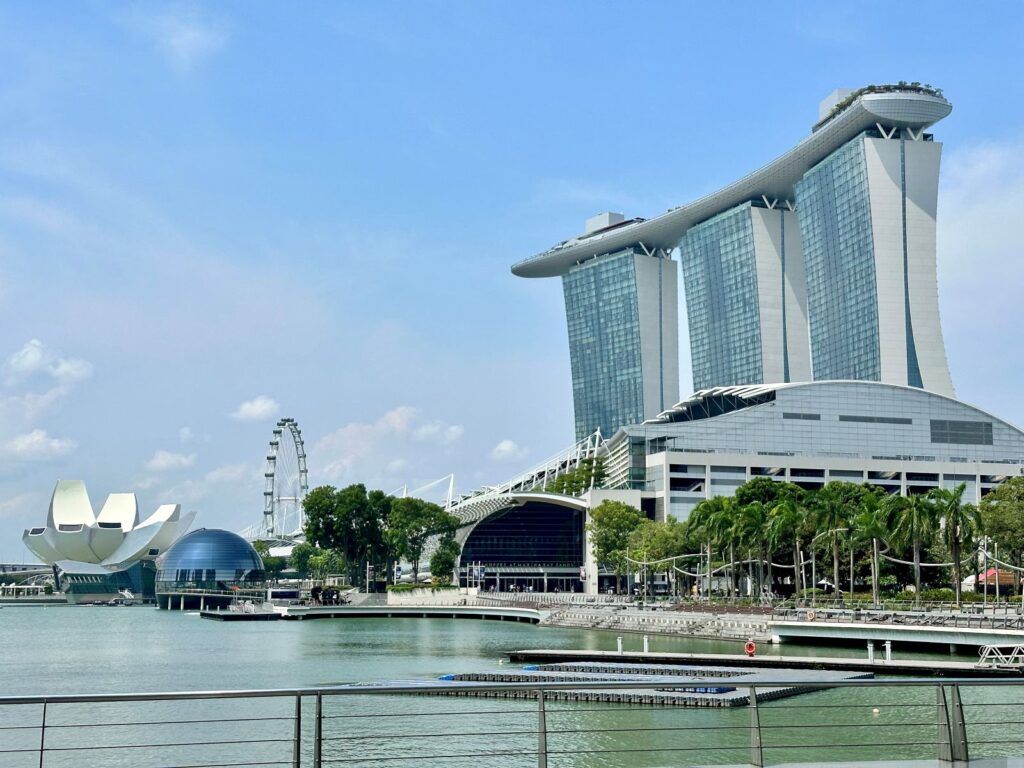
Singapore’s public transport works because it removes stress from your travels. You are not figuring out tickets, second guessing routes, or dealing with unpredictability. You tap, follow clear signs, and arrive where you expect to. In a city where the heat can make even short distances feel like a lot, this matters.
Stations are clean, well connected, and often linked to air-conditioned spaces, so moving around stays manageable even on hot days. There is also a clear sense of order, people queue, give space, and follow rules, which reduces the background stress you often feel elsewhere.
It means you spend less energy navigating, and more actually being present in the city, and it’s one of the many reasons why Singapore is one of my favourite places to visit in the world.
This article is for general informational purposes only and is not intended to replace personalised medical, psychological, or professional advice.