Walking While Travelling: Benefits For Body And Mind
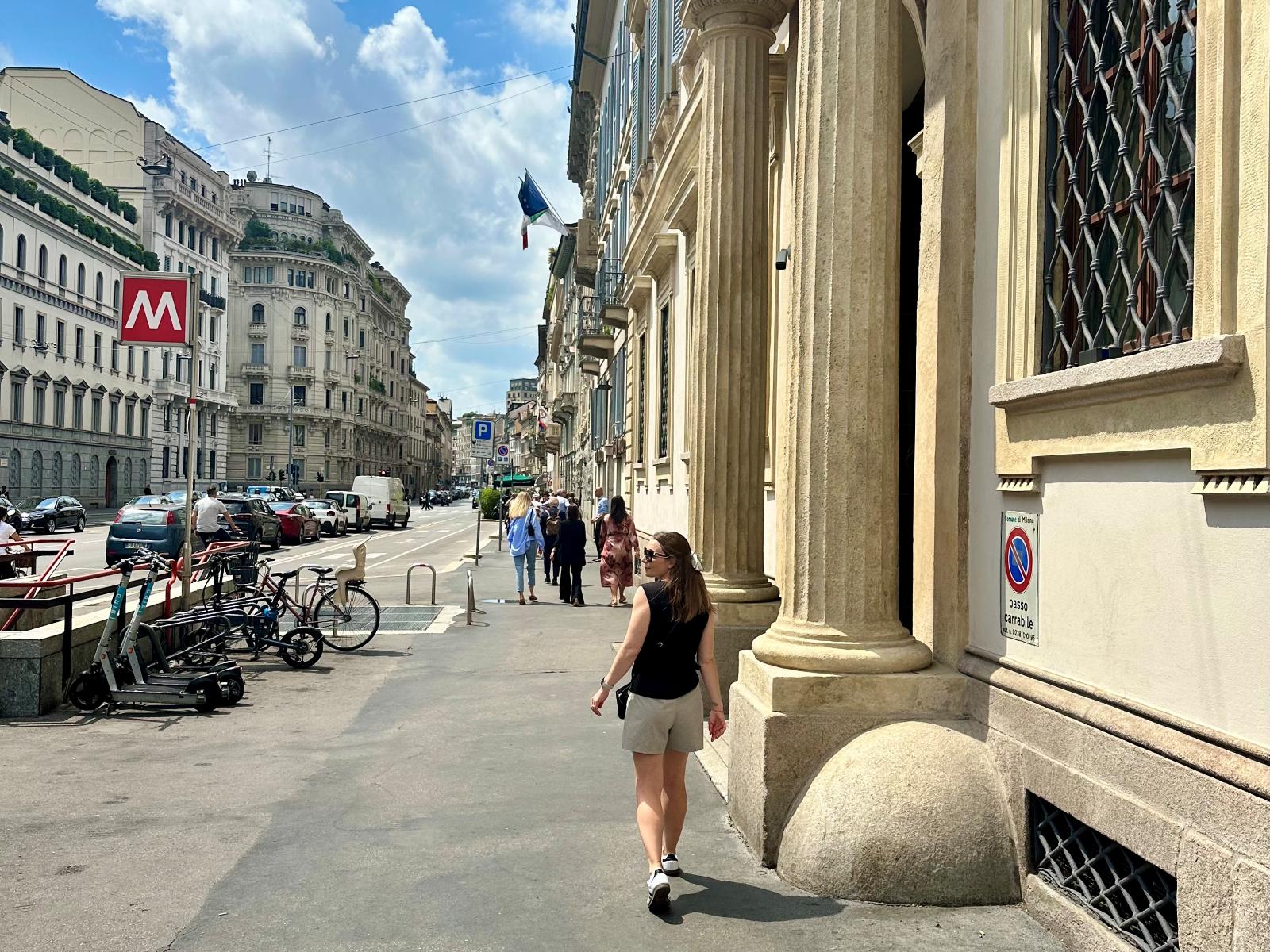
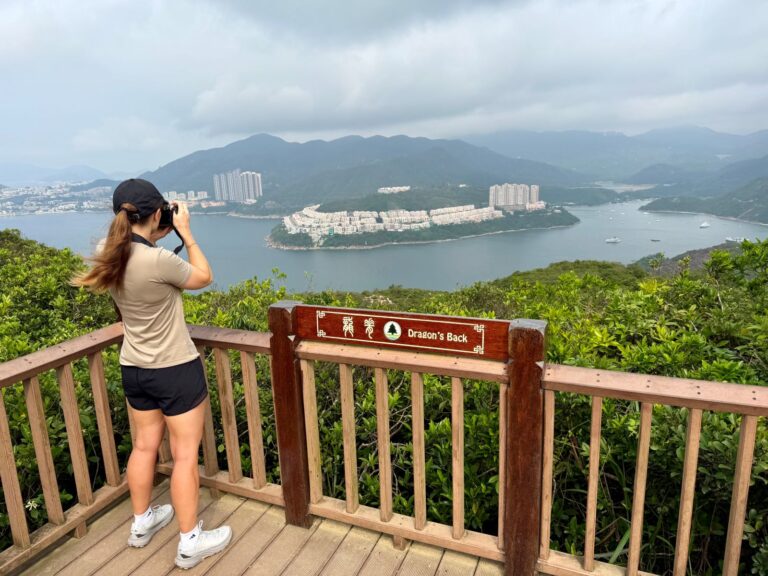
One of my favourite things about exploring a new place is how naturally walking becomes part of the day. You may head out to find breakfast, wander through a neighbourhood you had not planned to visit, walk along a waterfront, or realise the museum you want to see is only twenty minutes away. Sometimes, as I have experienced more than once, you get a little lost and end up taking the scenic route.
All those steps can feel like a by-product of sightseeing, but walking while travelling can offer much more than a convenient way to get from A to B. It is one of the easiest ways to keep moving when your normal routines disappear, while also giving your mind time to adjust to everything new happening around you.
Travel often involves more decisions, unfamiliar surroundings, disrupted sleep, and longer periods of sitting than an ordinary day at home. Walking introduces something familiar into that change. There is a steady physical rhythm to it, and you can experience a destination at a pace that gives you time to notice where you actually are.
The health benefits of walking have been studied extensively. The research discussed here is not specific to travel, so this article applies broader findings about walking, movement, mood, cognition, and natural environments to the realities of being away from home.
Table of Contents
Why Walking While Travelling Is Good For You
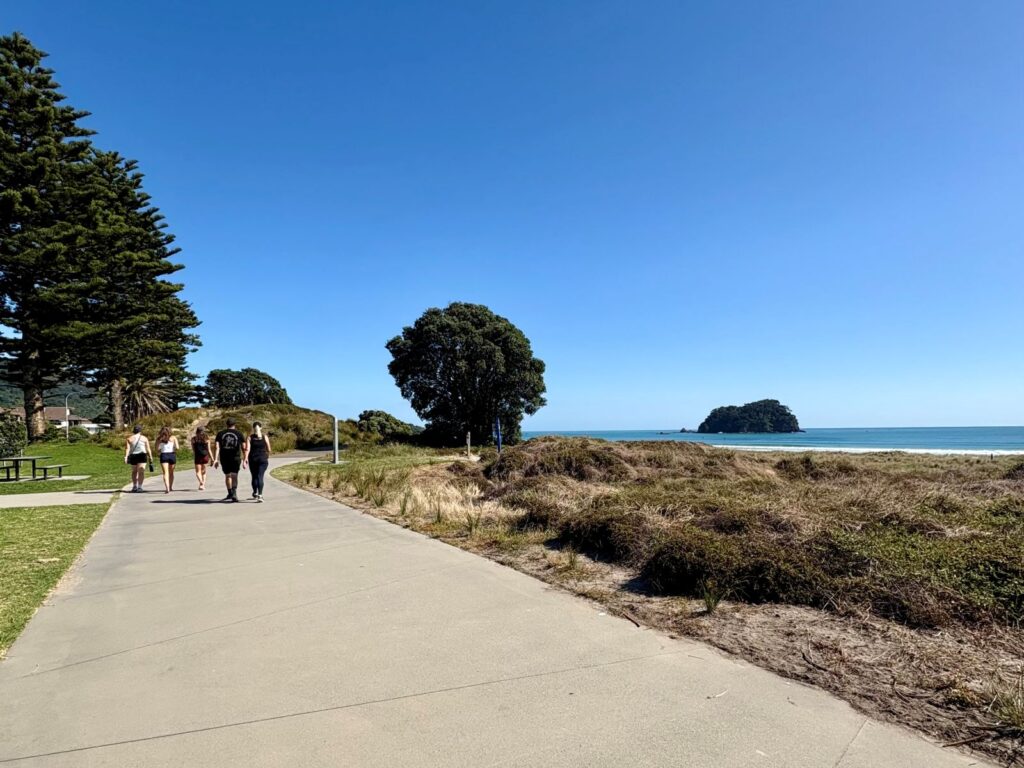
Travel can be exciting precisely because so much is unfamiliar. You are navigating new streets, deciding where to eat, working out how to use public transport, choosing what to see next, and constantly taking in information you would normally ignore at home.
Individually, those decisions may be tiny, but together, they can require a fair amount of mental effort. Towards the end of a busy day, you might notice that you are less decisive, slightly irritable, or mentally tired even though you have genuinely enjoyed everything you have been doing.
Walking can provide a useful contrast. Rather than making another decision every few seconds, there is a continuous physical task underneath everything else: putting one foot in front of the other while the environment unfolds around you.
That doesn’t mean a walk removes the mental demands of travel. It can, however, give you a steadier pace in which to process them. Instead of rushing directly from one attraction to another, you have time to notice the streets between them, work out how different neighbourhoods connect, and gradually become more familiar with the place you are visiting.
For me, that is one of the biggest benefits. Walking makes a destination feel less like a collection of individual sights and more like somewhere I am beginning to understand.
The Physical Health Benefits Of Walking While Travelling
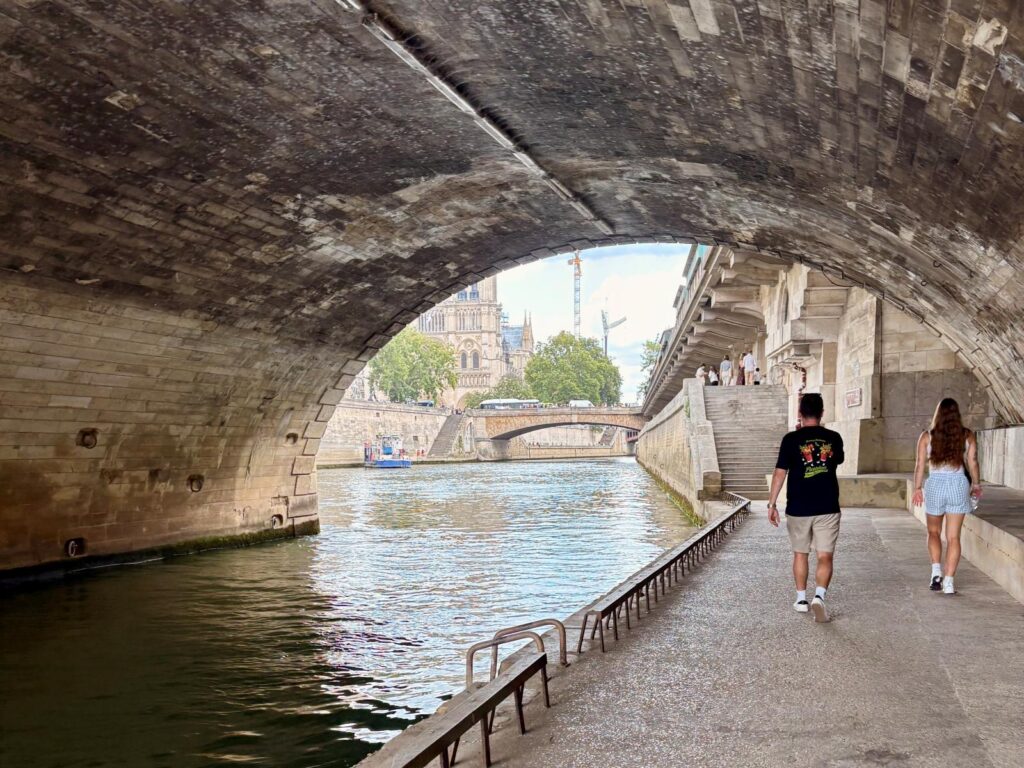
Walking is one of the most accessible forms of physical activity, and large observational studies suggest that health risks decrease as people move from very low daily step counts towards more regular movement. Benefits appear to continue as step counts rise, although the relationship varies with factors such as age.
One of the most useful points from this research is that the largest gains are not necessarily about reaching an extreme number of steps. Moving from very little activity towards consistent, moderate movement appears to matter.
City travel can support this almost without you noticing. Walking to a café, exploring a market, moving between museums, or wandering through different neighbourhoods can add up to a considerable amount of activity without needing to schedule a formal workout.
I am generally an active person, but the gym does not always make it into my travel plans. Walking gives me a way to maintain a familiar level of movement without trying to recreate my entire routine from home.
That distinction matters because it is easy to feel as though you should maintain your usual gym routine while you are away. Travel wellbeing doesn’t need to mean fitting your normal exercise programme around sightseeing. Walking can provide a useful baseline while still allowing the trip itself to remain the priority.
If you are interested in the wider role of movement when you travel, you may also like Movement On The Road: A Simple Way To Support Travel Wellbeing.
Curious to explore the science behind this?
This blog draws on established behavioural science research and applies these principles to travel contexts. Sources are linked in our Evidence & Further Reading section.
How Walking Can Support Your Mental Wellbeing While Travelling
Physical activity is associated with a lower risk of depression in large observational studies, and experimental research has also linked short periods of movement with improvements in mood and some aspects of executive function.
Those findings are broader than travel, but they are particularly interesting when you consider how travel days often feel.
A long-haul flight may leave you sore and tired. A morning spent navigating a crowded city can involve hours of noise and concentration. Even an enjoyable day of sightseeing can leave your mind feeling full because there has been so much to take in.
Going for a relaxed walk can create a change of pace without requiring much planning. After arriving somewhere new, for example, a short walk around the area near your accommodation gives you fresh air and movement while also helping you understand your surroundings.
The steady pace of a walk can feel useful. Your steps create a predictable pattern while streets, buildings, people, and sounds pass around you. Rather than adding another activity that demands concentration, walking allows you to continue exploring while giving your attention somewhere relatively steady to settle.
You don’t need to make this a dedicated wellbeing exercise. Twenty minutes spent wandering towards dinner or exploring the streets around your hotel can still give you movement, daylight, and a little space between one part of the day and the next.
Why Walking In Green And Blue Spaces Can Feel More Restorative
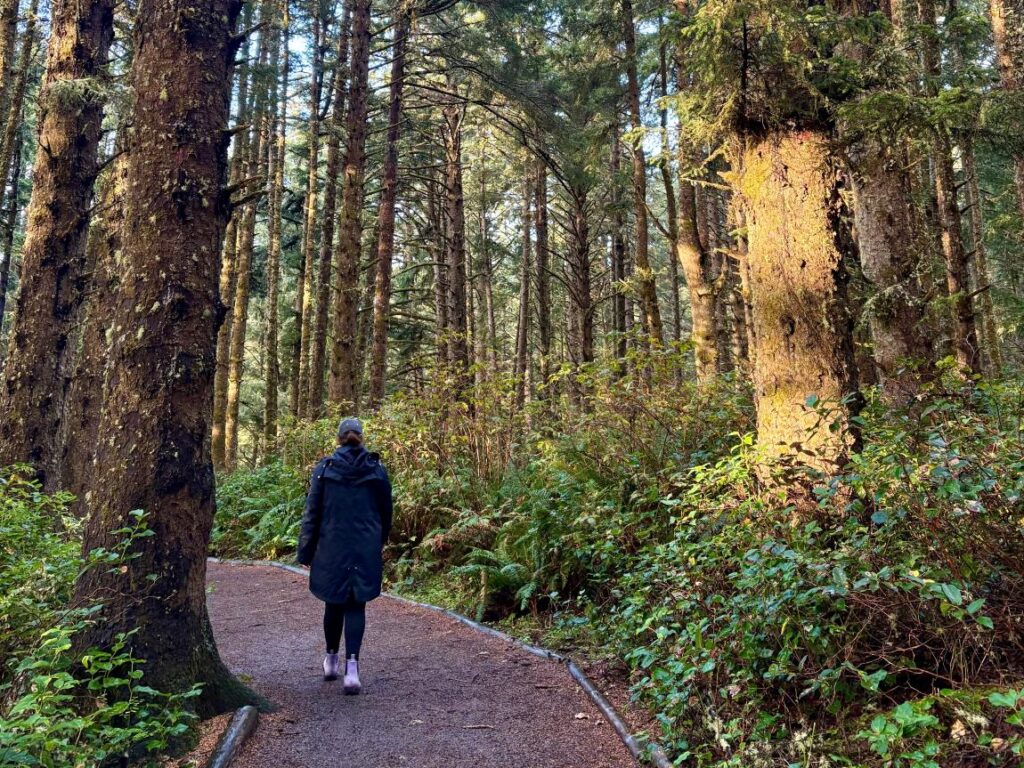
There is a noticeable difference between walking beside a busy road and walking through a park, along a canal, or next to the sea.
Built-up environments can be exciting, particularly when you have travelled somewhere specifically to experience the energy of a city. They also contain a lot for your attention to process: traffic, signs, crossings, shopfronts, people, noise, and movement.
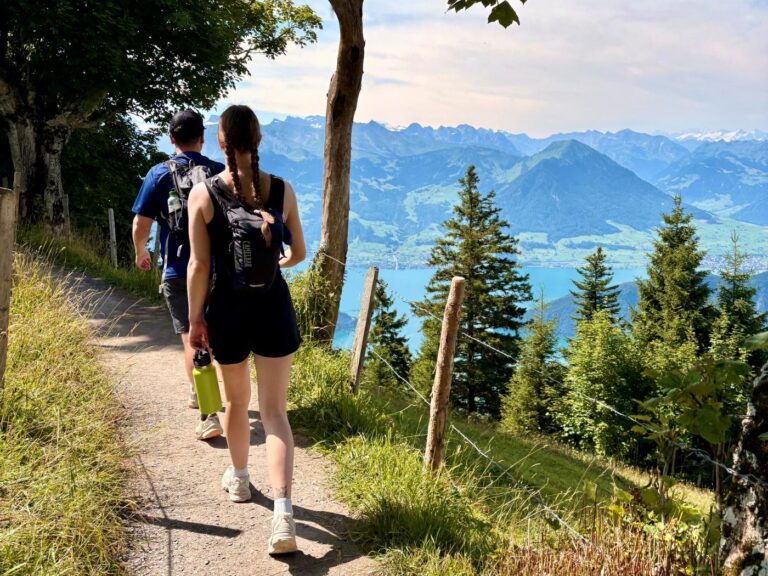
Natural environments often draw your attention in a different way. Trees, water, open space, and more repetitive natural sounds can provide a less demanding sensory backdrop.
Research suggests that spending time in natural environments may support short-term restoration and reduce rumination. These studies are not specific to travel, and a walk through a park won’t necessarily transform your wellbeing on its own. They do, however, suggest that the environment you walk through may influence how restorative that time feels.
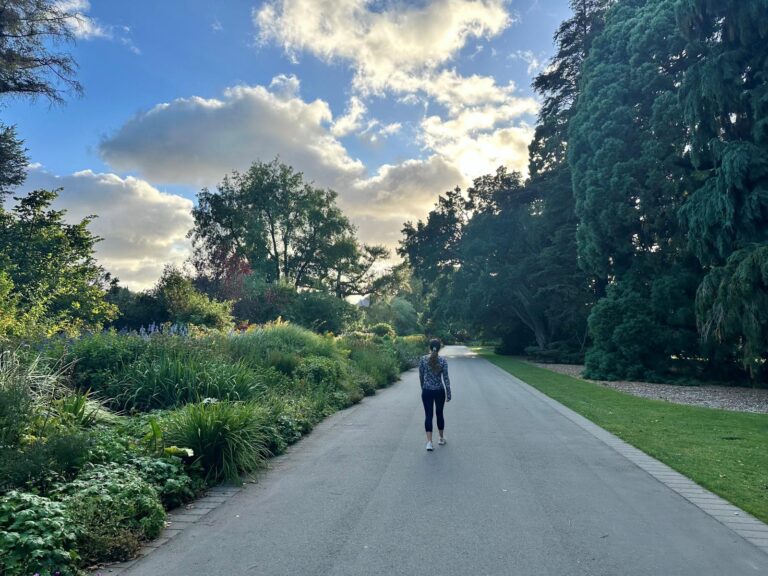
In practical terms, this does not require planning your whole itinerary around nature. If there is a park parallel to your route, a canal path instead of a main road, or a waterfront you can use to reach your next stop, taking that option may give you the same amount of movement in an environment that feels a little calmer.
You can read more about this in our Green Spaces and Blue Spaces travel articles.
How Walking Can Support Thinking And Creativity
Some research suggests that people may think more creatively while walking than while sitting, with some of the effect continuing briefly afterwards.
Travel already creates plenty of opportunities to see things differently. You are exposed to unfamiliar routines, architecture, food, conversations, and ways of organising daily life. Ideas that feel fixed at home can look slightly different when you are somewhere else.
Walking gives those thoughts room to move without requiring you to sit down and deliberately analyse them.
That might mean thinking through a personal decision while you wander beside a river, making sense of something you noticed earlier in the day, or finding yourself connecting ideas while walking back to your accommodation.
Not every walk needs to be reflective, of course. Sometimes it is just enjoyable to wander through a new city with no deeper purpose than seeing what is around the next corner. The benefit is that walking leaves enough mental space for either experience.
Why Walking Can Help You Feel Settled In A New Place
One of the hardest things to maintain while travelling is routine. Meal times move, sleep changes, plans depend on transport, and every destination asks something slightly different from you.
Trying to recreate your entire home routine can make travel feel unnecessarily restrictive. A smaller anchor is often easier to maintain.
Walking can fill that role because it already fits naturally into most trips. You do not need particular equipment, a gym membership, or a fixed time of day. You can walk while sightseeing, on your way to dinner, after arriving somewhere new, or during a slower morning.
For me, that consistency is part of the appeal. Even when everything else about the day is different, walking still feels familiar. My surroundings may have changed completely, but the act of moving through them has not.
That can provide a useful sense of continuity without taking anything away from the spontaneity of being somewhere new.
How To Walk More While Travelling Without Overplanning It
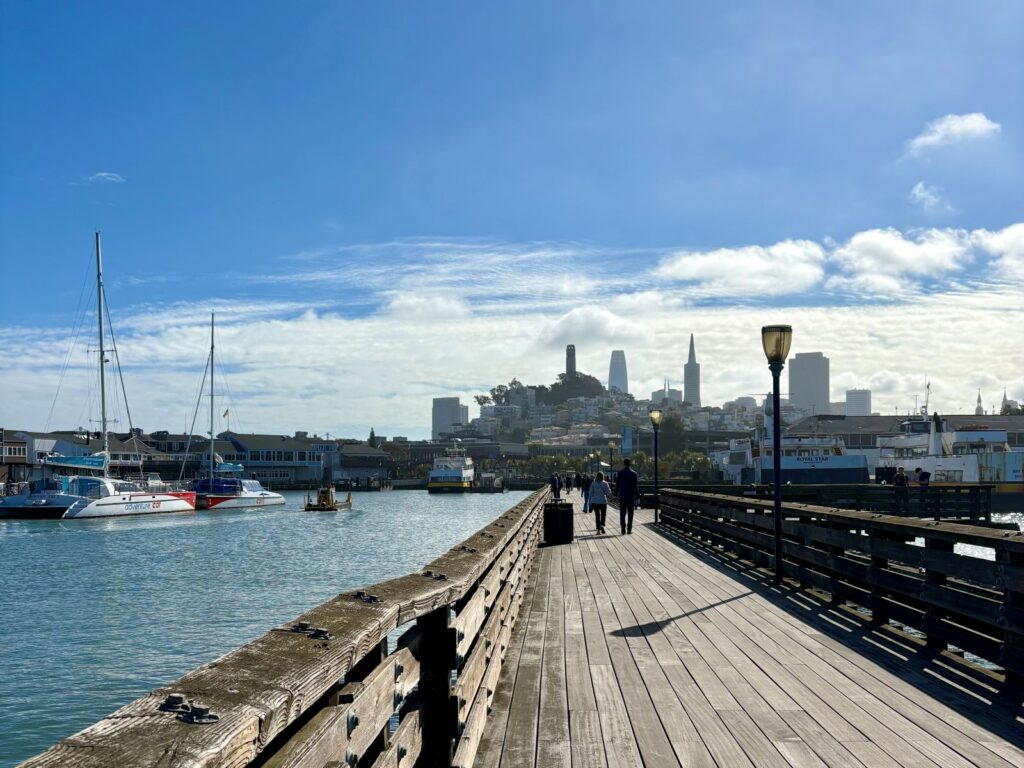
In many cases, the most useful approach is to notice where walking can naturally make the trip more enjoyable. In many cases, the most useful approach is to notice where walking can naturally make the trip more enjoyable.
On arrival day, for example, I like the idea of an orientation walk around the area where you are staying. There does not need to be a particular destination. You might find a café for the next morning, locate the nearest station, notice a restaurant that looks good, or work out which streets connect to the places you plan to visit.
On busier sightseeing days, consider leaving space for at least one stretch of walking that is not purely about reaching the next attraction as quickly as possible. Even fifteen or twenty minutes at a comfortable pace can give you time to absorb more of the destination between scheduled stops.
Maps can also help you find more enjoyable routes rather than only the fastest ones. If a park, canal, riverfront, pedestrian street, or tree-lined route is close by, a small detour may make the journey itself one of the more enjoyable parts of the day.
You can also pay occasional attention to how different walks feel. You do not need to monitor your mood or turn it into another travel habit to maintain. Just notice whether you tend to feel more settled after walking beside water, more energised after exploring on foot in the morning, or more tired when every walk becomes another race across the city.
Over time, you may start to understand which kinds of walking actually add something to your own trips.
Why You Do Not Need To Chase A Daily Step Count
There is an obvious risk with discussing the benefits of walking: something enjoyable and ordinary can suddenly start sounding like another metric you are supposed to optimise.
That is not the point.
Some travel days naturally involve 20,000 steps. Others involve a long train journey, a beach, a café, or several hours sitting somewhere you have been excited to visit. There is no need to force extra walking into a day purely because it is considered healthy.
Your energy, mobility, the weather, safety, accessibility, and the type of trip you are taking all matter. Public transport or a taxi may be the much better choice after a long day, and there is little benefit in exhausting yourself because you feel you should walk everywhere.
Walking works well because it can remain flexible. When it fits the day, it allows you to combine movement with something you already wanted to do. Try to focus less on reaching a high step count and more on the benefits of walking when it helps you feel good enough to keep enjoying the place you travelled to see.
Why Walking Is Such A Valuable Part Of Travel
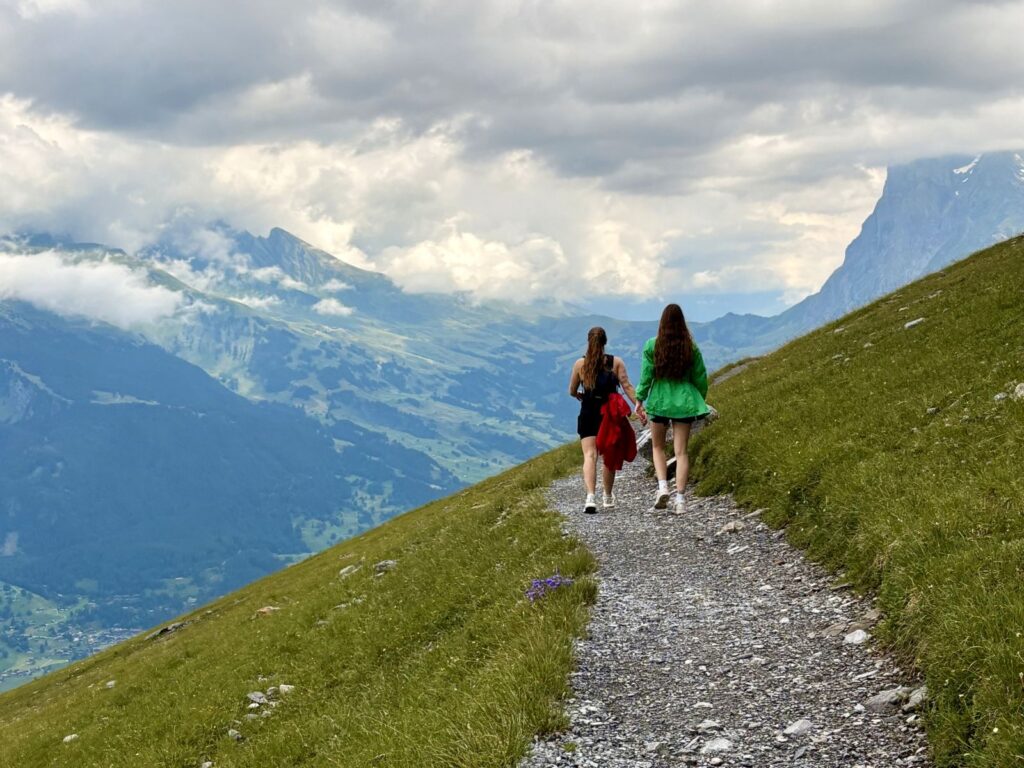
Walking is easy to overlook because it is so ordinary.
Yet some of my favourite travel experiences happen on foot, not necessarily at the attraction I planned to visit. They happen in the streets between places, when I notice a building I would otherwise have missed, find somewhere unexpected to stop, or gradually work out how a neighbourhood fits together.
Research gives us good reasons to value the movement itself. Regular walking supports physical health, physical activity is associated with mental wellbeing, natural environments may offer additional restorative benefits, and walking may support aspects of thinking and creativity.
But its value while travelling is also much more immediate.
Walking lets you explore and look after yourself at the same time. There is no separate wellness activity to fit into the itinerary and no need to reproduce your routine from home. You are already out seeing the place you came to experience.
For me, that is what makes walking such a useful part of travel wellbeing. It supports the body without making movement the focus of the trip and gives your mind space to take in your new surroundings.
Most importantly, it keeps you connected to the destination itself. Sometimes the best way to settle into a place is to head outside, choose a direction, and start walking.
For more psychology-informed ideas to help you enjoy travel while looking after your wellbeing, explore the latest guides and destinations on Nomadic Balance.
This article is for general informational purposes only and is not intended to replace personalised medical, psychological, or professional advice.