Hiking In Hong Kong: The Restorative Side Of An Intense City
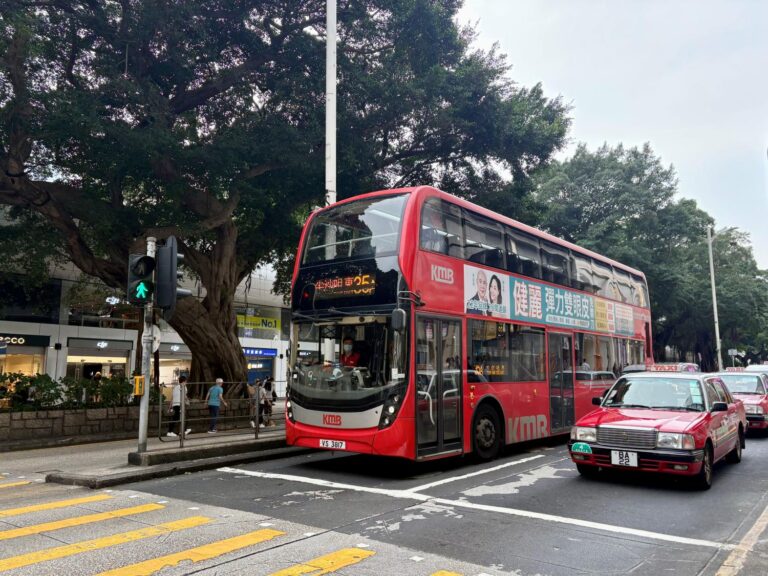
Hong Kong can keep your nervous system switched on: the crowds, the bright shopping centres, the humidity, and the speed of the city all arrive at once. It is exciting, efficient, and full of contrast, but it can also feel like a lot to take in. That is what made hiking in Hong Kong so unexpectedly grounding for me.
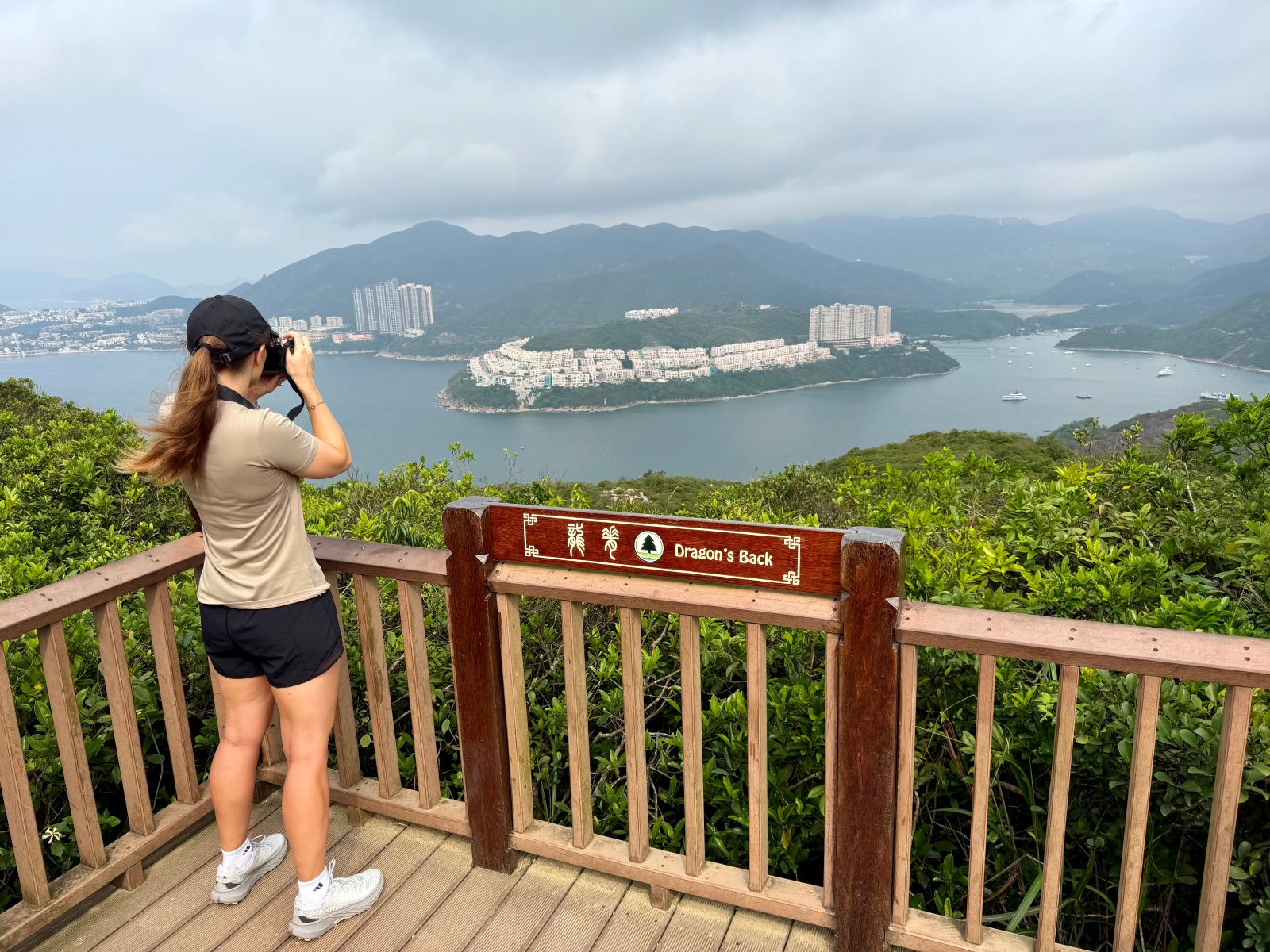
Before I visited, I thought of Hong Kong mostly through its density: towers, ferries, food, transport, neon, malls, markets, and movement. I did not expect one of my clearest memories to be walking along Dragon’s Back, looking out towards the sea, and feeling my body relax after several days of city stimulation.
This is not a “top 10 hikes in Hong Kong” article designed to help you squeeze more into your itinerary; Hong Kong already has plenty of those. This is a calmer guide to hiking in Hong Kong as a way to create space in your trip, move your body without turning the day into a performance, and experience a different side of an intense city.
Table of Contents
If you are interested in other ways that you can help your wellbeing while travelling, see our Nomadic Balance home page for more.
Why Hiking In Hong Kong Feels So Grounding
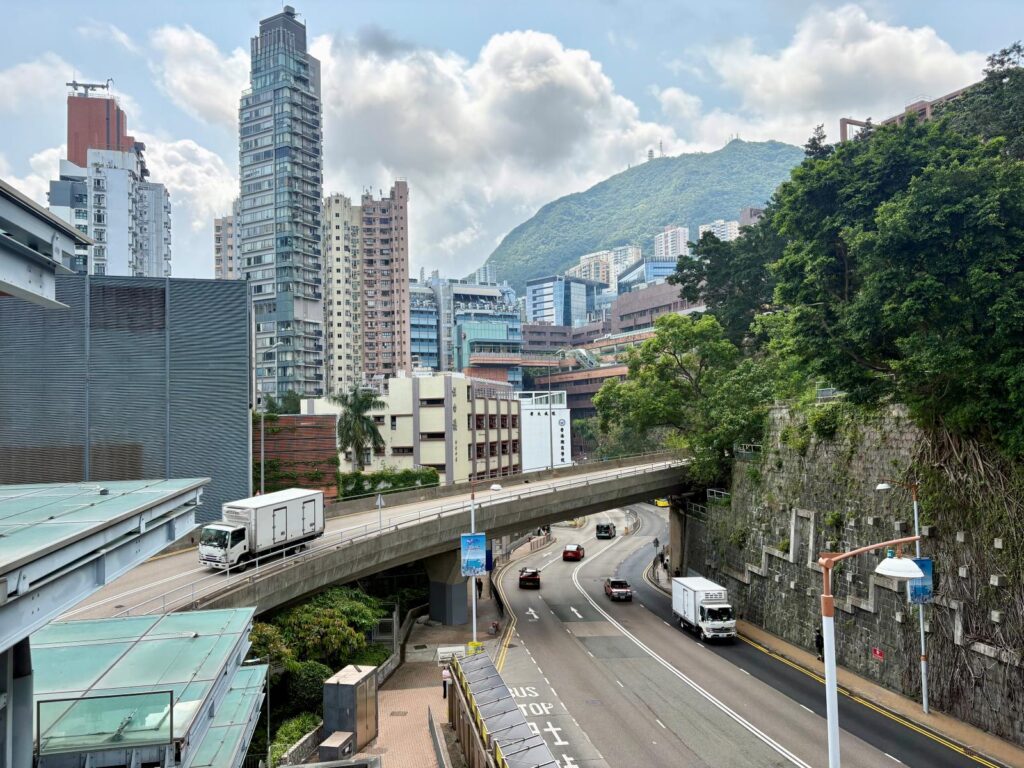
One of the most memorable things about Hong Kong is how quickly the city changes. You can spend the morning moving through a dense urban environment, then find yourself on a ridgeline, beside water, under trees, or looking out over the coastline not long afterwards. Nature does not feel like a distant extra here. It is woven surprisingly close to the city, which makes the contrast feel even stronger.
That physical shift matters when you are travelling. Even enjoyable trips ask a lot of your brain. You are reading signs, working out transport, deciding where to eat, managing heat, navigating crowds, checking directions, and adjusting to a place that does not yet feel familiar. None of this has to be negative for it to be tiring.
A hike gives your attention something simpler to do. There is a psychological reason this can feel so relieving. Research on nature exposure often points to attention restoration: natural settings can give the brain a break from directed attention, the effortful kind of focus used for navigation, decision-making, and filtering out distractions.
A Hong Kong hike does not remove every demand, but it can replace some of the city’s constant processing with softer attention: watching the path, noticing shade, listening to birds, and letting your pace settle.
That was what made hiking in Hong Kong feel so different from simply visiting another viewpoint. It was not only beautiful, it gave my mind a break from managing the city.
Curious to explore the science behind this?
This blog draws on established behavioural science research and applies these principles to travel contexts. Sources are linked in our Evidence & Further Reading section.
The Wellness Case For Hong Kong Hikes
For wellness-first travellers, Hong Kong hikes are not just about getting steps in. They can make space for the things that often disappear in a busy city break: steadier breathing, fewer decisions, a slower pace, and a clearer sense of where you are.
A hike gives shape to the day without overplanning it. There is a start, a route, and an end, which can feel helpful when your brain is already tired from making small decisions. It also gives your body a reason to move in a way that feels natural, rather than turning movement into another travel task to optimise.
The sensory shift can also be useful. On a trail, the input changes. After the visual noise of stations, signs, traffic, escalators, and shopping centres, the simpler rhythm of path, shade, breath, and view can feel like relief.
Hiking also helps you understand Hong Kong’s geography. The city feels different when you can see how close the towers are to mountains, islands, reservoirs, beaches, and ridgelines. It becomes less like one continuous urban rush and more like a place with edges, openings, and different kinds of pace.
Most importantly, hiking gives you another way to experience the city. You do not have to understand Hong Kong only through restaurants, viewpoints, markets, malls, and transport links. You can spend part of your trip in a slower rhythm and still feel that you are seeing Hong Kong properly.
How To Choose The Right Hong Kong Hiking Trail For Your Energy
The most restorative hike is not always the most dramatic one. It is the one that fits your body on the day you are actually having. This is also where the wellbeing evidence is reassuring. A restorative walk does not have to be intense to be useful. Green exercise research suggests that low-to-moderate intensity movement in natural settings can support mental health, which fits the kind of hiking most travellers actually need after several days of heat, crowds, and decisions.
Choose a ridge walk if the city has started to feel close or compressed. Open views can create a sense of space that is hard to access at street level. Choose a shaded or gentler route if you are tired, jet-lagged, or sensitive to heat. Hong Kong’s humidity can make even moderate walks feel more demanding than they look on paper. Or choose a coastal or island walk if you want the whole day to feel slower.
If you are short on energy, choose a short viewpoint hike if your energy is limited but you still want to shift the tone of the day. Sometimes a brief climb and a wide view are enough.
The key is to treat the hike as a wellbeing decision, not just a sightseeing decision. Instead of asking, “What is the most impressive hike I can do?” ask, “What would help me feel more settled today?”
The 3 Best Hong Kong Hikes For A Restorative Break
There are so many hikes you can do in Hong Kong; however, if you are there for a short amount of time, these three hikes are easily accessible by public transport, which is very easy to use in Hong Kong. They also don’t take up your entire day, so you can have a nature break in the morning, get some natural movement in while travelling (read more about the benefits here), have a refresh at your accommodation and then head out to see some more of Hong Kong later.
Lung Fu Shan Morning Trail
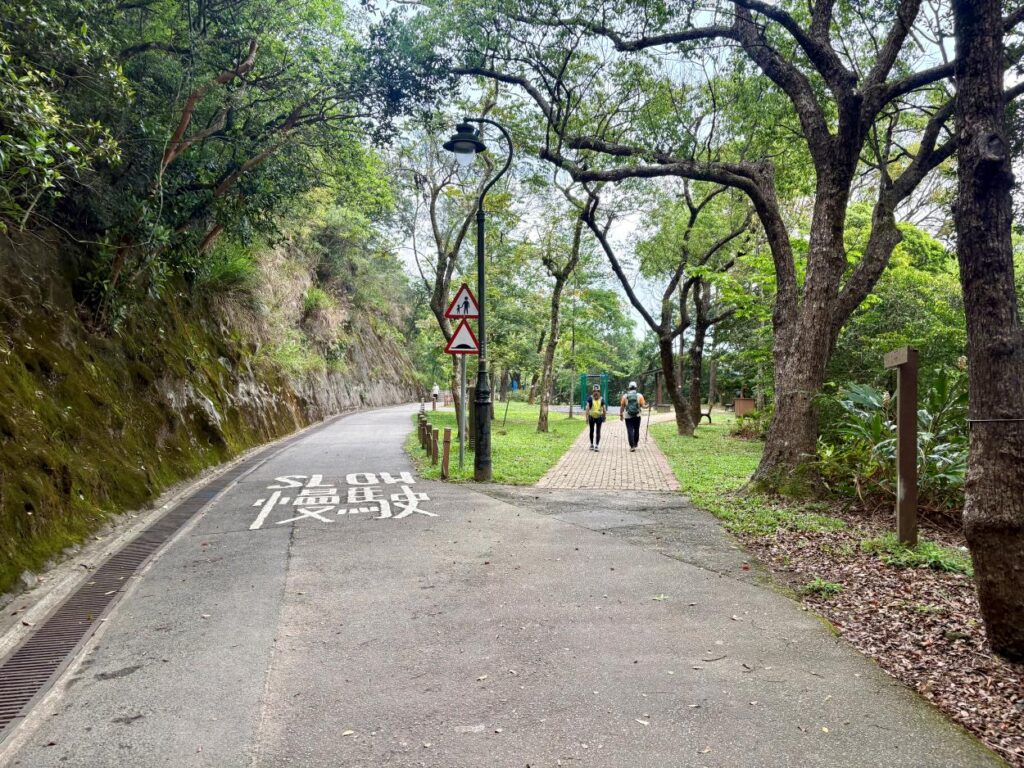
Best For: Shade, greenery, and a softer start to the day
Energy Level: Gentle to moderate, depending on how far you extend it
Good For: Mornings when you want calm without a complicated plan
The Lung Fu Shan Morning Trail is a good choice if you want a sense of escape without travelling far from the city.
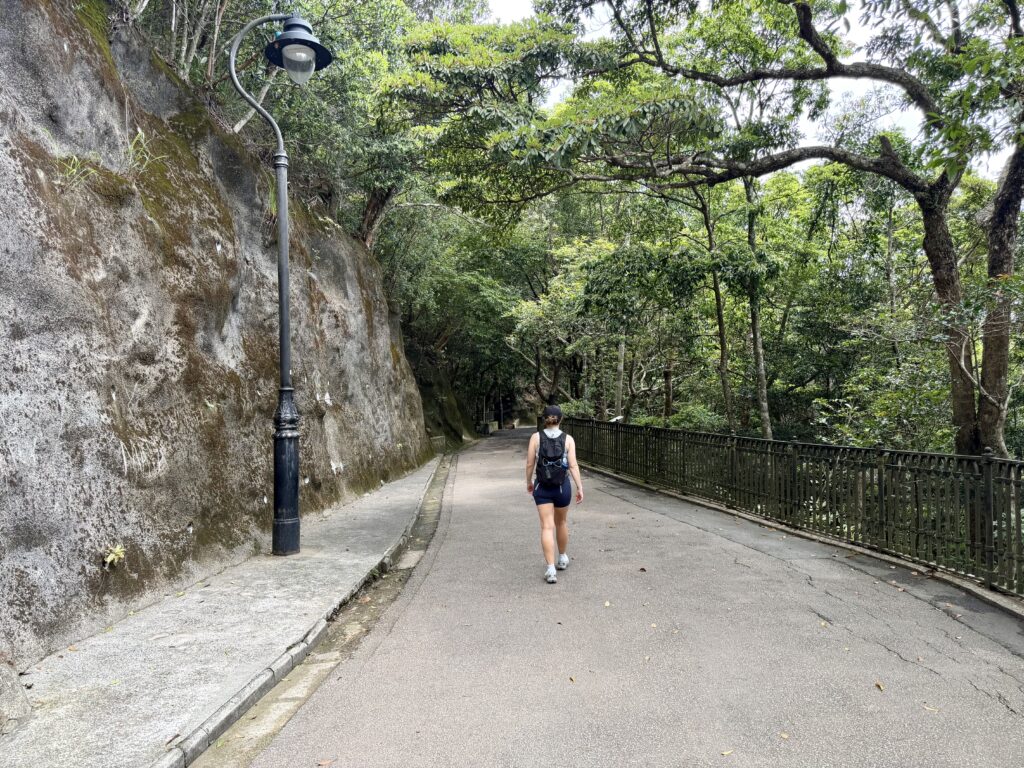
Set on the western slopes of Victoria Peak, this route offers a softer way into hiking in Hong Kong. It is not the most dramatic trail in the city, and that is part of its appeal. Instead of building towards one big summit moment, it gradually moves you from streets and buildings into trees, quiet paths, and hillside air.
It works especially well in the morning, before the heat has fully built and before the day becomes crowded with plans. There is something reassuring about beginning in greenery when you are travelling in a city that can quickly pull you into noise, food decisions, transport links, and bright indoor spaces.
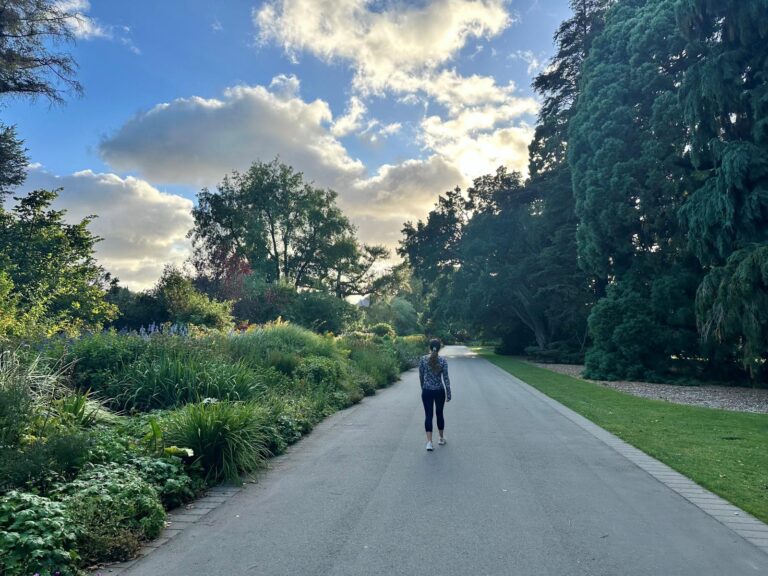
Lung Fu Shan also suits the “forest bathing” side of Hong Kong particularly well. You do not need to do anything elaborate for it to feel restorative; simply walking slowly, noticing birdsong, shade, temperature, and texture can help shift your attention away from city demands and back into your body.
The Lung Fu Shan Morning Trail can also connect with a wider Peak walk, which makes it flexible. You can keep it simple and restorative, or continue towards Victoria Peak and nearby viewpoints if your energy feels steadier once you are moving.
If you continue up to Victoria Peak, the calm does shift quickly back into the busy tourist version of Hong Kong. That said, I had never ended a hike with Shake Shack at the top before, so I was not complaining.
How To Get There By Public Transport: A common option is to take the MTR to HKU Station, then walk towards the trail access around the University of Hong Kong and Pok Fu Lam Road area. Some walkers also start near Pokfield Road Bus Terminus, which is served by local buses. From there, follow signs towards the Morning Trail, Hatton Road, or The Peak, depending on the route you choose.
Why It Helps: Lung Fu Shan is the hike for easing into the day. Choose it when you want shade, greenery, and a gentle transition out of the city rhythm rather than a big physical challenge.
Red Incense Burner Summit
Best For: Harbour views, sunset, and a short but satisfying climb
Energy Level: Short, but with some uphill effort
Good For: Low-capacity days when you still want a view
Red Incense Burner Summit is a good option when you want the feeling of a viewpoint hike without giving over the whole day to a trail.
Located around Braemar Hill, it is one of the most accessible short Hong Kong hikes for wide views over Victoria Harbour. It is especially known for sunset and evening views, but it can also work during the day if you want a quick change of scenery.
The appeal here is visual spaciousness. After time spent inside the city, looking out over the harbour can make everything feel less compressed. You are still close to Hong Kong’s urban energy, but no longer fully inside it. That small amount of distance can be enough to change how the day feels.
Because the route is short, it is useful when you do not have the energy for a bigger walk. You still get movement, air, and a view, but without needing to organise your whole itinerary around a trail.
How To Get There By Public Transport: Travel to the Braemar Hill area. A common approach is to go to the Braemar Hill Mansions bus stop, then walk up Braemar Hill Road towards the trail access near St Joan of Arc Secondary School. From there, the path to Red Incense Burner Summit is short, but check your route before setting off, especially if you are going for sunset or returning after dark.
Why It Helps: Red Incense Burner Summit is the hike for limited energy and quick relief. Choose it when you want open views, a little movement, and a sense of distance from the city without committing to a long route.
Dragon’s Back Hike
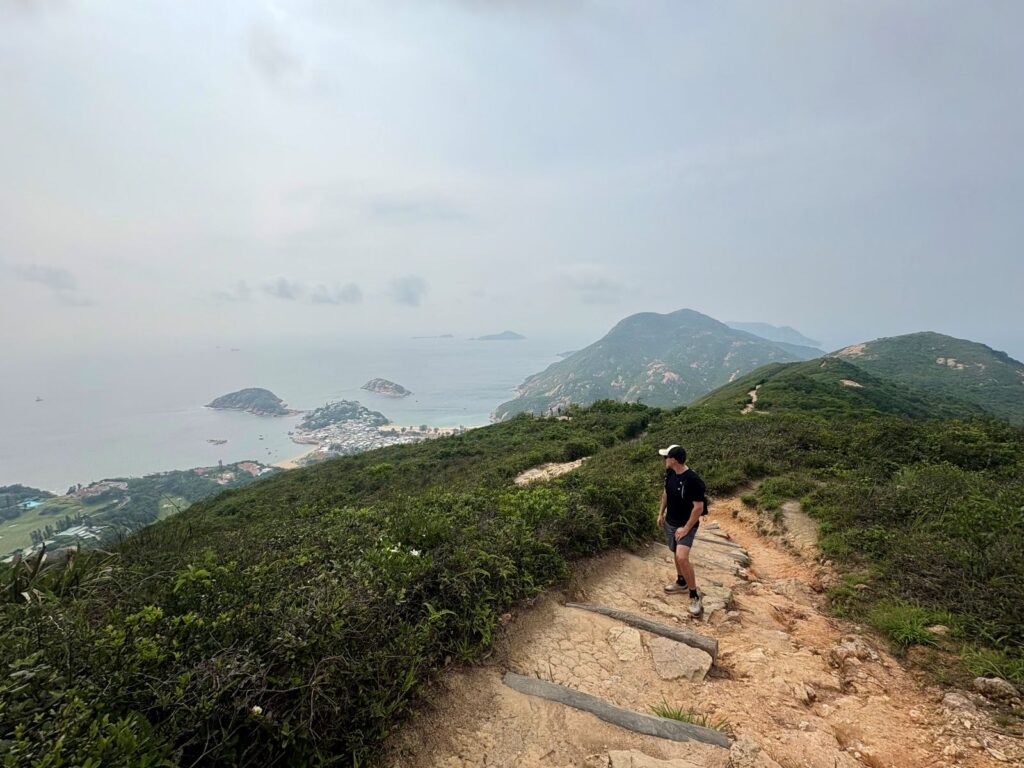
Best For: Open views, coastal air, and feeling reset after the intensity of the city
Energy Level: Moderate, but very worthwhile if you want a proper walk
Good For: Days when you need distance from the city without leaving Hong Kong Island
Dragon’s Back is the Hong Kong hike I would prioritise if you only have time for one. It was a highlight of my travels in Hong Kong. It is also the longest of the three routes in this guide, so take water and snacks with you.
It has many of the qualities that make hiking in Hong Kong so memorable: sea views, ridgeline walking, green hills, and the strange pleasure of feeling far away from the city while still being very much within it. The trail runs through Shek O Country Park and across Shek O Peak, with views over the surrounding countryside and coastline before finishing near Big Wave Bay.
This was the hike that changed how I felt about Hong Kong. Until then, the city had felt stimulating, efficient, humid, and, at times, overwhelming. Dragon’s Back gave me a different way to experience it. The hike felt challenging enough to change my state, but not so demanding that it took over the whole day. By the time the ridgeline opened up, I felt noticeably less caught in the pace of the city.
It is a good choice when you want movement, air, and the satisfying feeling of having used your body well. It works especially well after a few days in busier neighbourhoods, when you are not looking to escape the city completely but want a break from it.
How To Get There By Public Transport: Take the MTR Island Line to Shau Kei Wan Station, then go to the bus terminus and take Citybus route 9 towards Shek O. Get off at To Tei Wan on Shek O Road. The trail starts close to the bus stop, and signs for the Hong Kong Trail lead you uphill towards Dragon’s Back. If you finish near Big Wave Bay, you can return by bus or minibus towards Shau Kei Wan, but check the route on the day as services and waiting times can vary.
Why It Helps: Dragon’s Back is the hike for spaciousness. Choose it when your body wants a proper shift: open air, coastal views, steady movement, and a reminder that Hong Kong is not only crowded streets and vertical skylines.
How To Make Hiking In Hong Kong Feel More Restorative
The way you plan the hike matters almost as much as the route itself. If you turn it into one stop in an overpacked itinerary, it may lose some of the benefit. Let the hike be the anchor of the day, then add something simple around it: a beach stop, a ferry ride, a relaxed lunch, or an early evening plan.
Start earlier than you think. Heat, humidity, and crowds can change the whole experience, and a morning hike often feels calmer than squeezing one into the hottest or busiest part of the day.
Bring more water than feels necessary. Hong Kong hiking trails can look manageable by distance, but humidity changes the effort. The aim is to come back feeling clearer, not dehydrated. I also liked carrying the small Himalayan salt sweets that are easy to find in Hong Kong convenience stores. They were light, easy to pack, and useful when the humidity started to make the walk feel more draining.
Use the hike as a gentle phone boundary. You may need your phone for maps, transport, and safety, but you do not have to keep checking it every few minutes. Take photos, check the route when needed, then let your attention return to the path, the view, your breathing, and the pace of your body. If you need a bit of help to have a digital detox from your phone, you may find our 14 Easy Ways to Reduce Screen Time While Travelling guide helpful.
Plan the ending before you start. A restorative hike is easier to enjoy when you know what happens afterwards. Decide whether you are finishing with a beach, a ferry, a simple meal, or a direct route back to your accommodation. Removing that decision from the end of the walk can make the whole experience feel calmer.
What To Know Before Hiking In Hong Kong
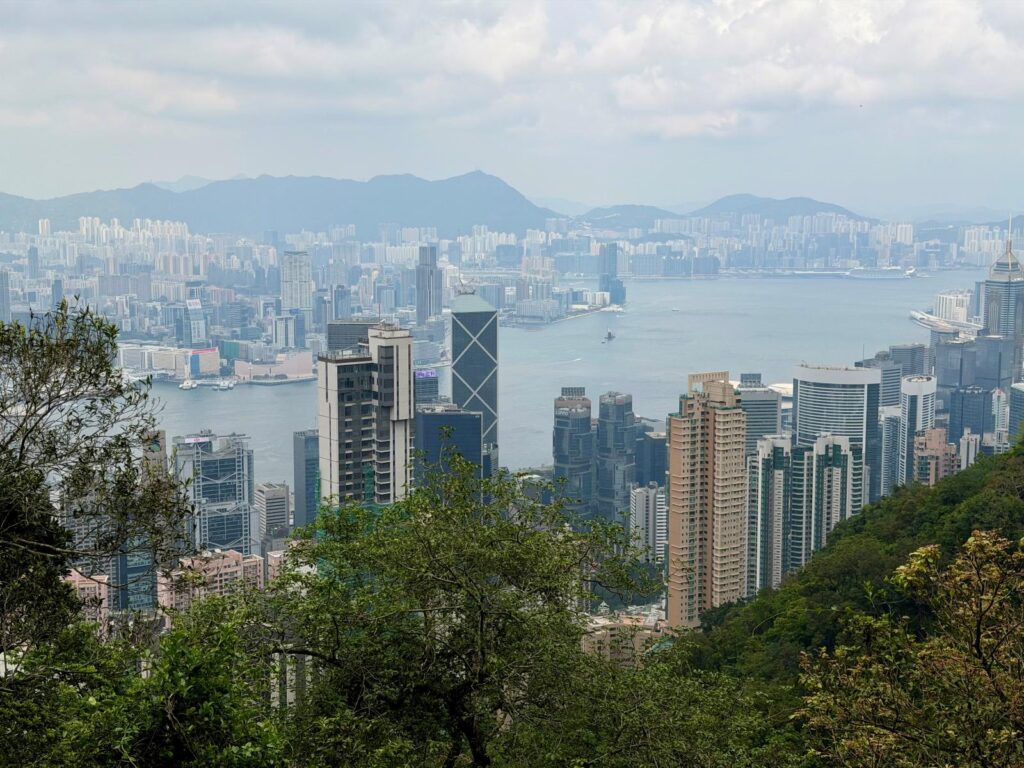
Hong Kong is very hikeable, but it is not a place to be casual about weather or heat. Check the forecast before setting out, avoid exposed trails in extreme heat, and do not underestimate humidity.
Wear proper shoes, carry water, and choose a route that matches your actual energy rather than your idealised travel self. It is easy to plan as though you will feel refreshed, capable, and up for anything every day of a trip. In reality, sleep, food, jet lag, heat, and overstimulation can all change what feels good once you are there.
It is also worth checking current trail conditions before you go, especially after heavy rain or storms. For final planning, use official tourism or country park information rather than relying only on personal blogs. Stay on maintained paths, avoid shortcuts or blocked-off areas, and do not push on if heat, rain, or fatigue starts to change how safe the route feels.
Most importantly, give yourself permission to choose the easier version. You do not need to complete the hardest trail for hiking to count. A gentle walk with a good view can be exactly what your body needs.
FAQ: Hiking In Hong Kong
Is Hiking In Hong Kong Suitable For Beginners?
Yes, as long as you choose the right route. Some Hong Kong hiking trails are steep, exposed, or physically demanding, but others are much gentler. If you want views without committing to a longer hike, the Lung Fu Shan Morning Trail is a good place to start.
What Is The Best Hike In Hong Kong For First-Time Visitors?
Dragon’s Back is a strong choice for first-time visitors because it gives you sea views, ridgeline walking, and a clear sense of contrast with the city. The trail itself is also in very good condition. If you want something easier and more accessible, the Lung Fu Shan Morning Trail may be a better fit.
Are Hong Kong Hikes Good For A Digital Detox Day?
They can be. A hike gives you a natural reason to step away from constant scrolling, route-checking, and city stimulation. You will still need your phone for maps and safety, but you can create phone-free sections where your attention stays with the trail, the view, and the rhythm of walking.
When Is The Best Time For Hiking In Hong Kong?
Cooler, clearer days are usually more comfortable than hot and humid ones. Morning is often better than the middle of the day, especially on exposed routes. Always check the weather before setting out, particularly during periods of heavy rain, storms, or extreme heat.
Hong Kong Is Intense, But It Is Easy To Escape To Nature For A Rest
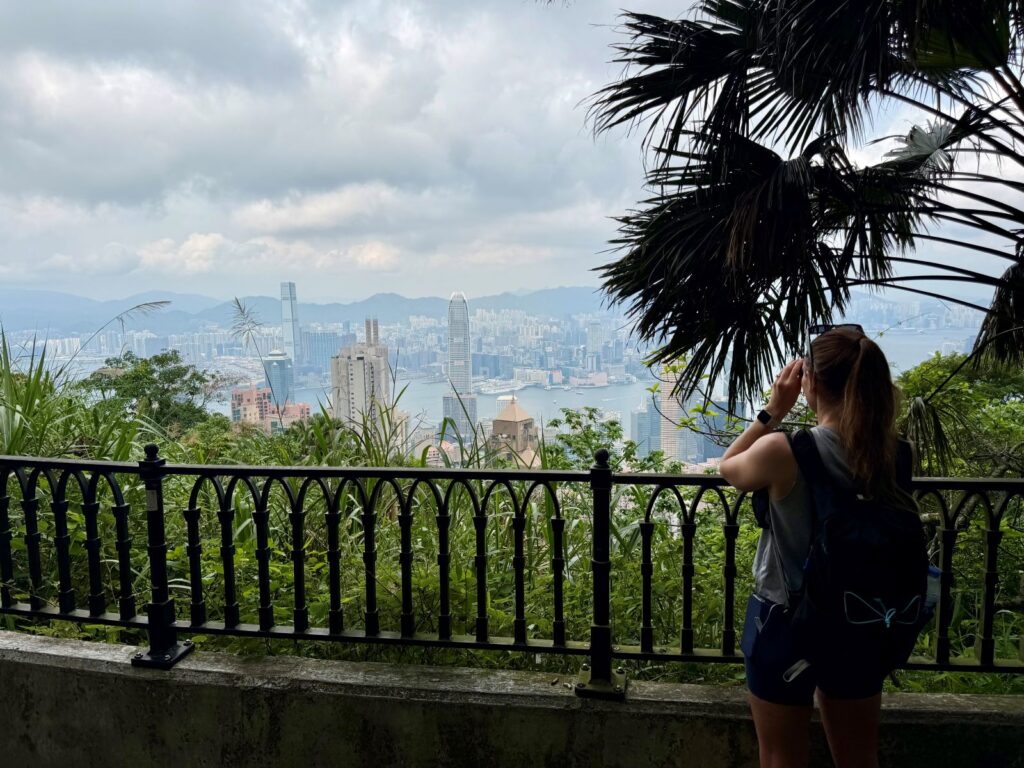
Hong Kong can feel intense, especially if you are sensitive to noise, crowds, humidity, or fast-moving urban environments. But that intensity is not the whole story.
One of the most balancing things about the city is how quickly it can shift. You can move from street-level stimulation to ridgelines, water, green hills, and open views in the same day. That makes hiking in Hong Kong more than a scenic activity, it can change the pace of your trip.
Dragon’s Back is the hike I would most strongly recommend if you want the kind of route that alters your impression of a destination. Lung Fu Shan Morning Trail is better when you want a gentler start. Red Incense Burner Summit is ideal when you have limited energy but still need a little distance and air.
For me, hiking made Hong Kong feel less overwhelming and more complete. It reminded me that even in an intense city, there can still be room to recover, and it brought some much-needed balance to the trip.
This article is for general informational purposes only and is not intended to replace personalised medical, psychological, or professional advice.