How To Use Public Transport In Hong Kong (And Whether You Need An Octopus Card)
Hong Kong is said to have one of the best public transport systems in the world. It is fast, reliable, clean, and surprisingly affordable. But if you are arriving tired, jet-lagged, anxious, or unfamiliar with the city, using the MTR, buses, ferries, and trams can feel intense at first.
The trains arrive quickly, stations stretch across multiple underground levels, and it can get very crowded. Even when the system itself is extremely organised, the pace of it can feel mentally demanding, particularly when you are already tired or overstimulated.
What catches many travellers off guard is that public transport in Hong Kong does not ease you in gently. The city expects movement and quick decisions almost immediately, which can make even a well-designed system feel psychologically draining during the first few days.
The reassuring part is that once you understand the basics, getting around Hong Kong becomes far easier than relying on taxis or constantly walking in the humidity. The key is learning how to use public transport in a way that supports your energy instead of draining it.
Table of Contents
If you are planning your first trip to the city, you can also see our homepage for more evidence-informed travel wellbeing guides designed to help travel feel calmer, easier, and less overwhelming.
Do You Need An Octopus Card For Public Transport In Hong Kong?
Technically, no. Realistically, yes.
If you are wondering whether you need an Octopus card to use trains and buses in Hong Kong, the answer is that it makes the entire experience much easier.
The Octopus card works across the MTR, public buses, minibuses, ferries, Hong Kong trams, airport transport, convenience stores, supermarkets, and many smaller purchases throughout the city. Instead of buying individual tickets every time you travel, you simply tap in and out.
That sounds small, but psychologically it makes a major difference in Hong Kong. Not having to repeatedly buy tickets makes moving around the city feel much simpler, especially when you are already dealing with noise, crowds, navigation, and heat.
You can buy a physical Octopus card at Hong Kong International Airport, MTR stations, and convenience stores including 7-Eleven. However, if you already use a digital wallet on your phone, you’ll probably find it easiest to use the mobile Octopus card.
How To Get The Octopus Digital Card?
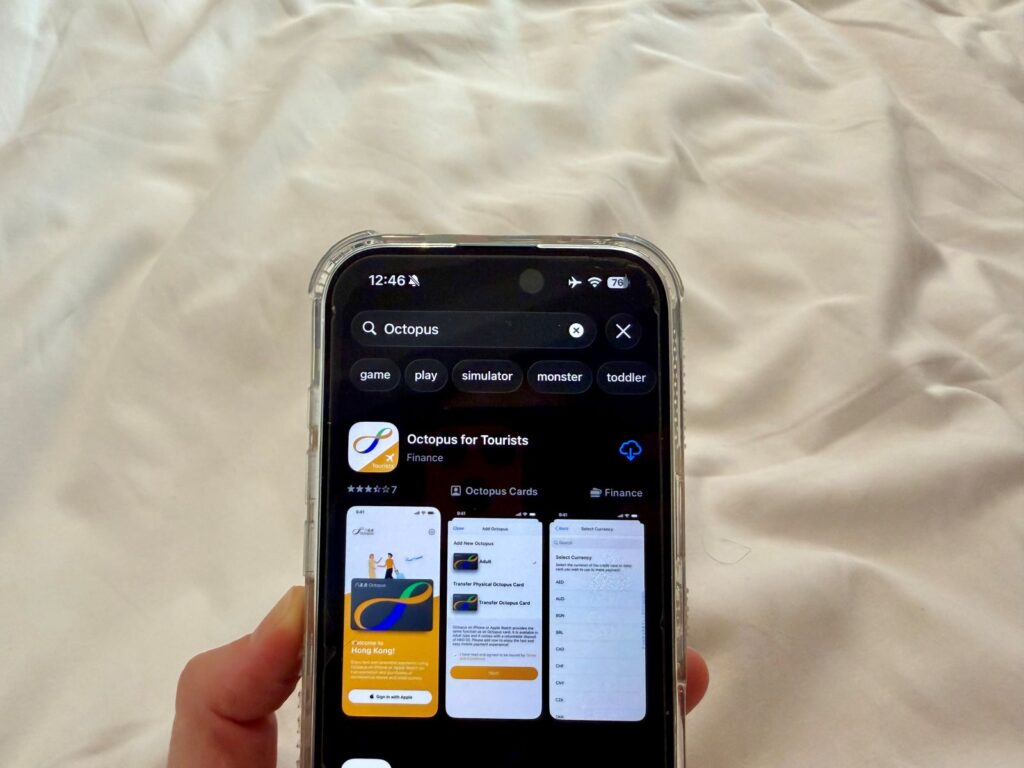
Some travellers avoid downloading transport apps abroad because they assume that you will need a local phone number or Hong Kong eSIM. Thankfully, getting the Octopus app is much easier than that. I only used Wi-Fi during my trip and had no issues setting it up.
To get started, download the Octopus for Tourists App before or after arriving in Hong Kong. Once you open the app, you create an account, and add money using your bank card. On supported devices, you can then connect the card to your phone wallet, such as Apple Pay.
After that, you simply tap your phone on trains, buses, ferries, and trams, much like you would using a physical Octopus card.
If you plan to use public transport in Hong Kong more than a few times, getting an Octopus card immediately is one of the easiest ways to make the city feel simpler.
How To Use The MTR In Hong Kong
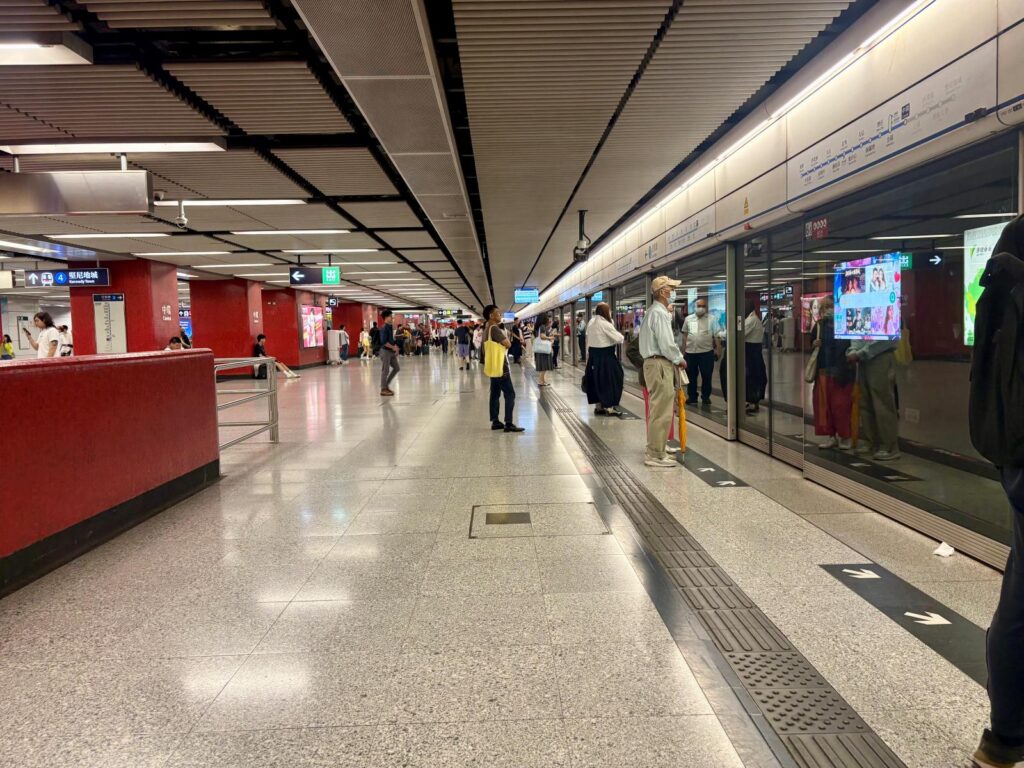
The MTR is the fastest and easiest way to get around Hong Kong, connecting major neighbourhoods including Central, Tsim Sha Tsui, Mong Kok, Causeway Bay, Wan Chai, Admiralty, Kowloon, Disneyland, and the main airport connection areas.
Using the MTR is straightforward once you understand how it works. The trains themselves are easy to use, the harder part is navigating the stations. Large interchanges can contain dozens of exits, underground shopping areas, and multiple train lines layered vertically.
Inside stations, it helps to focus only on the next step instead of trying to process everything at once. Following the colour-coded line signs, checking the final station name for your train direction, and moving to the side if you need to stop and think makes the experience far easier than trying to navigate while walking with the crowd.
You do not need to move at the same pace as commuters. Most navigation mistakes in Hong Kong are minor and fixable within minutes.
If you don’t speak Cantonese it is also okay, English translation is provided throughout the MTR system.
Using Buses In Hong Kong Without Feeling Confused
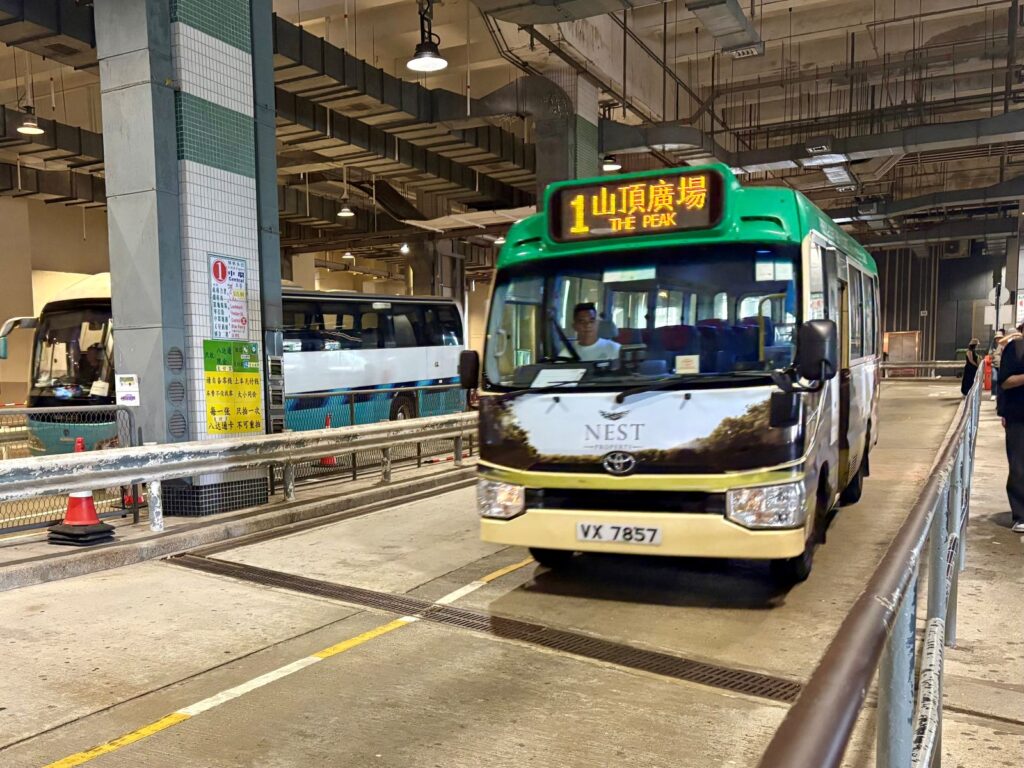
Hong Kong buses can initially feel harder than the MTR because the routes are less visually obvious and there is slightly more uncertainty involved. But once you get used to them, buses often become one of the best ways to see the city, particularly compared to spending entire days underground on trains.
Google Maps works very well for Hong Kong buses, most major bus routes display stops in both English and Chinese, and fares are usually paid when boarding by tapping your Octopus card once as you enter.
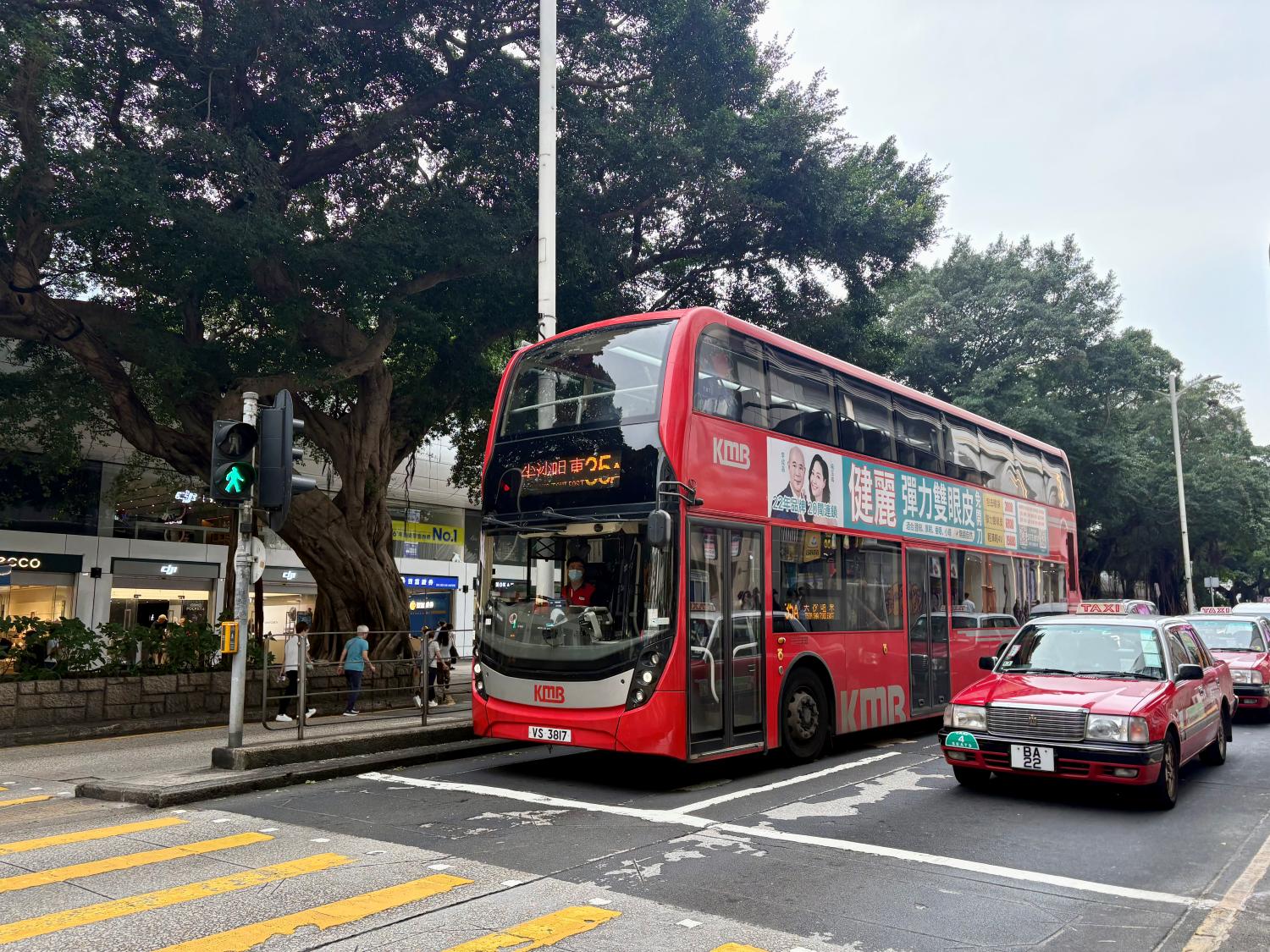
The double-decker buses are worth using at least once. If you have used London double-deckers before, you might expect a slower pace because of traffic, but buses in Hong Kong often feel fast, especially winding through hills or on the highway. It can feel slightly intimidating at first. During our trip, the very front seats upstairs were often available, and sitting there ended up being one of the cheapest and easiest ways to see great views of the city.
The minibuses are slightly different again. On some routes, you need to call out to the driver when you want to get off, which can feel stressful the first time you do it. But if you tell the driver where you are going when you board, they are usually helpful, and other passengers often step in too if they can see you are unsure.
Overall, we ended up really liking the buses in Hong Kong once we understood how they worked. They felt less mentally draining than constantly navigating large underground MTR stations, and they gave us a much better sense of the city above ground.
Do You Need To Wear Seatbelts On Hong Kong Buses?
I have not seen seatbelts on public buses in many other places, but in Hong Kong they are now common on many buses, particularly airport routes and newer double-deckers. As of 2026, passengers are legally required to wear one whenever it is available at their seat, and fines can apply for not complying.
After using the buses ourselves, this made sense. Some buses move much faster than people expect, especially on highways and hillier roads, and sitting upstairs at the front of a double-decker can feel surprisingly intense at times.
Once we realised both the legal requirement and the safety aspect, we wore them automatically whenever they were available, and this actually made me feel a bit calmer. It is a small detail, but worth knowing before arriving because it is very different from what many travellers are used to in other cities.
The Best Public Transport Options In Hong Kong If You Feel Overwhelmed
Not every transport option creates the same experience. If you are overstimulated, exhausted, or trying to move through Hong Kong more slowly, some forms of transport feel noticeably gentler.
Take The Star Ferry When You Need A Reset
The Star Ferry is one of the calmest ways to travel between Hong Kong Island and Kowloon. Unlike the MTR, the ferry naturally slows the pace down, while the harbour creates visual openness after crowded streets and underground stations.
Even short crossings can feel calming after a busy day in Central or Tsim Sha Tsui. It is also one of the cheapest and most scenic transport experiences in the city.
Use Hong Kong Trams For Slower, Easier Travel
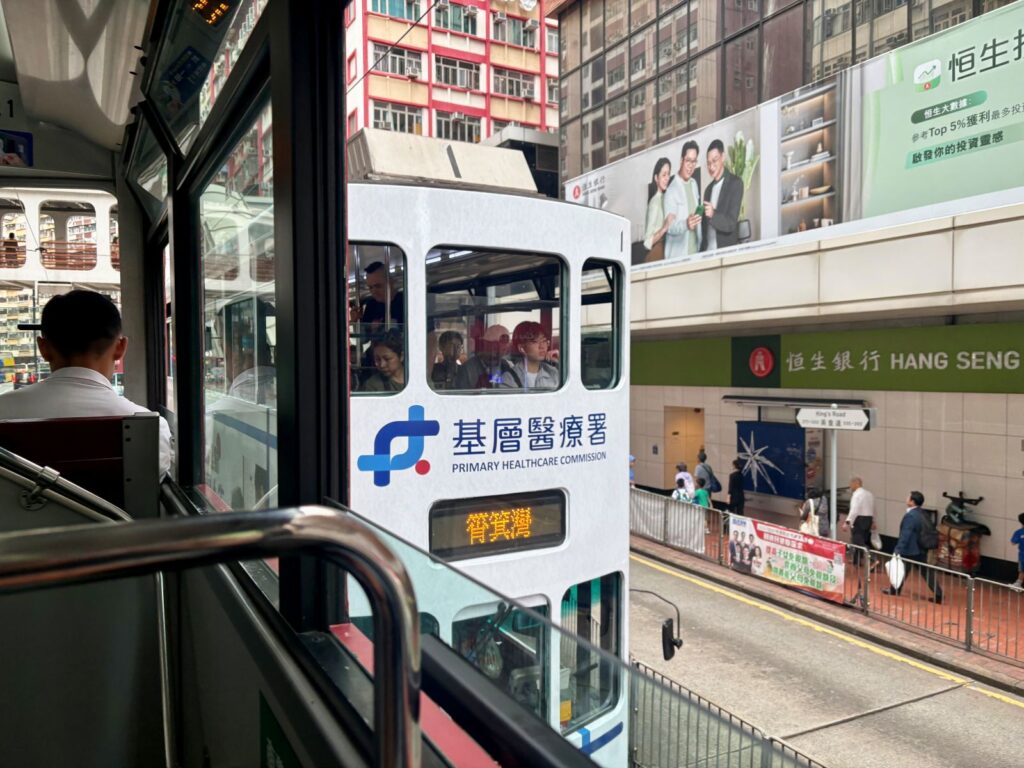
Hong Kong Island’s trams are slower than the MTR, but I found they feel less intense. You stay above ground, you can visually track where you are, and the slower pace reduces the constant decision-making that underground transport sometimes creates.
During quieter hours, sitting upstairs by the window can feel genuinely restorative compared to repeated underground transfers. If your nervous system already feels overloaded, trams often feel easier than another crowded interchange station.
Avoid Hong Kong Rush Hour If You Are Jet-Lagged Or Sensitive To Crowds
Hong Kong public transport changes noticeably during peak commuter hours. If you are already tired, anxious, heat-exhausted, or overstimulated, try to avoid roughly 8:00am to 9:30am and 5:30pm to 7:00pm where possible.
Stations like Central, Admiralty, Mong Kok, and Tsim Sha Tsui become significantly denser during these periods. Outside rush hour, the system often feels organised and efficient, while commuter peaks can feel fast-moving and physically compressed.
That said, Hong Kong is an extremely densely populated city, and even quieter periods can still feel busy compared to what many travellers are used to elsewhere. The MTR rarely feels empty, even in the middle of the day, so it helps to adjust expectations slightly before arriving.
There is no advantage in forcing yourself through maximum-density transport when you are already overwhelmed. Sometimes the better decision is simply sitting somewhere air-conditioned for 30 minutes and travelling later.
Is Hong Kong Walkable?
Yes, Hong Kong is far more walkable than many people expect, particularly when the weather is pleasant.
Neighbourhoods like Central, Sheung Wan, Wan Chai, Tsim Sha Tsui, and Mong Kok are densely packed, so once you arrive somewhere, you can often spend hours exploring on foot without needing more transport. Some of our favourite parts of Hong Kong came from simply wandering between cafés, markets, side streets, and waterfront areas rather than constantly taking the MTR between stops. Walking also changes the way you experience the city, slowing your attention enough to notice details you would otherwise move straight past.
That said, Hong Kong is not always relaxing to walk around in the way flatter European cities can feel. The city is vertical, fast-moving, and full of hills, staircases, escalators, footbridges, and underground walkways. During summer, the heat and humidity can also make short distances feel surprisingly tiring.
In cooler months though, Hong Kong becomes a genuinely enjoyable city to walk around. Early mornings and evenings felt especially nice, both because the temperatures were more manageable and because the city takes on a completely different atmosphere once the lights come on. Walking through Central or along the Tsim Sha Tsui waterfront at night ended up being one of our favourite parts of the trip.
We found the best balance was combining walking with public transport rather than relying entirely on one or the other. Taking the MTR or bus into a neighbourhood, then exploring slowly on foot, felt much less exhausting than trying to optimise every route across the city.
How To Get From Hong Kong Airport To The City
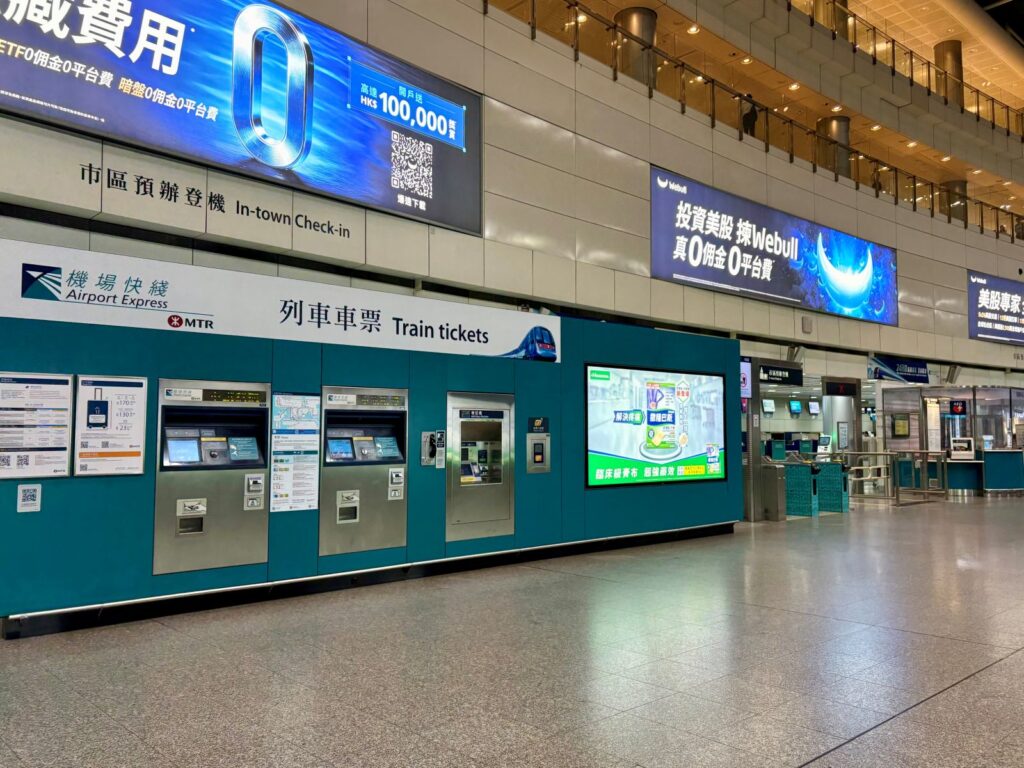
Getting from Hong Kong Airport to the city is much easier than it first looks. After a long flight, I expected it to feel chaotic, but Hong Kong Airport is extremely well organised and transport signs are very clear once you arrive.
The fastest option is the Airport Express train, which connects Hong Kong International Airport with Kowloon and Hong Kong stations in around 25 minutes. The trains are clean, quiet, air-conditioned, and designed with luggage space in mind, so the journey feels very straightforward even if you are arriving tired or jet-lagged. If you are staying around Central or Hong Kong Island, this is often the simplest option.
The public buses are slower, but they are significantly cheaper and surprisingly easy to use. Many routes go directly into major areas including Central, Tsim Sha Tsui, Mong Kok, and Wan Chai. Google Maps generally works well for airport bus routes, and most stops and announcements are displayed in English as well as Chinese.
We actually enjoyed the airport buses more than expected because they give you your first proper view of Hong Kong. Sitting upstairs on a double-decker bus watching the city gradually appear was a great first introduction to the city.
Both the train and buses can be paid for using an Octopus card, including the digital version on your phone, which makes the entire process feel very seamless once you land.
Using Public Transport To Get From Hong Kong To Macau
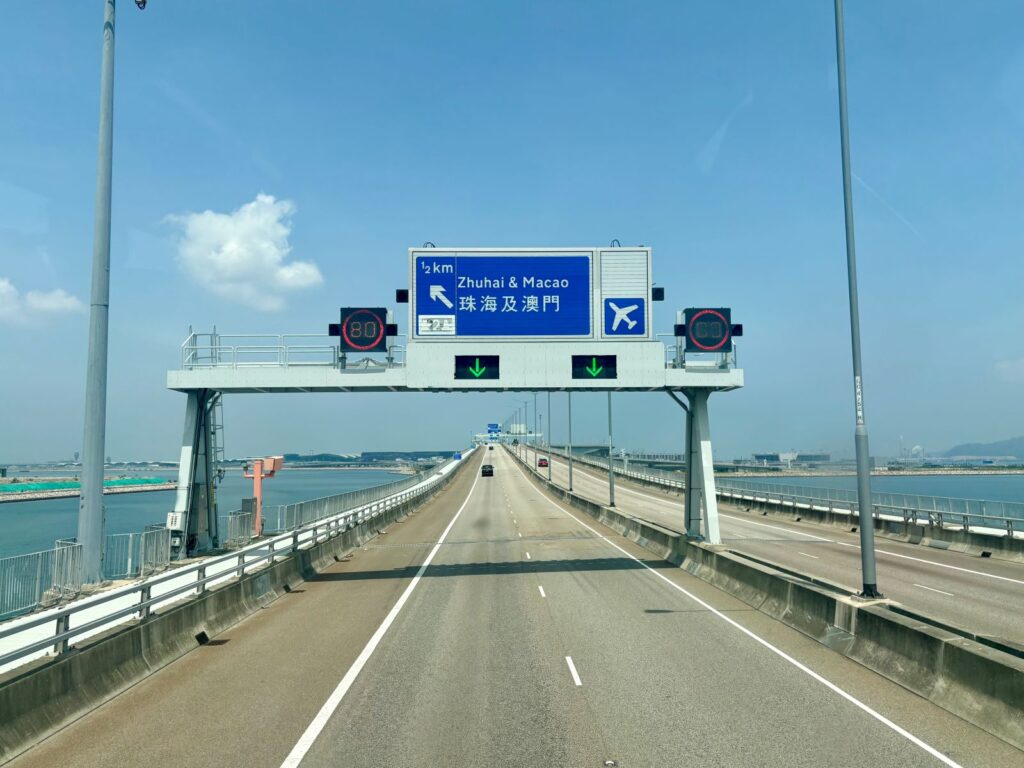
You can either take the ferry or the bus from Hong Kong to Macau. Many people choose the ferry because it is slightly easier to reach if you are staying centrally, particularly around Hong Kong Island or Tsim Sha Tsui. However, we chose the bus because I get seasick, and a lot of the ferry reviews mentioned that crossings can feel rough depending on the weather.
Ferries run regularly from Hong Kong Macau Ferry Terminal in Sheung Wan and the China Ferry Terminal in Tsim Sha Tsui, with journeys usually taking around 45 minutes to an hour. The terminals are easy to reach using the MTR, and tickets can either be booked online in advance or bought on the day.
There is also the Hong Kong–Zhuhai–Macau Bridge shuttle bus, often called the Golden Bus, which is usually cheaper than the ferry and runs very frequently throughout the day. It does involve slightly more transitions, including getting to the bridge terminal and passing through immigration checkpoints, so on paper it can sound more complicated.
In reality, we found it very straightforward. We split our stay between four days on Hong Kong Island and three days at Novotel Citygate near the airport, so getting to the Golden Bus terminal was simple for us. The bus ride itself was smooth, immigration felt surprisingly seamless, and I would genuinely recommend it for anyone who gets motion sickness or feels nervous about ferries.
Whichever option you choose, remember that Macau has its own immigration controls, so you will need your passport and should allow extra time for border checks.
Once you arrive in Macau, public buses are inexpensive and easy to use, while many major hotels and casinos also operate free shuttle buses from the ferry terminal and bridge arrivals area.
Why Hong Kong Transport Feels More Intense Than Singapore
Many travellers notice that Hong Kong transport feels more intense than Singapore’s MRT system. Singapore’s stations often feel more spacious and slower-paced, while Hong Kong’s transport system is faster, denser, and built around constant movement.
Most people are not overwhelmed because the system is confusing. It is usually because the city moves very fast and there is a lot happening around you. Crowded platforms, bright signage, fast escalators, compressed personal space, people constantly moving in different directions, and the feeling of needing to keep up can all become mentally tiring surprisingly quickly.
Once I stopped trying to match the speed of everyone around me, Hong Kong became much easier to navigate.
Tips For Using Public Transport In Hong Kong More Comfortably
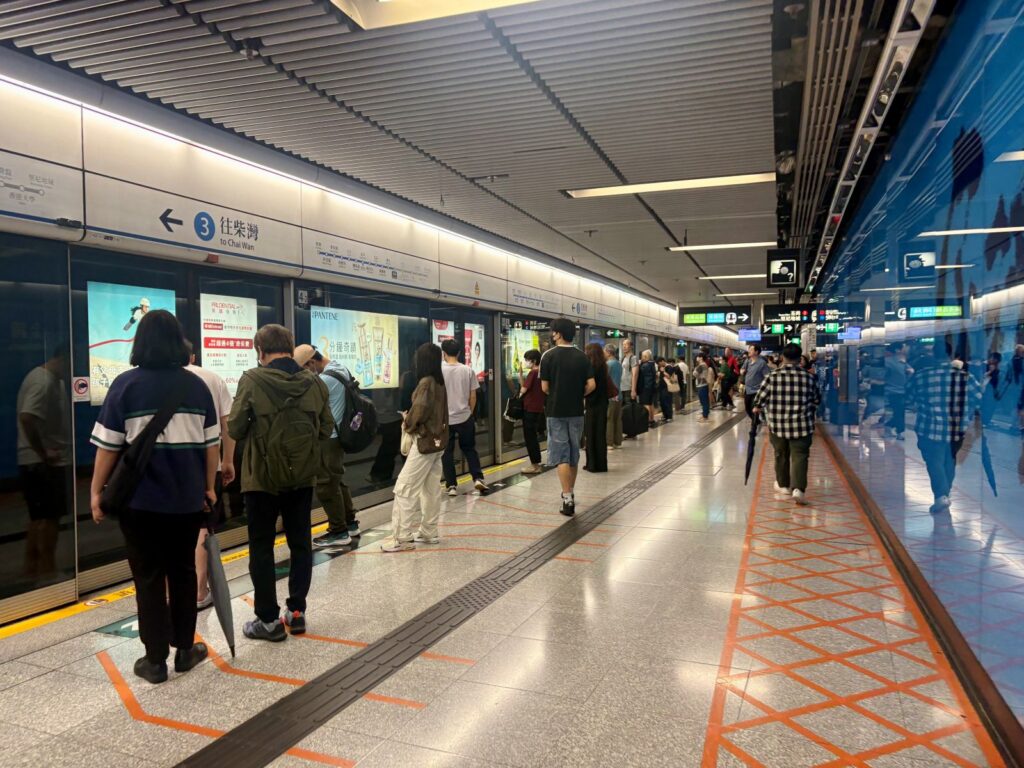
Small changes can make Hong Kong transport feel much easier. Getting an Octopus card immediately, choosing direct routes instead of over-optimising, avoiding rush hour where possible, and using ferries or trams when your energy is low can all make the city feel significantly easier.
It also helps to expect occasional wrong exits without panicking, pause before navigating large stations, and sometimes walk slightly farther if it means avoiding multiple train transfers.
Hong Kong’s transport system is not actually difficult. It is simply intense at first. Once you stop trying to move at the city’s pace, public transport becomes one of the easiest parts of being there.
If you are planning more city trips, you can also read our other guides on using public transport around the world, including trains, metros, ferries, and airport transfers that feel manageable even when travelling feels overstimulating.
This article is for general informational purposes only and is not intended to replace personalised medical, psychological, or professional advice.