Is Singapore Good for Solo Travel? Why It’s One of the Easiest Places to Start
The hardest part of travelling for the first time is not the flight, or even the planning. It’s the small decisions that start as soon as you land and don’t really stop.
You begin asking yourself where to go first, whether you are on the right train, what you should eat, and whether you are doing things properly. That background noise builds quickly, especially if you are travelling alone, and it is often what makes a trip feel overwhelming.
Singapore feels different. It’s one of the few places where things feel simpler almost straight away. You still feel like you have travelled somewhere new, but without the sense that you are constantly catching up or trying to figure things out as you go.
If you are planning your first trip abroad, or your first solo trip, it is difficult to find a destination that makes things feel this straightforward. For many people wondering “is Singapore good for solo travel,” this is where it starts to stand out.
Table of Contents
If you’re trying to travel in a way that feels calmer and easier to manage, that’s exactly what we explore more at Nomadic Balance.
Is Singapore Good for Solo Travel?
Singapore is one of the easiest places in the world to travel for the first time or on your own because it takes away a lot of the usual stress, especially around safety, navigation, and figuring things out on your own.
What makes Singapore stand out is not just that it is easy, but that the ease shows up immediately. From the moment you arrive, things feel clear, structured, and manageable in a way that allows you to settle quickly instead of adjusting slowly over several days. If you are asking yourself whether Singapore is good for solo travel, this immediate clarity is a large part of the answer..
Why Singapore Is So Easy for Solo Travel
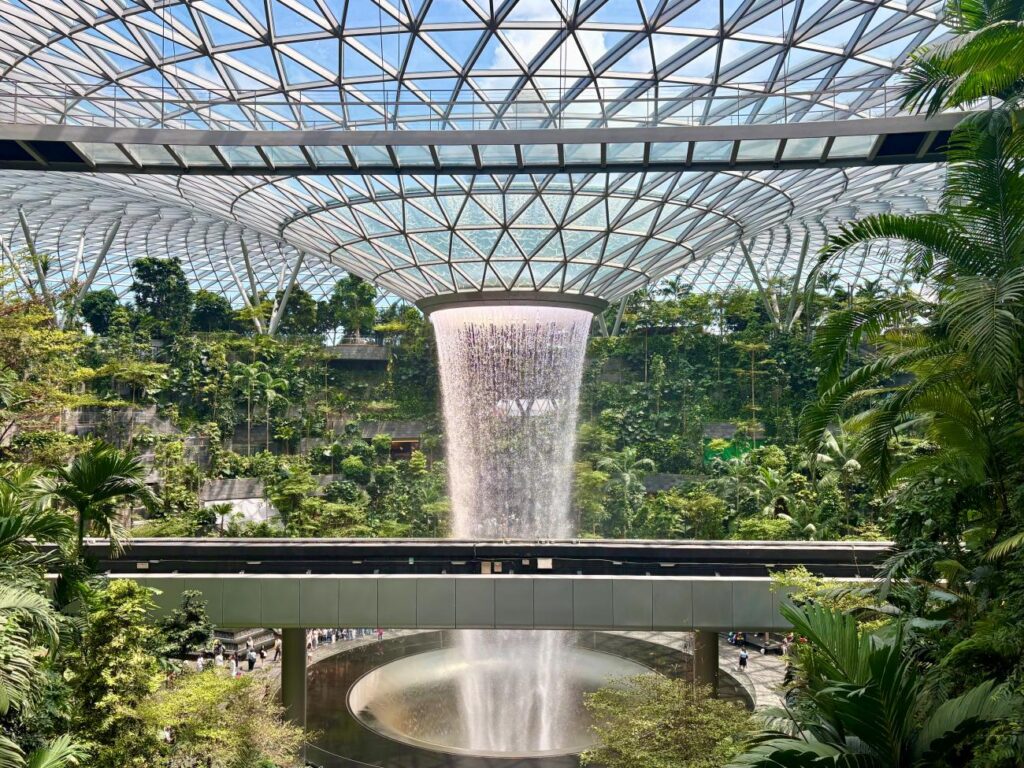
Some destinations take time to settle into, but Singapore does not really have that adjustment period (apart from the heat).
From the award winning airport you land at and onwards, everything is clear. Signs are easy to follow, systems are consistent, and English is widely spoken. You do not spend your first day trying to decode how things work. You simply move through them.
It sounds small, but it makes a big difference once you’re there. When you are not translating menus, second-guessing directions, or worrying about making mistakes, you’re not using your energy figuring things out, so you notice more of where you are. You notice more, you feel calmer, and you are not rushing just to keep up.
It is one of the few places where you can arrive tired and it’s possible to feel oriented quite quickly, even on your first day
Experiencing Culture in Singapore as a Solo Traveller (Without Feeling Overwhelmed)
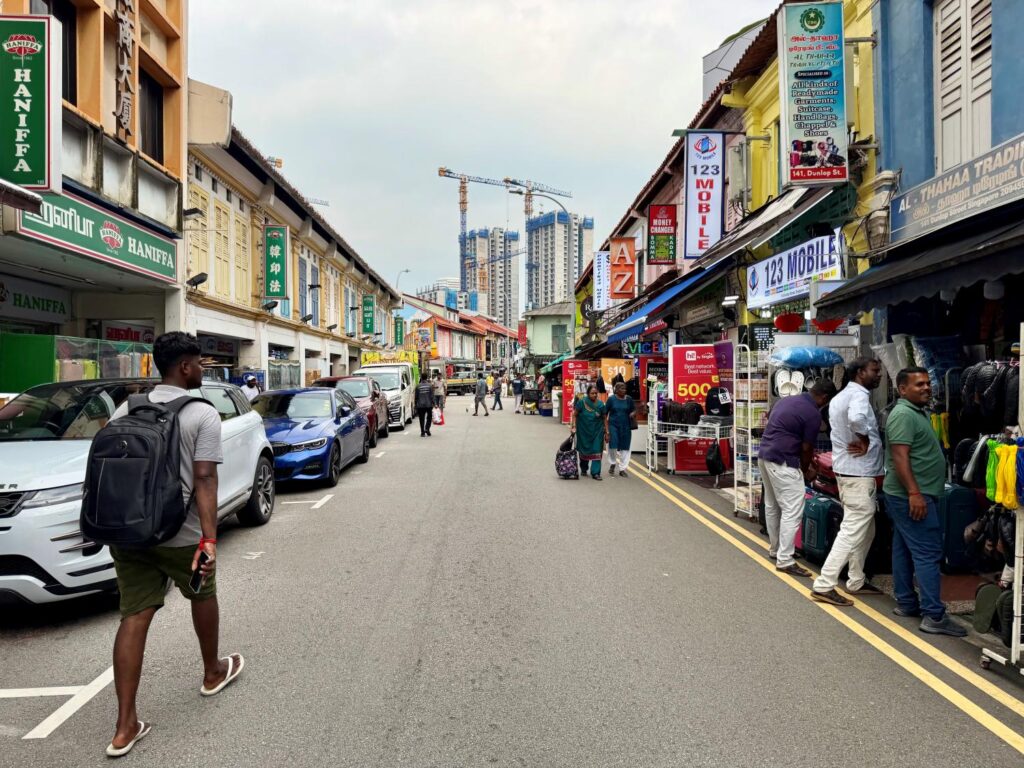
Singapore is often described as a mix of cultures, but what stands out more is how easy that mix feels when you are there.
You will notice the differences across Chinese, Malay, and Indian influences in food, architecture, and neighbourhoods, but they are presented in a way that does not overwhelm you. The experience feels like a gradual shift rather than a sudden adjustment.
You can spend the morning walking through Chinatown, the afternoon in Kampong Glam, and the evening in Little India, and each place feels distinct without being difficult to navigate. The structure of the city remains familiar even as the details change.
For a first-time traveller, that balance is important. You experience something new without needing to constantly adapt to it.
Why Singapore Is One of the Safest Places to Travel Alone
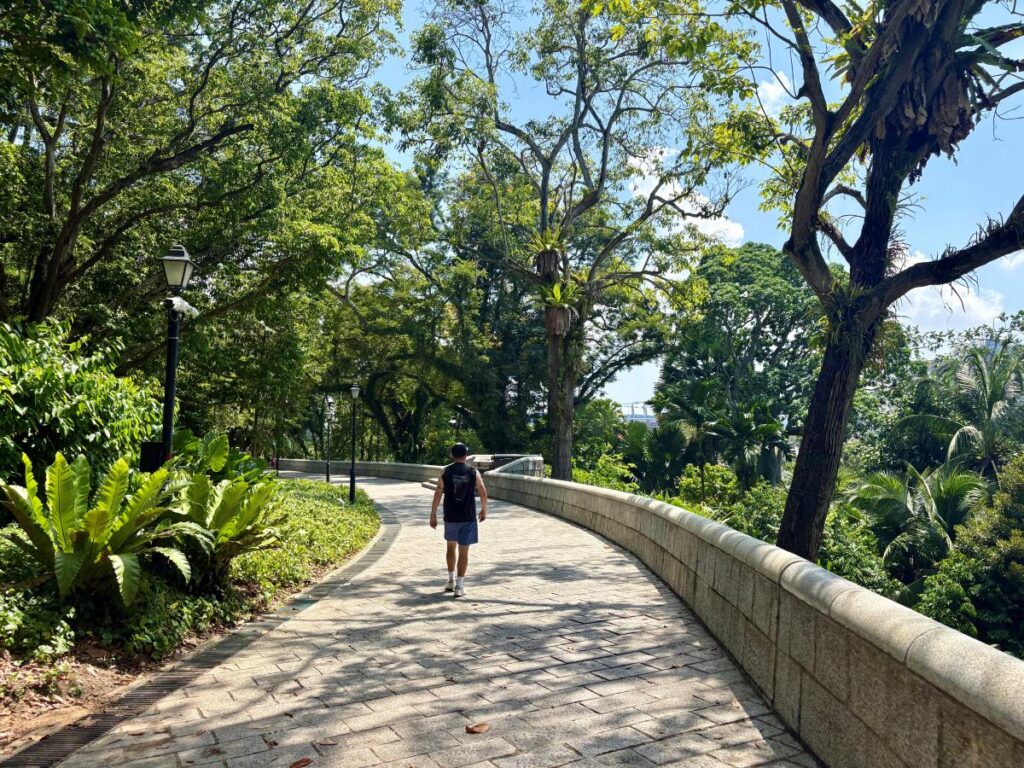
Safety is often mentioned in discussions about Singapore, but the real impact is not the statistic itself. It is how that safety changes your behaviour.
You do not find yourself constantly thinking about where you are walking or whether it is safe to take your phone out. You can walk around in the evening as a solo female traveller and not be looking over your shoulder every second.
That reduced level of vigilance has a noticeable effect. Solo travel feels lighter because you are not carrying the same background tension. You are able to be more present, whether you are walking through a neighbourhood, sitting down to eat, or deciding what to do next.
If you have never travelled alone before, this is actually quite rare, and although you can travel many places safely on your own, Singapore is one of the places I actually feel truly safe.
Eating in Singapore as a Solo Traveller (Without Stress)
Food can be one of the things people overthink most when they travel somewhere new, particularly if you are used to knowing exactly what you are ordering at home. Singapore removes much of that pressure.
Hawker centres play a large role in this. They are open, structured spaces where you can see what is available before choosing. You are not committing to a restaurant without knowing what to expect. Instead, you can walk around, take your time, and choose something that feels manageable. As a solo traveller, it also feels nice to eat here as many other people are solo too (getting lunch or dinner), opposed to restaurants where I usually feel a bit lonely watching other couples or groups eating together while I’m alone.
There is also a wide range of familiarity. If you want to try something new, there are plenty of options. If you prefer to keep things simple, there are always more recognisable choices nearby (McDonalds and 7-Eleven are usually close by).
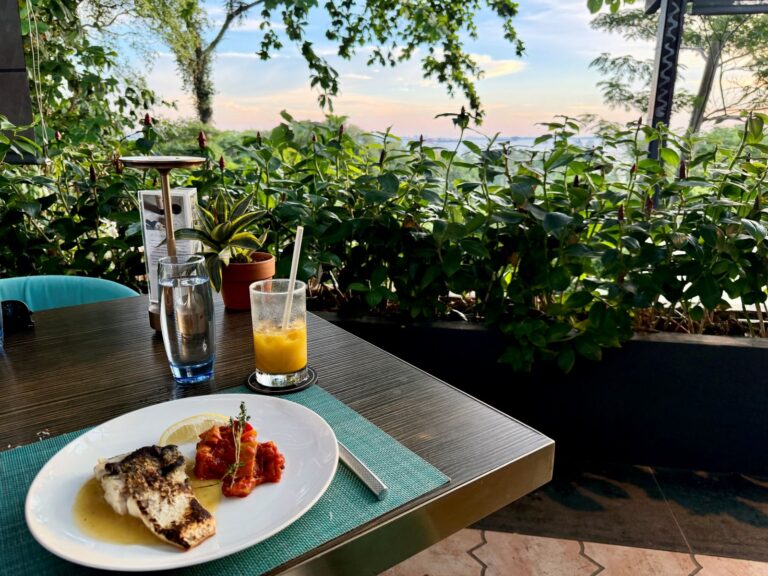
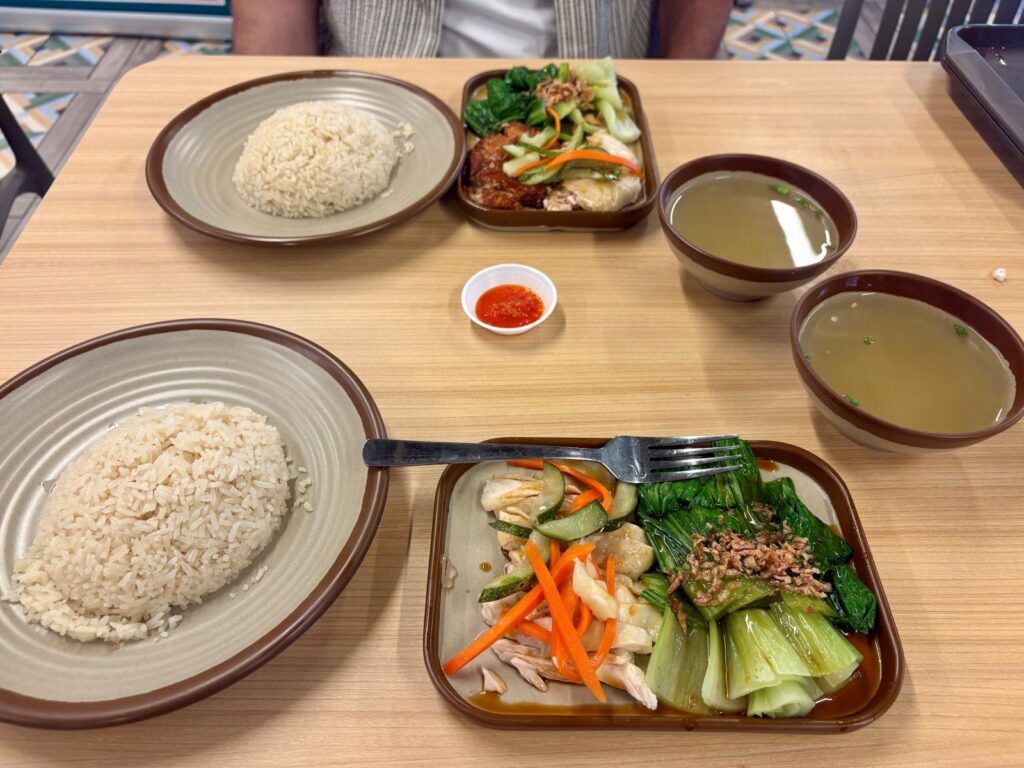
One of my favourite meals in Singapore is Hainanese Chicken Rice. It’s simple, chicken on rice, and is available at most hawker centres or malls, and is budget friendly. It’s my go to over there when I’m not feeling adventurous and want something close to home comfort food.
I found that it was one of the few places where I could try something different without overthinking it, while still knowing I would eat well even if I stayed within what felt familiar.
Getting Around Singapore Easily as a Solo Traveller
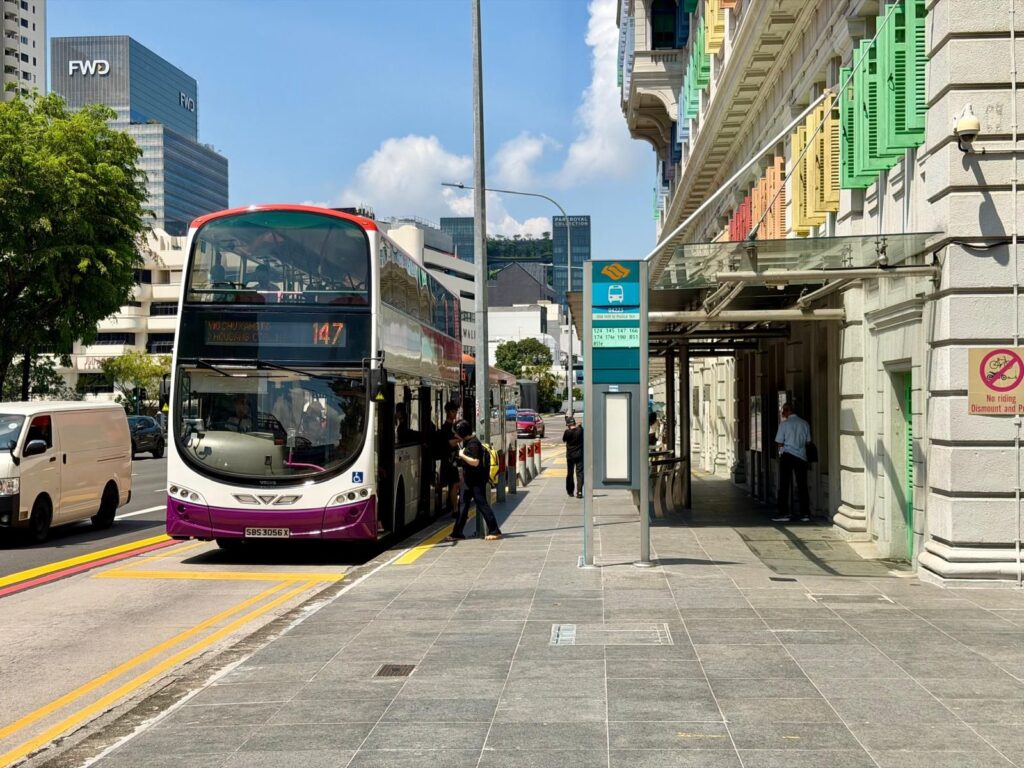
Public transport is often one of the more stressful parts of travelling in a new place, but in Singapore it is one of the easiest.
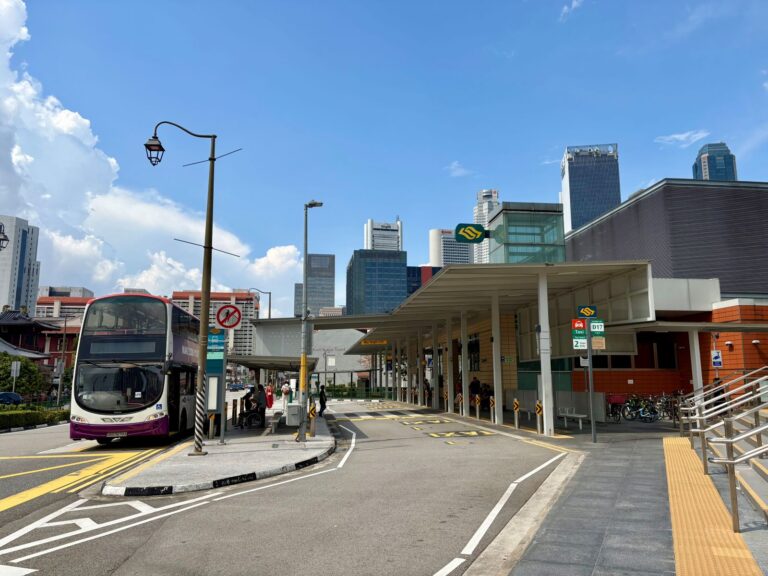
The MRT system is clean, clearly mapped, and consistent. Stations are well signposted, trains run frequently, and it is difficult to get seriously lost. Even if you do take the wrong train, it is easy to correct your route. You are not dealing with complicated transfers or unclear exits. Singapore buses are also very reliable and easy to use.
If you want a more detailed breakdown of how to use the system, including tickets, routes, and what to expect, you can read our full guide to Singapore public transport.
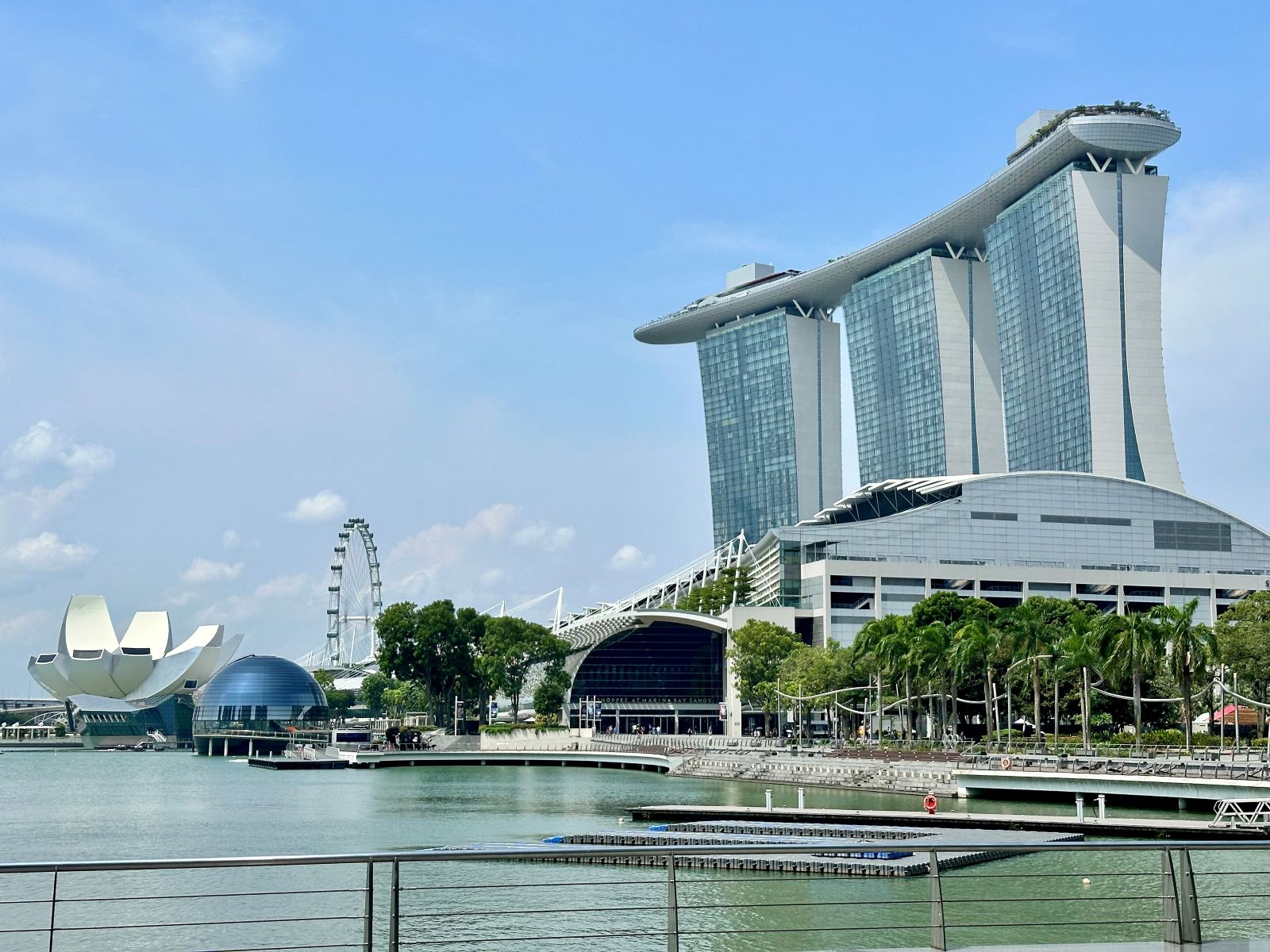
Walking is also a realistic option in many areas, particularly in areas like Marina Bay. When the heat becomes too much, which it often does, it is easy to step into a mall or a café without needing to plan for it in advance.
Getting around easily takes away a lot of the usual hassle. You are not using your energy to figure out how to get somewhere, leaving you space to enjoy the moment.
There Is Always Something to Do Without Needing to Overplan
Some destinations require careful planning to get the most out of them, but Singapore does not.
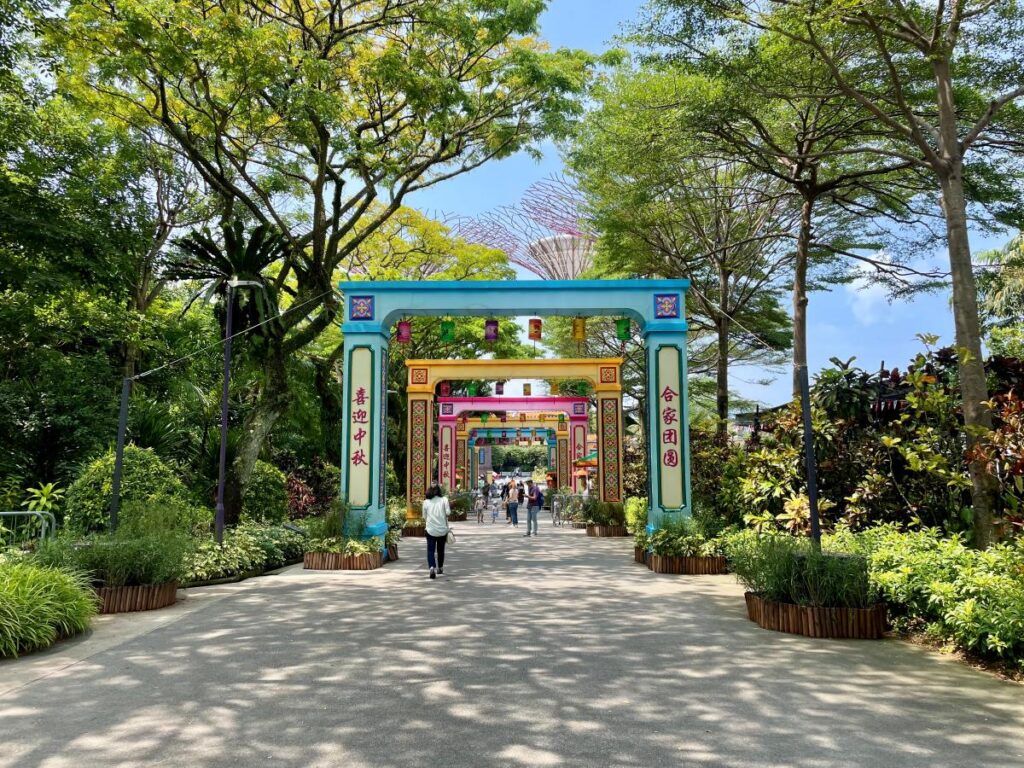
It is possible to have a full day without booking anything in advance. You might walk through Gardens by the Bay in the morning, explore different neighbourhoods in the afternoon, and end the evening at a hawker centre or along the waterfront.
For many first-time visitors, three to four days is enough to experience the city without rushing, especially because distances are short and moving between areas is straightforward.
The city also offers built-in variety. You can move between modern areas like Marina Bay and Orchard Road, quieter residential neighbourhoods such as Tiong Bahru, cultural districts like Chinatown, Little India, and Kampong Glam, and green spaces including the Botanic Gardens.
Because everything is relatively close together, you do not feel locked into a single plan for the day. You can adjust your pace depending on how you feel.
The Heat Is the Only Real Challenge (But It Shapes the Experience)
If there is one downside to Singapore, it is the heat and humidity. The heat and humidity are constant, and it can feel intense if you’re not used to it. Singapore’s climate stays relatively consistent year-round, so there is no strong “best” time to visit, so being prepared for the humidity is a must.
The heat also changes how you travel through the city. You take more breaks, stop for drinks, and spend time sitting down between activities. It helps to move between air-conditioned spaces more frequently and naturally avoid packing everything into busy days.
At first, this can feel limiting but over time your body will thank you for it as it adjusts to the heat. For some people, the heat acts as a built-in pause that slows the day just enough to prevent rushing. Because the infrastructure supports this, with plenty of indoor spaces and shaded walkways, it becomes something you work with rather than against.
Is Singapore Expensive for Solo Travellers?
Singapore is often described as an expensive destination, and in some ways that is accurate. Accommodation and certain attractions can be noticeably higher than in other parts of Southeast Asia. However, once accommodation is paid for, travelling in Singapore can be budget friendly.
Food can be surprisingly affordable if you eat at hawker centres, or mall food courts, where meals are accessible, varied, and easy to approach. Public transport is also relatively low-cost and removes the need for taxis or car hire.
There are also many free ways to explore the city, like walking around Gardens by the Bay or the Botanic Gardens, exploring historical sites like Fort Canning Park, or window shopping by the canal in The Shoppes at Marina Bay Sands.
What stands out more than the price itself is the predictability. You are less likely to encounter unexpected costs or confusing pricing, which makes it easier to stay within a budget without constantly tracking it.
I found that while I spent more on accommodation than I might have elsewhere in the region, I spent less energy thinking about money day to day, which changed how the trip felt overall.
What to Know Before Your First Solo Trip to Singapore
Singapore is easy to navigate, but a few practical details make the experience smoother.
Public transport works most efficiently with a contactless card rather than paper tickets, and the system is designed to be consistent rather than flexible. The heat and humidity mean that you will naturally move in shorter bursts instead of full-day stretches, which changes how you plan your time.
The city is also structured, with clearly enforced rules that can feel different if you are used to more relaxed environments. However, once you understand how things work, everything becomes easier to move through.
These are not challenges so much as adjustments, and they tend to reinforce the same pattern you notice throughout the trip. Once you understand the system, the experience feels straightforward.
Why Singapore Works So Well for a First Solo Trip
When you look at everything together, Singapore removes many of the barriers that make first-time or solo travel feel difficult.
You do not have to worry about safety in the same way. You do not have to constantly figure out how things work. You do not have to overthink food or transport, and you do not have to plan every detail in advance.
That combination is quite rare when you travel. You get independence without pressure.
You are able to make decisions as you go, change your mind, take breaks, or explore at your own pace, and it all feels manageable. This is ultimately why Singapore is good for solo travel, especially if you are just starting out.
Singapore as a Starting Point, Not Just a Destination
A good first trip does more than show you a new place. It changes how capable you feel navigating unfamiliar environments. Travelling to Singapore can help you achieve that.
You arrive expecting it to be easy, and you leave realising that travelling itself might not be as difficult as you once thought. That shift in confidence carries forward, making the next destination feel more approachable and the uncertainty feel smaller.
That is what makes Singapore such a strong choice, not just as a place to visit, but as a place to begin.
This article is for general informational purposes only and is not intended to replace personalised medical, psychological, or professional advice.