Why Reading Fantasy Books On Holiday Can Help You Slow Down
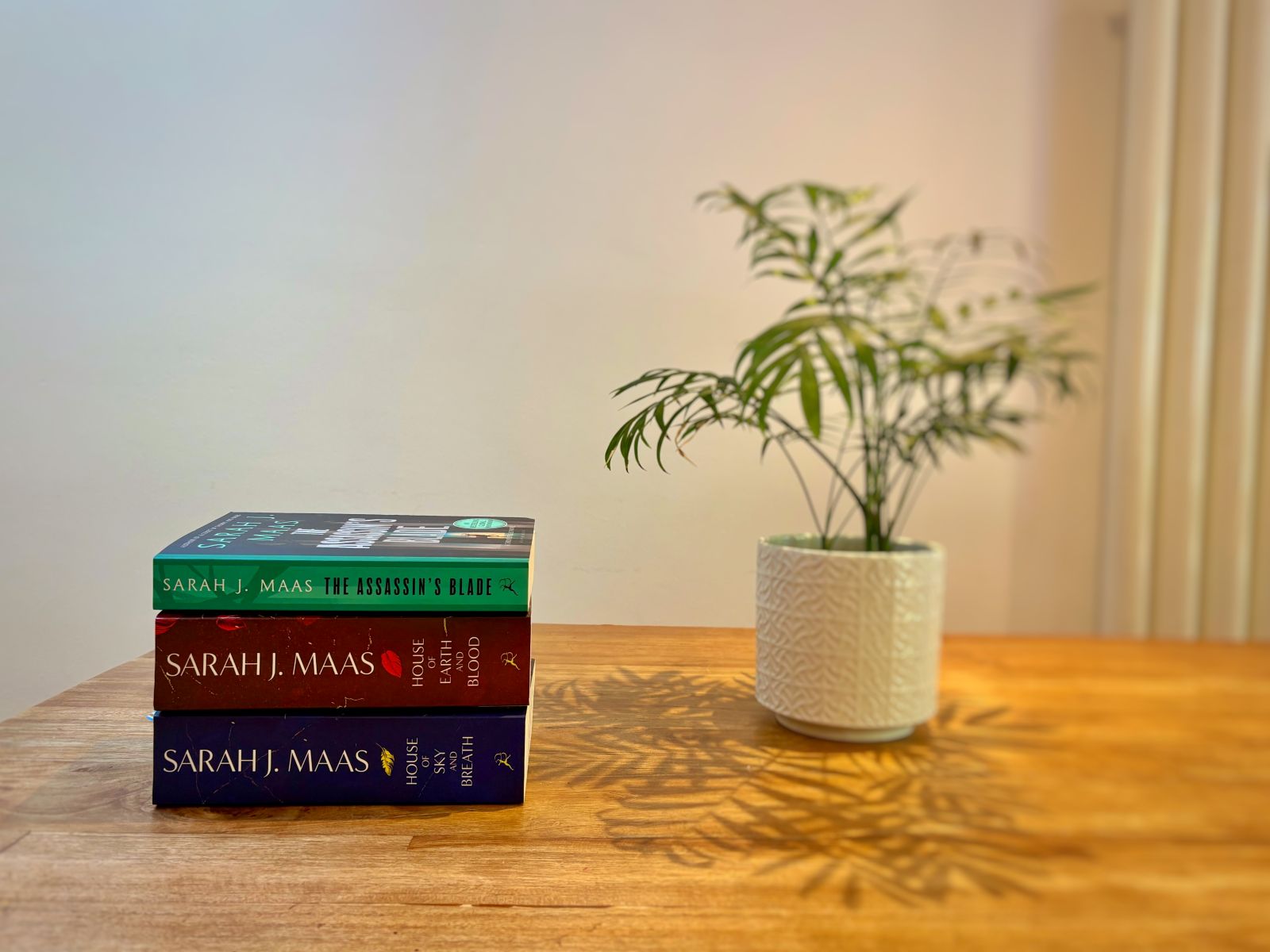
For most of my adult life, I read perhaps one book a year. Then Fourth Wing happened.
I picked it up in my thirties and became completely immersed in reading again. I read for hours, immediately bought the next book when I finished, and wanted more stories, more worlds, and more of that feeling of being unable to wait until I could read again. In some ways, Rebecca Yarros did for my adult reading life what the Harry Potter series did for my early teenage years: both reminded me how a fictional world can take over your attention.
That is part of what makes reading fantasy books on holiday so enjoyable. Travel gives you unfamiliar places, disrupted routines, and stretches of time that do not exist in quite the same way at home. Fantasy gives that time somewhere to go. A chapter can replace an automatic scroll in an airport lounge, make a rainy afternoon feel more enjoyable, or help your mind finally catch up with the fact that work has stopped.
Books such as Fourth Wing and A Court of Thorns and Roses are drawing new and returning readers into fantasy at an extraordinary scale. Their popularity is worth talking about, but the problem they help solve is not new. Many of us want to slow down on holiday and be more present, yet still find ourselves filling every pause with work, planning, messages, or our phones.
Reading offers another option. It does not require a perfect digital detox, a silent retreat, or a particularly worthy book. It only asks you to remain with one story for a while.
Why Is Fantasy Good To Read On Holiday?
Fantasy can make particularly absorbing holiday reading because it gives your attention one continuous story to follow. An immersive fictional world can help create separation from work, provide an appealing alternative to habitual scrolling, and make the quieter parts of travel feel intentional rather than empty. The effect depends less on fantasy itself than on choosing a book you genuinely want to return to.
Five reasons fantasy can work particularly well on holiday are:
- It creates a clear alternative to checking your phone.
- It can help mark the transition out of work mode.
- Immersive worlds hold attention across longer stretches.
- A book gives unplanned travel pauses somewhere to go.
- Continuing series reduce the need to keep choosing new entertainment.
These are possible benefits of reading on holiday rather than guaranteed effects. The most absorbing genre will differ from person to person, and the useful part is finding a story that makes you want to keep reading.
Why Reading Fantasy Books On Holiday Can Help You Leave Work Mode Behind
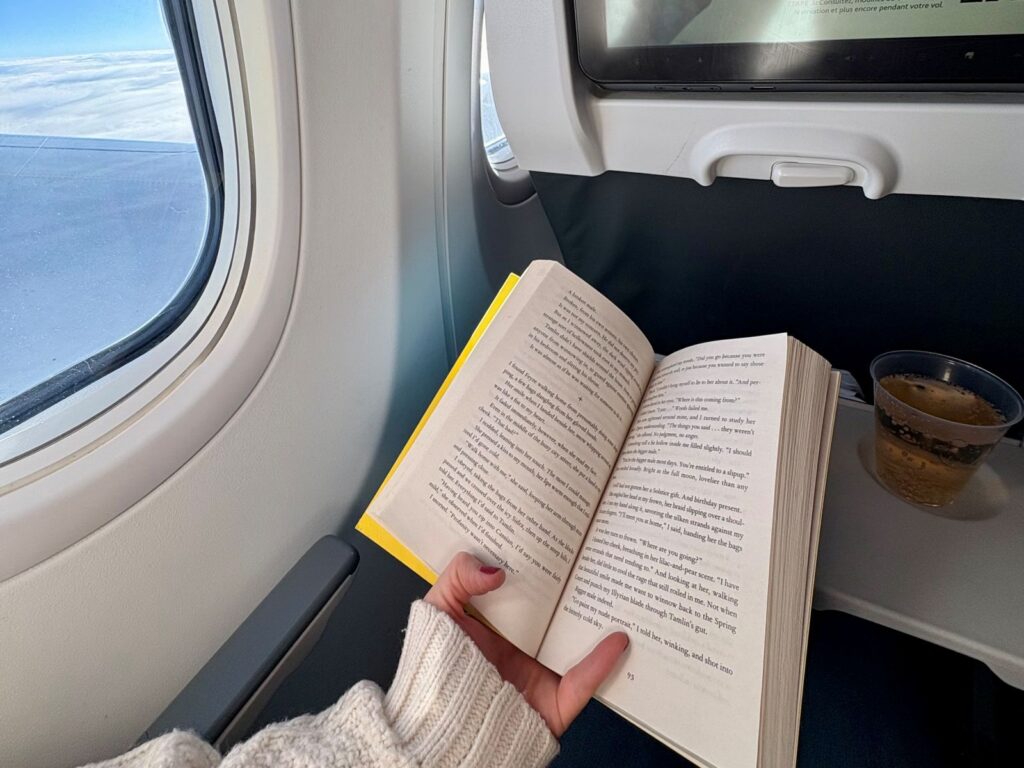
Arriving at your destination does not mean your mind immediately follows. You may still be mentally answering emails or opening a work app because the movement feels automatic. This does not mean you are incapable of relaxing. Those habits have often been repeated on the same device, at similar times, for months or years.
A meta-analysis involving more than 38,000 employees found that greater detachment was associated with less exhaustion, better sleep, greater life satisfaction, and other positive wellbeing outcomes. Most of the studies examined everyday non-work time rather than holidays, so the findings cannot tell us whether reading on a trip directly improves recovery. They do help explain why continuing to think about work can make it harder to experience time away as genuinely separate.
A book can create a clearer alternative. It is difficult to follow a conversation between characters while checking an inbox every few minutes. Fantasy can be particularly effective at holding attention because it asks you to learn another world’s histories, relationships, rules, and dangers. Dragons do not have a special clinical effect. The useful part is having a story you genuinely want to return to, making the transition away from familiar work cues feel inviting rather than dutiful.
This is also why reading fits so naturally alongside calm-cations, where rest is treated as part of the holiday rather than the small amount of time left after a packed itinerary.
Curious to explore the science behind this?
This blog draws on established behavioural science research and applies these principles to travel contexts. Sources are linked in our Evidence & Further Reading section.
Why Reading Instead Of Scrolling Feels Different On Holiday
Phones are valuable travel tools. They hold boarding passes, maps, restaurant bookings, translations, photographs, and messages from people we care about. The difficulty is that the same device also offers an endless supply of novelty. Opening it to check a train time can become twenty minutes of messages, news, and short videos before you notice what happened.
In one study, university students who received phone notifications made more errors on a sustained-attention task, even when they did not check or answer their phones. This was a controlled task rather than a holiday setting, but it supports the practical value of disabling notifications when you want to concentrate on a book.
A physical book can remove those alerts for a while. An e-reader can do something similar when notifications are disabled and there is no easy route into other apps. The story gives your mind something active to do, which can feel much more realistic than expecting yourself to sit quietly and resist every urge to check.
This is not a moral contest between books and screens. Many people read novels on a phone, and not every minute online is wasted. A more useful question is how you tend to feel when you stop. If you repeatedly put your phone down feeling more restless or fragmented, reducing screen time while travelling does not have to mean leaving it behind. It can mean carrying another appealing way to use the pause.
Phone use may also be meeting a genuine emotional need. Familiar apps, people, and routines can feel comforting in an unfamiliar place. Understanding why being on your phone feels comforting while travelling makes it easier to replace that habit thoughtfully, without treating it as a failure of discipline.
How Fantasy Books Help You Slow Down
An absorbing story can produce what researchers call narrative transportation: the experience of becoming mentally involved in a fictional world. It combines attention, imagery, and emotion. You may lose track of time, picture a place that does not exist, or continue thinking about a character after closing the book. The original research examined how immersion influences responses to a narrative, rather than whether reading makes a holiday more restorative.
This is a description of a recognisable experience, not a guarantee that every novel will absorb you. The quality of the fit matters. I had been struggling to get back into reading because I felt I ought to be choosing educational books, self-help, or genres that seemed more age-appropriate. What I really needed, apparently, was dragons. A book chosen because it is supposedly good for you may hold far less attention than the slightly ridiculous dragon romance you cannot wait to continue.
Long fantasy and romantasy series have another practical advantage. Returning to a known world requires less of the restless decision-making involved in choosing another video, post, podcast, or activity. The story keeps moving, but your attention stays within one continuous experience.
This overlaps with the principles in Mindful Travel: How To Stay Present While Travelling. Mindful travel does not require uninterrupted awareness of your surroundings. It involves noticing where your attention is going and making deliberate choices about what deserves it. Sometimes that choice can be a fictional world for an hour.
Reading is not presence in the narrow sense of watching everything around you. It can still help you slow down by giving you a break from constantly switching between activities.
How Reading Creates Natural Pauses During Slow Travel
Slow travel is often described through longer stays and fewer destinations, but pace is also shaped by what happens between activities. A free hour can feel uncomfortable when you are used to filling gaps immediately. It is easy to respond by adding another attraction, opening social media, or researching what you might be missing.
A book can fill those gaps. You can read while waiting for a ferry, after lunch, beside a hotel window during rain, or for half an hour before dinner. These are not empty periods between the important parts of the trip. They are part of the experience of being away.
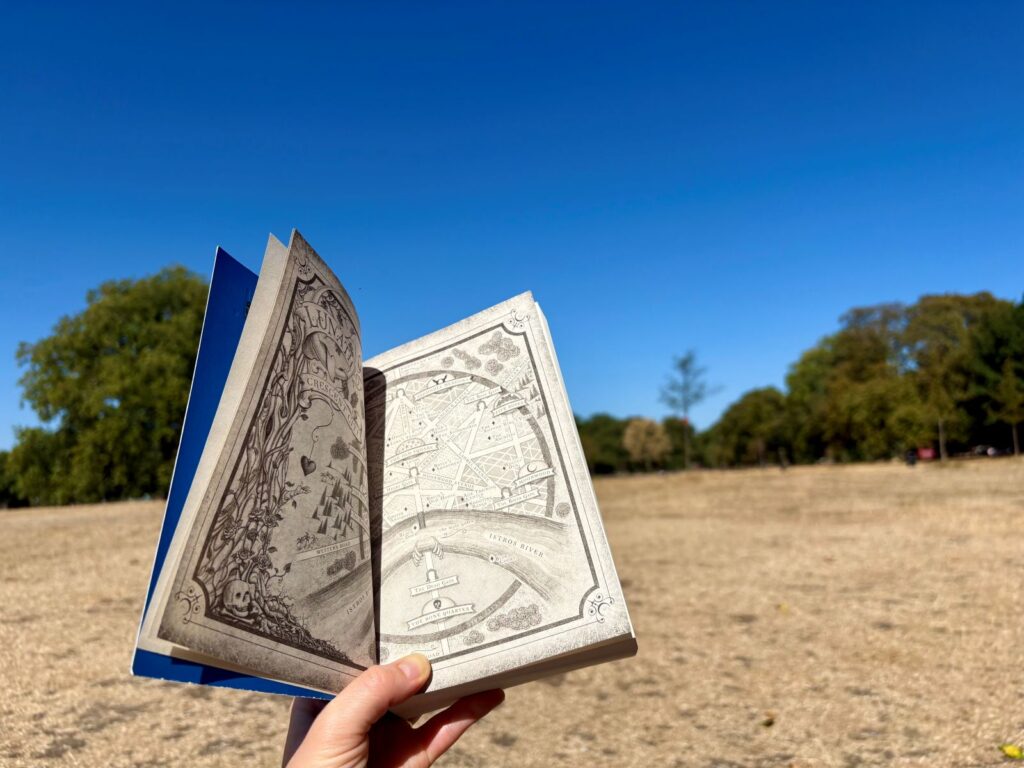
Reading can also make staying in one place feel intentional. Spending an hour with a novel in a park or café gives you a reason to stop moving while remaining gently connected to your surroundings. This summer in London, I have particularly enjoyed taking my book to the park and spending an hour immersed in another world. The book holds enough of your attention for you to settle, but you may still notice the changing light, the rhythm of conversation around you, or the arrival of the evening crowd when you pause between chapters.
This does not require every trip to be long, quiet, or rural. A reading pause can sit inside a busy city break just as easily as a week by the coast. It supports slower travel at the level of attention, even when the wider itinerary still contains plenty of movement.
Restorative Escapism Or Avoiding Difficult Feelings?
Escapism is often discussed as though it must be either healthy recovery or an unhealthy refusal to face reality. In practice, the difference is usually found in its purpose, flexibility, and consequences.
Restorative escapism gives you a temporary break and leaves you able to return to the rest of your life. You can close the book when you need to eat, sleep, meet someone, or deal with a practical problem. Reading adds pleasure to the trip without narrowing the whole experience to one activity.
Avoidance may look different. You might use a story to postpone every difficult feeling, repeatedly cancel plans you valued, lose sleep night after night, or feel unable to stop even when reading is making the trip less enjoyable. The issue is not the number of chapters or the explicitness of the book. It is whether the habit remains chosen and whether it supports or displaces what matters to you.
You don’t need to analyse every reading session. An occasional check is enough: am I choosing this because it is enjoyable and I want a break, or because I cannot tolerate what I might notice without it? Sometimes the honest answer will be both.
Homesickness, loneliness, anxiety, and disappointment can still appear on a long-awaited holiday. A chapter may offer welcome relief, but it does not need to silence every uncomfortable emotion. If you can put the book down, respond to what needs your attention, and return because you still want to know what happens, the story is more likely to be supporting the trip than replacing it.
How To Choose A Fantasy Book For Your Holiday
The best fantasy books for holiday reading are not necessarily the titles you think an intelligent or well-travelled person should read. Choose for appetite. You may want a richly built fantasy world, a familiar comfort read, a fast plot, a gentle tone, a central romance, or enough spice to make you look forward to an uninterrupted afternoon.
It can help to sample a few pages before leaving. A book that requires intense concentration may be wonderful at home but tiring beside a busy pool. In contrast, a long novel can suit a quiet week better than packing several books and feeling obliged to finish them all.
Check the content as well as the genre. Romantasy covers very different levels of violence, explicit content, relationship dynamics, and emotional intensity. Publisher descriptions, content notes, and reviews can help you choose a book that suits your preferences without revealing the entire plot.
Think about the practical format too. A single paperback reduces choice and gives your phone a rest. An e-reader makes sense for a longer journey, especially when luggage space is limited. An audiobook can suit travel sickness, long train journeys, or moments when your eyes need a break. The best format is the one that suits you.
Try not to turn the trip into a reading performance. Page counts, streaks, and ambitious lists can reproduce the pressure you hoped to leave behind. Bring one book you are genuinely excited about, plus a contrasting alternative if space allows. If a popular fantasy novel has not caught you after a fair attempt, leaving it unfinished is not a failure. Holiday time is too valuable to spend proving that you can complete a book you do not enjoy.
How To Create A Holiday Reading Ritual
A reading ritual works best when it is attached to a moment that already happens. You do not need a page target, a reading streak, or a perfectly styled corner. Choose one reliable cue, then keep the book where beginning requires very little thought.
You might read with your first coffee before opening messages, for twenty minutes after returning to your accommodation, or in bed while your phone charges across the room. Repeating the same small sequence can help that part of the day take on a different pace.
Make the setting comfortable enough rather than perfect. Find shade, bring water, adjust an e-reader’s brightness, and change position when your body asks you to. If you are sharing the trip, tell your companion that you would like a quiet reading interval. They may welcome permission to do their own thing too.
A simple ritual could be:
- Put your phone on Do Not Disturb.
- Choose a comfortable place and bring a drink.
- Read one chapter, or continue until your attention naturally fades.
- Pause before reaching for your phone again.
- Notice one detail about where you are.
That final pause reconnects the book with the holiday, rather than sending you directly from one source of input into another.
Reading can also sit alongside other relaxing holiday activities, such as walking, swimming, lingering over lunch, or doing very little for a while. It does not need to take over the trip to become a meaningful part of it.
Reading before bed may also become a useful cue when you are sleeping somewhere unfamiliar. I personally find that putting my phone away for the night and reading some fiction is a very effective routine for supporting good sleep. It will not fix jet lag or guarantee good sleep, but it can form part of the short, repeatable wind-down routine described in the guide to sleep tourism and planning a trip around real rest.
Why Fantasy And Romantasy Books Are So Popular Right Now
The scale of fantasy’s recent growth is not only visible on BookTok. It is showing up in book sales.
In the UK, NielsenIQ BookData recorded just under £84 million in science-fiction and fantasy sales during 2024. That was the category’s highest value since records began and 41% above its previous record of £59.4 million in 2023. In the US, Circana BookScan data showed adult fantasy print sales rising by 35.8% in 2024.
The following year was more mixed. US adult fantasy sales fell by 8.7% in 2025 after that exceptional rise, while romance increased by 3.9% to almost 44 million print copies. BookScan does not maintain a separate romantasy category, which makes the overlap difficult to measure precisely. However, Rebecca Yarros’s Onyx Storm was one of the clearest examples of its commercial power, with its main editions selling more than two million print copies through reporting retailers during 2025.
Sarah J. Maas offers another indication of the audience’s size. Bloomsbury reported that she was the highest-selling author in the US in 2024 and the bestselling fantasy author in the UK in 2025. The publisher has described pre-orders for its forthcoming major titles as exceptional.
Upcoming releases are likely to keep that attention high. Rebecca Yarros’s Threshing Day, a collection of stories from the Empyrean world, is due on 29 September 2026. Sarah J. Maas returns to ACOTAR with A Court of Splintered Harmony on 27 October 2026 and A Court of Forgotten Melody on 12 January 2027.
These figures do not mean everybody has suddenly become a fantasy reader, or that sales will rise forever. They show that fantasy and romance are reaching well beyond a small genre audience. Books that were once easy to dismiss as dragons, fae, or guilty pleasures are bringing many adults back to regular reading, often after years away.
Why Romantasy Is Bringing Adults Back To Fantasy
The recent popularity of romantasy books for adults is part of this wider return to reading. There is no honest discussion of the romantasy boom without mentioning the smut.
Readers often use spice or smut as playful shorthand for explicit scenes, although the amount varies enormously. Some romantasy books focus mainly on romantic tension, while others are chosen partly for their higher spice level. For many readers, these scenes add anticipation and emotional intensity to stories already filled with danger, adventure, and relationships they can become invested in.
Fiction can also offer a private, low-stakes place to explore attraction, desire, and relationship dynamics. Readers have different preferences and boundaries: some seek high-spice recommendations, some prefer the tension leading up to those scenes, some skim them, and others avoid explicit content altogether.
Smut is part of the trend, but it is not the complete explanation. Romantasy also offers fast-moving plots, accessible world-building, powerful heroines, familiar tropes, elaborate special editions, and an active community sharing recommendations. The romance gives the fantasy an emotional centre, while the fantasy raises the stakes of the romance. When both work, the result can be extremely difficult to put down.
Books enjoyed largely by women are still frequently dismissed as less serious when they include romance or desire. A book does not need to be literary, educational, or restrained to rebuild a reading habit. If dragons, enemies-to-lovers tension, and a few explicit chapters make someone excited about reading again, that enthusiasm is valuable in its own right.
Frequently Asked Questions
Why are fantasy and romantasy books so popular?
They combine immersive worlds with emotionally intense relationships, familiar tropes, continuing plots, and active reader communities. Romantasy also attracts readers who enjoy romance and explicit content but may not previously have considered themselves fantasy readers. Sales data shows substantial growth, although no single factor explains the trend.
What does smut mean in fantasy books?
Smut is informal reader language for explicit content. It is often used playfully rather than as an insult. The level of detail varies widely between books, so readers may use terms such as closed-door, low spice, or high spice to find stories that suit them.
Why is fantasy good for holiday reading?
Fantasy often combines unfamiliar settings, strong world-building, continuing plots, and relationships that encourage readers to keep going. That sustained interest can make it easier to choose a book over habitual scrolling. However, the most absorbing genre will differ from person to person.
Is Fourth Wing a good holiday book?
Fourth Wing can suit readers who want a fast-moving romantic fantasy with dragons, danger, explicit scenes, and a continuing series to become immersed in. It may be less suitable if you prefer a quiet standalone novel, limited romance, or little explicit content. Sampling the opening pages and checking content guidance can help.
Is reading on holiday good for you?
Reading can be a pleasurable way to focus on one activity, take a break from work cues, and spend less time switching between phone apps. Its effects vary by person, book, and context, so it is better approached as an enjoyable option than a wellbeing prescription.
How can I read more on holiday without setting a target?
Attach reading to one natural point in the day, keep the book visible, and put your phone out of reach for a short period. Read while it feels enjoyable, and stop without tracking pages or chapters.
Let The Book Support The Holiday
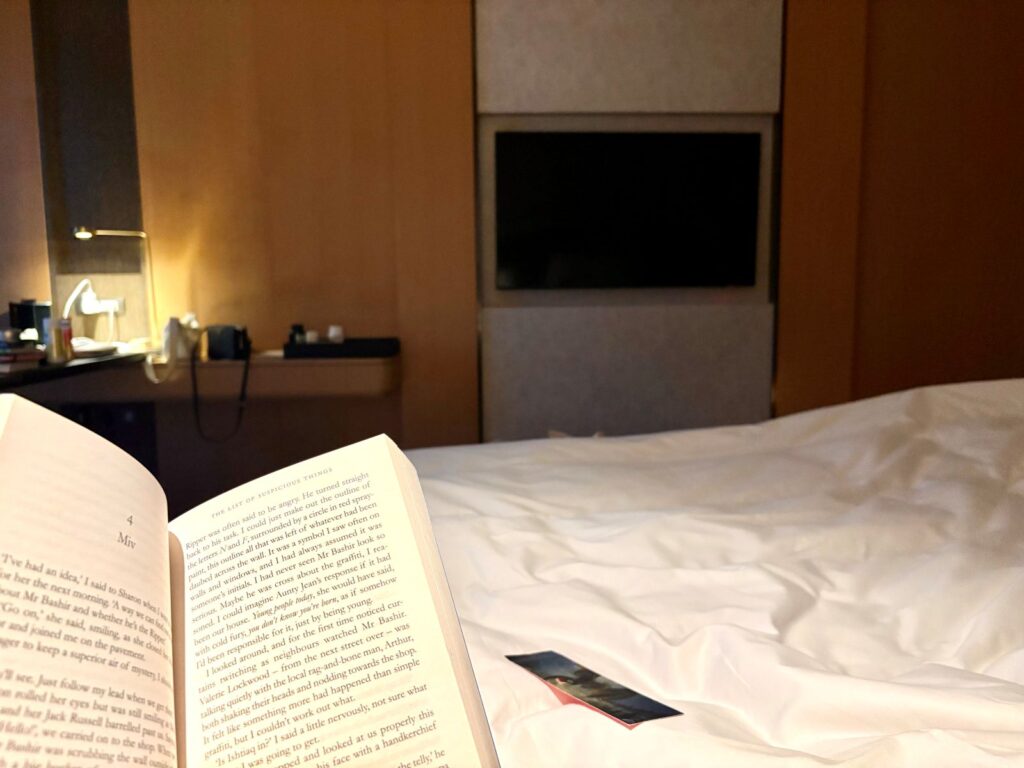
Reading can add a welcome pace to a trip without dominating it. A satisfying day might include a morning walk, a long lunch, a few chapters in the shade, and an evening exploring somewhere new. Rain may turn one afternoon into an unplanned reading session. A conversation may be so enjoyable that you do not open the book at all. Both can belong to a restful holiday.
Fantasy will not appeal to everybody, and smut is neither a requirement nor a wellbeing tool. The important part is finding a story that makes slower attention feel attractive. For a growing number of adults, romantasy has done exactly that. It has made reading social, emotionally involving, playful, and difficult to abandon after one chapter.
I will always be grateful to Fourth Wing for doing that for me. It did not turn reading into another self-improvement goal. It reminded me that I genuinely loved it.
The aim on holiday is not to return home having read the most pages. It is to find a pace that lets more of the trip feel like your own. If a fantasy world helps you step away from work, leave your phone untouched, and enjoy an hour with nowhere else to be, it has already done enough.
For more psychology-informed ideas that support attention, rest, and everyday wellbeing away from home, explore the Nomadic Balance travel wellbeing hub. Or to explore the wider site, return to Nomadic Balance home.
This article is for general informational purposes only and is not intended to replace personalised medical, psychological, or professional advice.