How To Plan An Ireland Road Trip Without Feeling Rushed
Ireland was a real highlight of our trip. Usually, I try to use public transport as much as possible on a trip, but having a car gave us the freedom to enjoy far more than the places marked on our itinerary. On a map, Dublin, Galway, the Cliffs of Moher, Killarney, Cork, and several coastal villages can look close enough to connect in one straightforward loop. In reality, narrow roads, parking, check-in times, meals, walks, and all the places that tempt you to pull over can make each journey take much longer than expected.
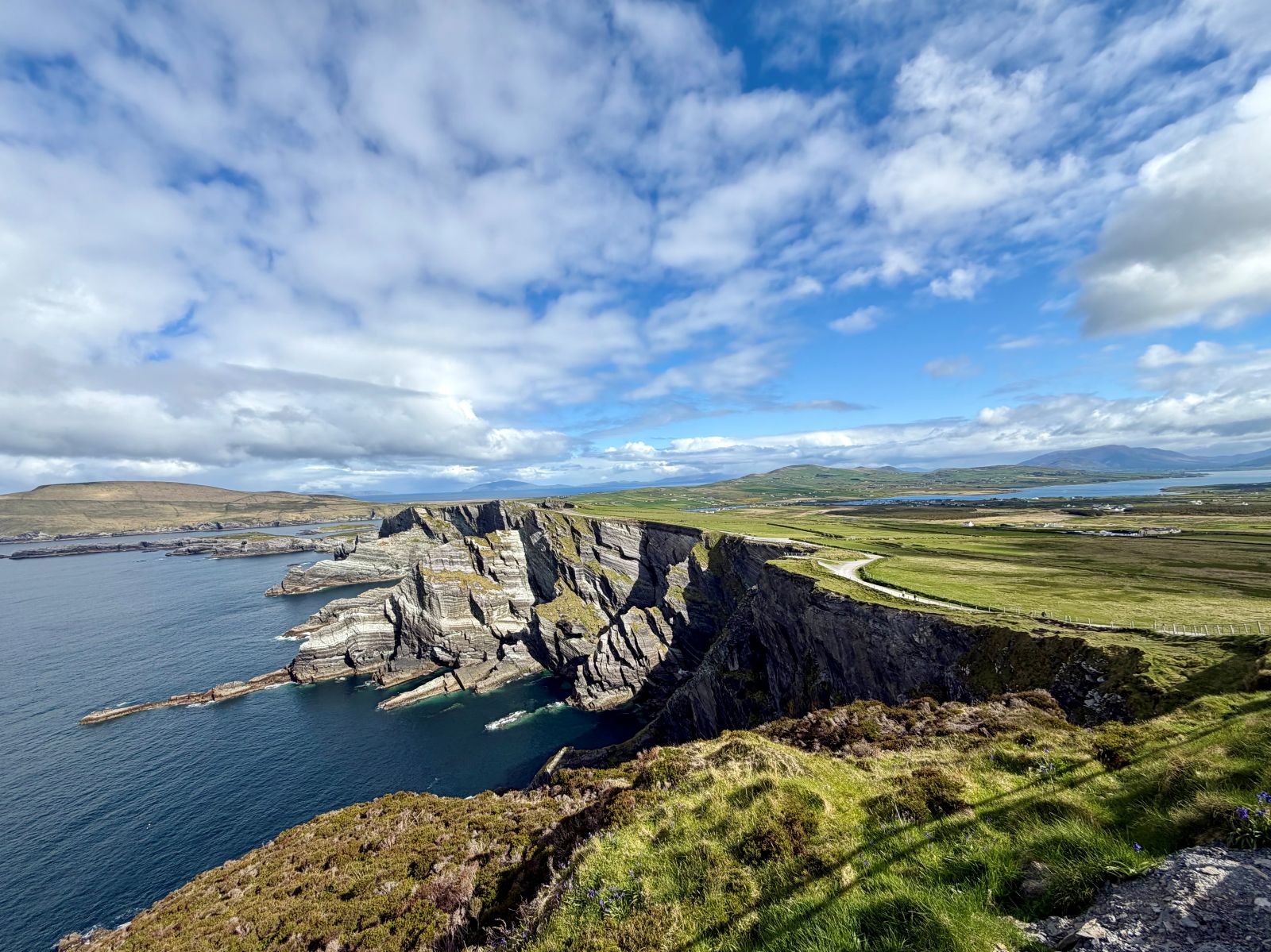
Some of our favourite moments happened during the drives themselves. A motorway would give way to open countryside, stone walls, or a view of the Atlantic that made us want to stop and look around. We quickly realised that leaving extra time was not wasting part of the day. It gave us more freedom to enjoy the scenery, change our plans, and spend longer in places we had almost driven past.
If you are working out how to plan an Ireland road trip, start with a small number of regional bases and a realistic idea of how much driving you want to do. Give each day one main priority, allow more time than your navigation app suggests for scenic routes, and leave room for the stops you cannot plan in advance. You can still visit the well-known places, but you will have more time to enjoy the journey between them too.
Table of Contents
Why Ireland Road Trips Can Feel Rushed
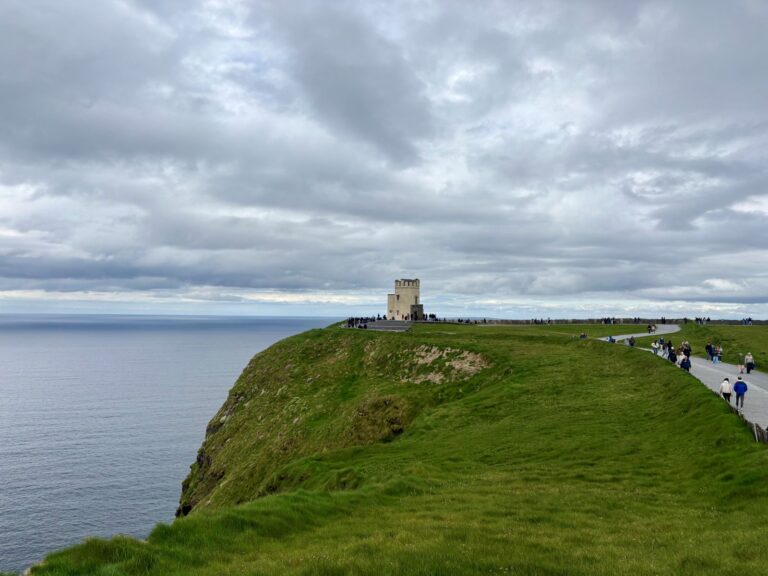
Ireland offers more appealing places than most people can comfortably fit into one holiday. The distances between them can also look deceptively short. A morning at the Cliffs of Moher seems easy to combine with an afternoon elsewhere, while Cork may appear close enough to add before returning to Dublin.
Each choice makes sense on its own. The problem comes when several of them are combined, leaving you with a trip shaped by check-out times, driving, and the pressure to reach the next place.
The best-case driving day assumes you leave on time, follow the quickest route, park immediately, and spend exactly as long as expected at each stop. A real day may also include breakfast, repacking, fuel, roadworks, toilets, check-in, and turning around because a stretch of coastline deserves a closer look.
This does not mean planning is pointless. It means a good Ireland road trip itinerary needs space for the ordinary parts of travel, not just the main sights.
Our Ireland Road Trip: What Worked And What Felt Rushed
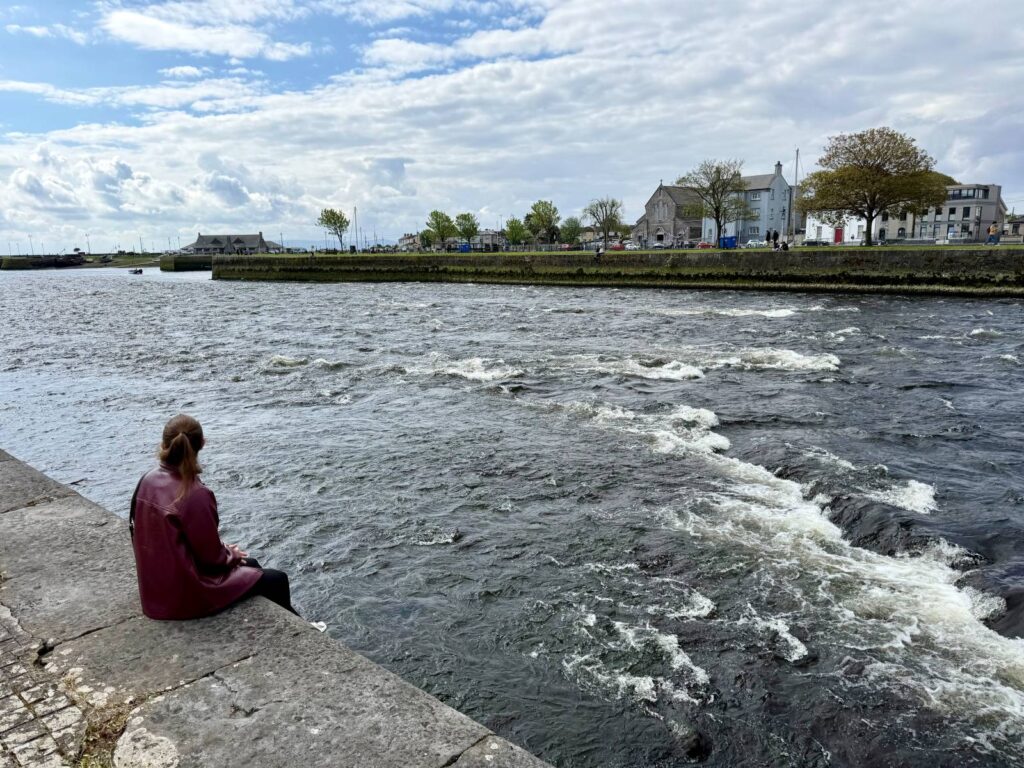
On our recent trip in May 2026, we stayed for two nights in Dublin, three nights in Galway, one night in Limerick, two nights in Killarney, two nights in Cork, and three nights in Belfast, Northern Ireland.
The three nights in Galway gave us enough time to settle in and explore without immediately thinking about the next drive. Killarney also worked well as a two-night base. We could begin the Ring of Kerry early, return to plenty of evening food options in town, and avoid adding another accommodation change to an already full day.
The single night in Limerick was the part that felt most rushed. We had included it to break up the journey, but packing, checking in, and leaving again the next morning created more disruption than the shorter drive saved. In hindsight, I would rather have extended one driving day and spent an extra night somewhere we genuinely wanted to explore.
That does not mean one-night stays are always a mistake, as an example, they can be useful near an airport to make flying less stressful. Our Limerick stay helped me realise, however, that breaking up a drive is only worthwhile when the stop adds something you care about. Otherwise, it can become another arrival and departure without much time to enjoy the place.
We also decided not to include the Blarney Stone. Fitting it in would have meant more time in the car and less time to enjoy both the site and Cork properly. We really enjoyed Cork, and I was glad we could wander through the city at our own pace rather than spending that time watching the clock and planning the next drive.
Our route was not perfectly slow, but it gave us a useful comparison between stays that allowed us to settle and the one stop that felt too brief. The biggest lesson was that fewer accommodation changes would have improved the trip more than adding another attraction.
How Many Days Do You Need For An Ireland Road Trip?
Seven to ten days can be enough for a rewarding Ireland road trip if you focus on one or two connected parts of the country. A broad circuit of the island may be technically possible in a week, but it is likely to involve more driving and accommodation changes than many people expect.
As a flexible starting point:
- For five to seven nights, choose one or two main regional bases.
- For eight to ten nights, choose two or three regional bases.
- For eleven to fourteen nights, choose three or four regional bases.
An airport night may sit outside that calculation. If you arrive late or have an early flight home, staying near the airport can prevent the first or final day from becoming unnecessarily demanding.
These numbers are not strict rules. Some travellers genuinely enjoy long driving days and frequent changes of scenery. Others would rather unpack once, find a favourite café, and explore a smaller area properly. Your budget, energy, arrival time, and confidence driving on unfamiliar roads will all affect what feels manageable.
For a first trip, one connected area can still offer plenty of variety. Kerry and West Cork, Clare and Galway, or Galway and Connemara can each support a memorable route without requiring you to circle the island.
If you are particularly interested in building a more restorative trip, the guide to Ireland wellness travel explores the regions and everyday experiences that made Ireland feel so calming for us.
How Many Places Should You Stay In Ireland?
For most Ireland road trips, staying two or three nights in each main base creates a good balance between seeing different places and having time to settle.
A one-night stay involves more than the drive itself. You need to repack, check the room, load the car, check out, navigate, find parking, wait for check-in, unload, and work out the practical details of somewhere new. Even when everything runs smoothly, the move takes up part of the day and some of your attention.
It also leaves less room to change your plans. If the weather turns, you feel tired, or you discover somewhere you would like to explore, another booking is already waiting. Two nights give you one complete day without luggage or check-in times. Three nights give you two, which makes it easier to decide what to do according to the weather and how you actually feel.
Two nights may be enough when a base gives you one clear full-day experience and the onward journey is manageable. Three nights are worth considering when the area includes several priorities, the surrounding roads are slow and scenic, or you want to keep a walk, boat trip, or coastal drive flexible.
When comparing two routes, count accommodation changes as well as driving hours. A route with fewer kilometres will not necessarily feel calmer if you still have to move every morning.
How Long Does It Take To Drive Around Ireland?
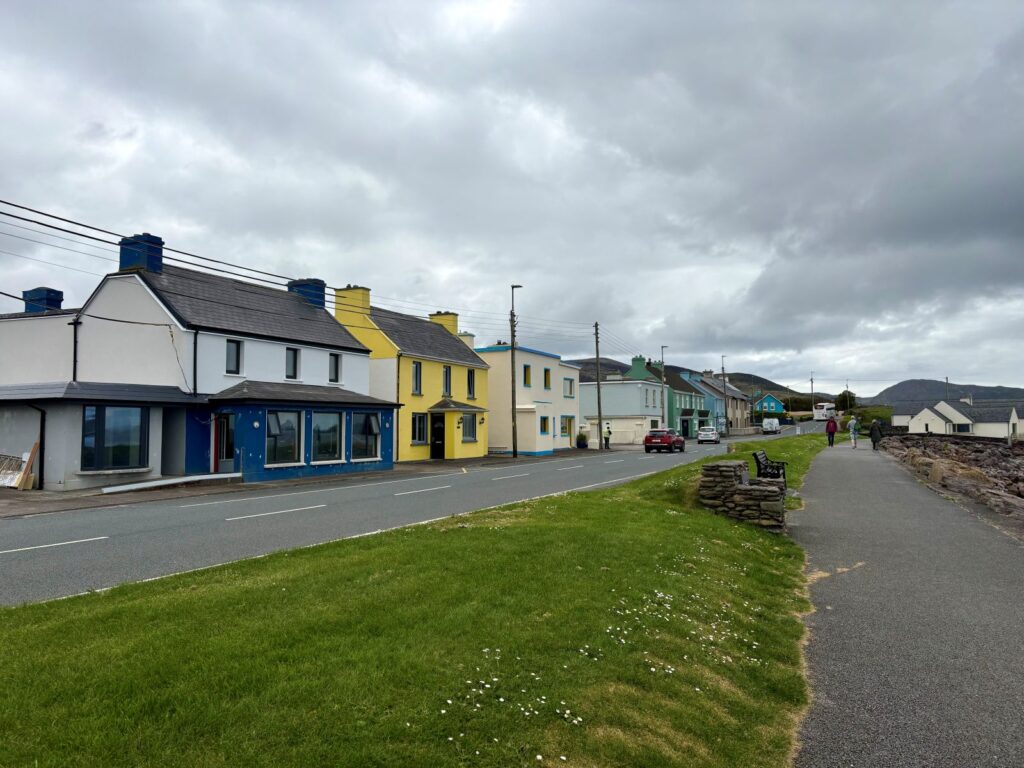
There is no single useful answer because a motorway journey and a scenic coastal drive can require very different amounts of time and concentration.
Navigation apps can estimate how long it should take to reach your destination, but they cannot know how often you will stop for photographs, food, short walks, or somewhere you had not planned to visit. They also cannot fully reflect how a road will feel when you are driving it for the first time.
Many smaller roads in Ireland are narrow and winding, with limited visibility, cyclists, farm traffic, and occasional sections where two vehicles need to pass carefully. If you are unfamiliar with driving on the left, you may also need more concentration during the first few days.
None of this means driving in Ireland needs to feel intimidating. The smaller roads were part of what made our trip so memorable. They just worked better when we treated the drive as part of the day rather than empty time between attractions.
Before accepting the estimated journey time, consider:
- What kinds of roads make up the route?
- Will you want to stop for photographs, food, or a walk?
- Are you driving after a flight or a full sightseeing day?
- Is the scenic route one of the experiences you are looking forward to?
- Will the driver still have enough energy to enjoy the destination?
For scenic or unfamiliar roads, add a generous buffer. If you arrive earlier than expected, you can use that time for lunch, a walk, or checking in without rushing.
How Much Driving Should You Plan Each Day In Ireland?
There is no universal number of hours that will suit every traveller. Your sleep, concentration, familiarity with the car, road conditions, and the weather matter more than a rigid daily target.
It can help to think about the purpose of each driving day.
Local exploration days
Keep the driving light enough that you can stop, walk, eat, and explore without constantly checking the time. A small group of nearby places usually works better than crossing a region and then returning to the same base.
Transfer days
A transfer day connects two bases. Around two to three hours of estimated driving can be manageable when the journey includes somewhere you genuinely want to stop. If the route is scenic, allow most of the day rather than placing several timed attractions around it.
Longer driving day
A longer drive may occasionally make sense, particularly at the beginning or end of a trip, or when the alternative is adding a one-night stay you do not really want. Treat reaching the next region as the main plan, and keep the rest of the day fairly quiet.
If possible, keep your first driving day fairly easy, especially after an overnight flight. Collecting a hire car and adjusting to driving on the left can take more energy than expected.
How To Choose The Best Bases For An Ireland Road Trip
Choose your bases before building a long list of daily stops. Begin with the one or two experiences that matter most, then look for a town or area that gives you practical access to them without repeatedly driving the same roads.
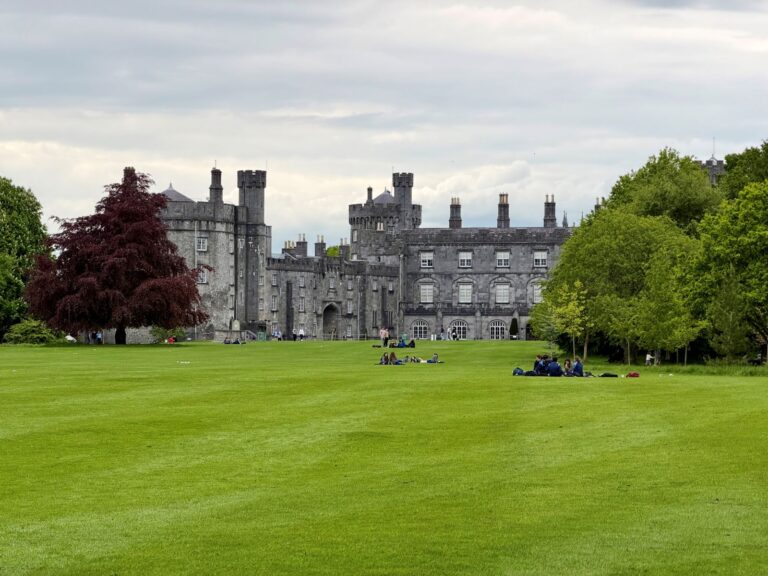
Killarney worked well for us because it offered easy access to Killarney National Park and an early start for the Ring of Kerry, while still having plenty of places to eat in the evening. Galway can work well if you want to combine the city with County Clare or Connemara, although the best choice will depend on which direction you intend to explore.
A base should also be somewhere you would be happy to return to at the end of the day. Check parking, evening food options, distance from your priority experiences, and how much driving is required before you even reach the scenic part of the route.
If spending time outdoors is one of your main reasons for visiting, the guide to green spaces in Ireland includes our first-hand experiences of Killarney, Kerry, and Clare.
Ireland Road Trip Ideas For 7, 10, And 14 Days
These are route frameworks rather than detailed day-by-day itineraries. They are designed to show how a smaller number of bases might work, while still leaving room for weather, walks, meals, and unplanned stops.
The best route will depend on your flights. An open-jaw trip, where you arrive in one city and leave from another, can reduce backtracking. If you are flying in and out of Dublin, allow time to return without turning your final day into a race to the airport.
A calmer seven-night Ireland road trip
- One night in Dublin
- Three nights in Galway
- Two nights in Killarney
- One final night near Dublin or the departure airport
This route gives you time for Dublin, part of the west coast, and County Kerry without attempting a full circuit. From Galway, you could choose either County Clare or Connemara as your main day trip rather than trying to fit both into one day.
I would deliberately leave out Cork and Northern Ireland. Both deserve more than a rushed overnight stop, and adding them would make the route feel more like a checklist.
A ten-night Ireland road trip
- Two nights in Dublin
- Three nights in Galway
- Three nights in Killarney
- Two nights in Cork
This route works particularly well if you can arrive in Dublin and depart from Cork or another airport that avoids driving all the way back to Dublin. It creates time for city exploring, the west coast, the Ring of Kerry, Killarney National Park, and Cork without moving every morning.
If your return flight is from Dublin, check the timing carefully. You may prefer to replace Cork with a base that creates an easier return journey rather than adding an airport night after only one night in the city.
I would leave Northern Ireland for another trip. Adding it would introduce a long cross-country transfer and reduce the time available in the south and west.
A more spacious fourteen-night Ireland road trip
- Two nights in Dublin
- Three nights in Galway
- Three nights in Killarney
- Three nights in Cork or West Cork
- Two nights in Kilkenny or Wicklow
- One night near the departure airport if required
Fourteen nights give you more scope to include the south and east without turning every second day into a transfer. The extra time could also be used to stay longer in Galway or Kerry if you would rather explore fewer regions in greater depth.
I would still avoid assuming that two weeks is enough to see every part of the island slowly. If Northern Ireland is a priority, replace Cork and the south-east portion with several nights in Belfast and around the Antrim Coast rather than adding them on top.
These frameworks are deliberately selective. The places left out are not less worthwhile. They are being saved so that the places included have enough room to be enjoyed.
How To Plan Stops Without Turning The Trip Into A Checklist
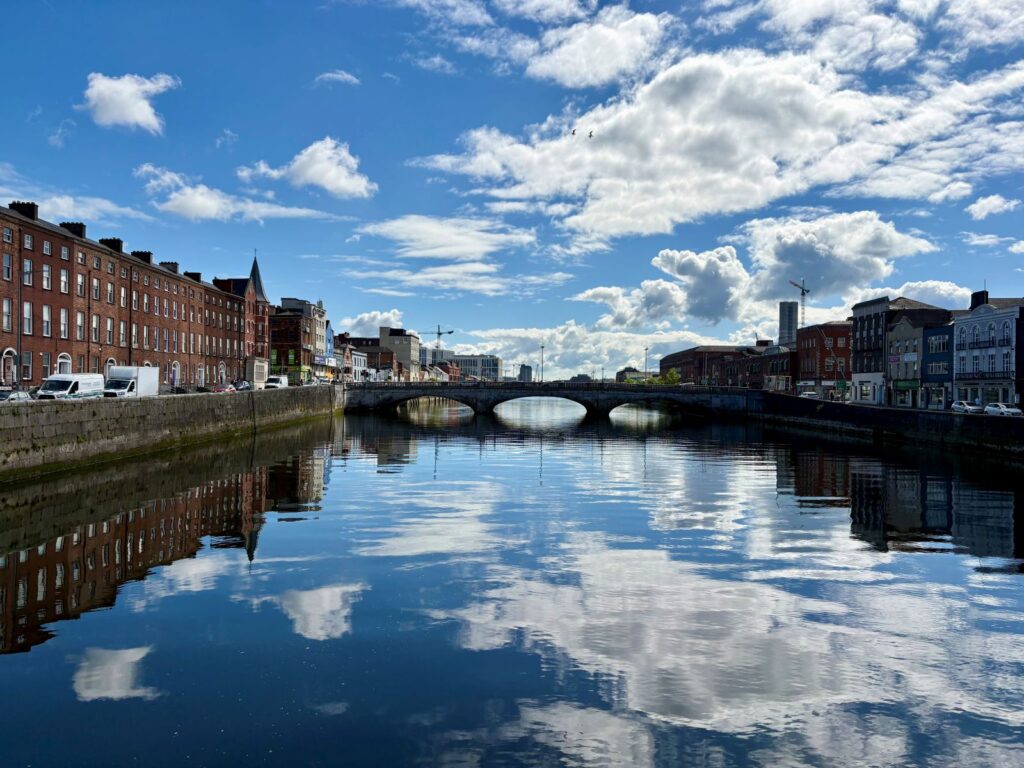
A road trip becomes crowded when every appealing place is treated as equally important. Before finalising each day, choose one main experience you would be genuinely disappointed to miss. It might be a coastal walk, a national park, a food experience, or an evening of traditional live music.
Add one optional stop that would be enjoyable if the weather, timing, and your energy allow. Keep everything else on a separate possibilities list. Saving a place on a map does not mean you are committed to visiting it.
It also helps to ask what each stop adds. If three viewpoints offer similar scenery, choose the one that fits your route best. If you already have several castles planned, another may be less valuable than a relaxed lunch or an hour walking beside the coast.
Leaving something out can feel disappointing while you are planning from home. Once you are travelling, having enough time to walk around, find food, and enjoy an area tends to matter more than the number of places you manage to reach.
How To Leave Room For Ireland’s Weather
Ireland’s climate is strongly influenced by the Atlantic, and conditions can change within the same day. A tightly fixed itinerary can make that ordinary uncertainty more stressful because every shower appears to threaten something you have planned.
Where possible, give your most important outdoor experience a two-day window. Staying nearby for several nights may allow you to choose the more suitable day for the Ring of Kerry, a Connemara walk, or time along the coast.
It can also help to make one booking the centre of the day instead of arranging several fixed times. Cafés, museums, gardens, village walks, and scenic stops can then fit around it.
The space you leave for weather also creates room for spontaneity. On our trip, some of the most enjoyable moments came from changing the plan, taking an unplanned coastal detour, or spending longer in a village we had almost driven past. A flexible day made those choices feel like part of the trip rather than a reason we were falling behind.
Check the current Met Éireann forecast before longer drives and outdoor activities. Seasonal climate information can help with packing, but it cannot tell you what conditions will be like on a particular road or walking route.
A Simple Ireland Road Trip Planning Checklist
Once you have a draft route, check it against a few practical questions:
- How many full days do you genuinely have once flights and car collection are included?
- Which two or three experiences matter most?
- Can you organise those experiences around a small number of regional bases?
- Have you allowed extra time for scenic and unfamiliar roads?
- Is each transfer day trying to include too many attractions?
- Do you have at least one flexible half-day during a week-long trip?
- If something takes longer than expected, what would you remove first?
- Does the driver have enough time and energy to enjoy the destination after each journey?
Deciding what you would drop before the trip makes it easier to adjust without feeling as though the day has gone wrong. It also stops every saved place from becoming an obligation.
Frequently Asked Questions
Is seven days enough for an Ireland road trip?
Seven days is enough for a rewarding road trip if you focus on one or two connected regions. Trying to cover Dublin, the west coast, the south, and Northern Ireland in the same week is likely to involve frequent moves and long driving days.
How many hours should you drive each day in Ireland?
Around two to three hours of estimated driving can be manageable on a transfer day, with extra time allowed for scenic roads and stops. Longer drives may occasionally make sense, but keep the rest of the day quiet and stop safely if the driver becomes tired.
Should you stay in a different place every night?
Usually not if you want flexibility. Staying for two nights gives you one full day without packing or checking in, while three nights provide more room to adapt to the weather and explore at a comfortable pace.
Can you drive between the Republic of Ireland and Northern Ireland?
Yes, but check your hire-car agreement, as permission or a cross-border fee may be required. Speed limits change from kilometres to miles per hour, and euros to pounds sterling. Depending on your nationality, you may also need a UK visa or ETA.
What I Would Do Differently On My Next Ireland Road Trip
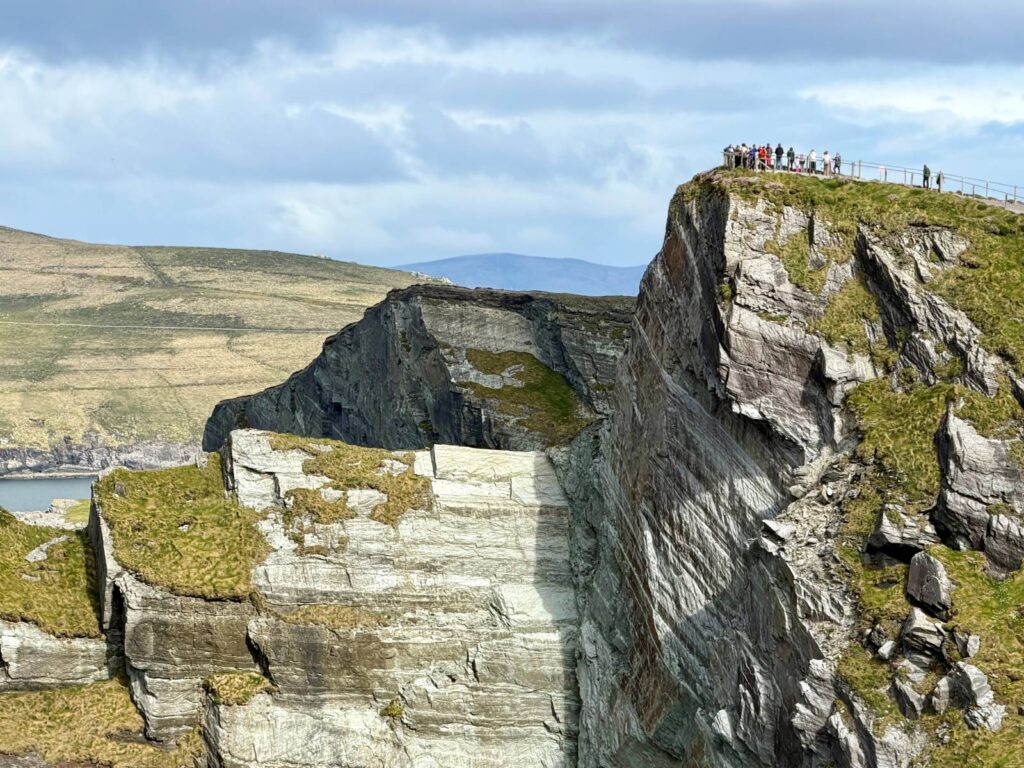
Our Ireland road trip was incredibly enjoyable. We loved how green the country felt, the changing landscapes, the friendliness of the people, and ending the day in a welcoming pub. The things I would change next time are less about fixing a bad trip and more about giving ourselves even more time for the parts we enjoyed most.
I would use fewer bases and be more selective before booking accommodation. I would keep the longer stays that allowed us to settle, such as Galway, and avoid adding a one-night stop purely to break up a journey. Having fewer check-ins would leave more time for wandering through a city, stopping somewhere that caught our attention, or enjoying an evening without thinking about packing again.
I would also protect more time around scenic drives. The journeys were not just a way of reaching the next place. They took us through green countryside, coastal landscapes, and small towns that often became part of the day’s experience. Leaving more space around them would make it easier to stop without feeling as though we were falling behind.
Most importantly, I would leave at least one half-day completely open. I naturally research trips thoroughly, so an empty section of an itinerary can look wasteful from home. In Ireland, that time was what allowed us to change direction, stay longer, find another pub, or stop when somewhere looked inviting.
A future Ireland road trip would not need to include more places. I would rather create more room for the landscapes, conversations, unplanned stops, and relaxed evenings that made this one so enjoyable.
For more wellbeing-first travel inspiration, explore our destination guides or visit Nomadic Balance for more practical ways to travel well.
This article is for general informational purposes only and is not intended to replace personalised medical, psychological, or professional advice.