Soft Digital Detox Travel For Solo Travellers With Anxiety
Digital detox travel can sound peaceful in theory. No notifications. No scrolling. No checking who has viewed your story while you are supposed to be watching the sunset. For some people, that kind of clean break feels freeing. For anxious solo travellers, it is often more complicated.
Your phone is not just a distraction when you travel alone. It may also be your map, translator, boarding pass, booking folder, bank card, camera, emergency contact list, and connection to someone who helps you feel okay when a place feels unfamiliar. On a solo trip, especially if you are new to travelling alone, going fully offline can sometimes create more stress than calm, particularly if travel already makes you feel alert, overstimulated, or unsure of yourself.
If the anxiety is more about the trip itself than your phone use, start with our guide to first-time travel anxiety before trying to change too many habits at once.
A better approach is a soft digital detox. You keep the tools that help you feel safe and oriented, while reducing the habits that pull you away from the trip you came to experience. The goal is not to disappear from the digital world completely. The goal is to create enough space from your phone that you can notice where you are, without removing the support that helps solo travel feel manageable.
Please note, this guide is designed for people who experience mild to moderate travel anxiety, rather than anxiety that feels severe, debilitating, or unsafe to manage alone. If travel anxiety significantly affects your daily life, your ability to travel, or your sense of safety, it may be helpful to speak with a qualified health professional before your trip.
Table of Contents
What Is A Soft Digital Detox For Solo Travel?
Digital detox travel does not have to mean travelling without a phone. For most people, especially anxious solo travellers, that is neither realistic nor necessary. A more useful definition is this: using your phone intentionally, rather than reactively.
Checking a map, translating a menu, messaging your accommodation, or finding a train platform is not the same as losing an hour to social media because you felt awkward sitting alone. The difference is not the device itself. The difference is whether your phone is helping you participate in the trip or helping you leave it mentally.
A phone can help you regulate when you travel alone. It can reduce uncertainty, give you a route back, and make a new place feel more manageable. It can also become the place you disappear into whenever solo travel feels uncomfortable. A realistic digital detox is about learning to tell the difference.
Why Full Disconnection Can Feel Calming When You Travel

For some travellers, full disconnection is genuinely restorative. Removing notifications reduces the number of small interruptions competing for attention. Without constant messages, social feeds, work updates, and news alerts, it may become easier to notice your surroundings: the sound of a bustling market, the stillness of a quiet street, the feeling of sitting somewhere without needing to document it.
Full disconnection can also reduce comparison. When you are not seeing other people’s trips, outfits, meals, relationships, and achievements, your own experience has more room to feel like enough. You are not constantly measuring your day against someone else’s highlight reel.
For travellers who feel safe offline, a strict detox can create a rare sense of mental quiet. It gives the mind fewer cues to check, respond, refresh, and perform. That can feel like a relief. In my own experience, if I am not looking at how another person experiences a highly polished version of a destination, then I am able to enjoy it more, because it’s just for me.
Why Going Fully Offline Can Feel Stressful For Anxious Solo Travellers
For anxious solo travellers, full disconnection can remove too many supports at once. If your phone holds your hotel address, route home, tickets, banking app, translation tool, emergency contacts, and plans for the day, switching it off may not feel liberating. It may make your nervous system work harder.
Travel anxiety often grows when control and predictability drop. That does not mean you need to control every part of a trip. It means your brain may look for anchors when everything around you feels new; and your phone can be one of those anchors.
Needing that support does not mean you are failing at mindful travel. The aim is not to prove that you can cope without help. The aim is to separate useful support from compulsive checking. You can use your phone as a travel tool without letting it become the centre of the trip.
Practical Phone Use Vs Anxious Phone Use While Travelling Solo

One of the easiest ways to make digital detox travel less extreme is to ask one question before unlocking your phone: is this helping me move through the place, or is it helping me leave the place mentally?
Opening your map to find the next street is practical. Checking the weather before a hike is practical. Using a translation app to read a menu is practical. Screenshotting your booking, checking a platform number, paying for transport, or messaging someone to say you arrived safely are all practical uses.
Escapist phone use feels different. It often happens in the pauses: waiting for food, standing in a queue, sitting alone in a cafe, lying in bed after a long day, or feeling unsure what to do next. You open one app for reassurance and end up scrolling through other people’s lives. You check messages again, even though nothing urgent has changed. You post before you have really experienced the moment. You refresh because uncertainty feels uncomfortable. Sometimes, hours can elapse in this process.
The goal is not to judge the habit. Most of these behaviours make sense as they are small attempts to soothe discomfort, boredom, loneliness, or decision fatigue. However, when you start noticing what job the phone is doing, you can then decide whether it is actually the best tool for that moment.
How Social Media Can Pull You Out Of A Solo Trip
Social media can subtly change the way travel feels. Instead of asking, “What am I noticing?” the mind starts asking, “How would this look?” A beautiful place becomes content before it becomes an experience.
This does not mean taking photos is bad. Photos can be part of memory, creativity, connection, and joy. Sharing a trip with people you care about can also feel meaningful. The problem is not the camera. The problem is when the imagined audience is who you are thinking about before you have had your own moment.
When you are constantly posting, checking engagement, or comparing your trip with other people’s trips, your attention becomes split. You are partly in the street, gallery, cafe, viewpoint, or hotel room, and partly somewhere else. For anxious travellers, this can add another layer of pressure. The trip starts to feel like something to prove rather than something to live through.
If this is something you recognise, our guide on how to travel without social media pressure explores this feeling in more depth.
A softer rule works better: capture if you want to, but do not share everything live. Let the moment happen first. Post later from your accommodation, when you are no longer standing inside the experience. I often buy a low-data eSIM for this reason. When you cannot easily post or scroll throughout the day, it becomes easier to stay with the place you are in, rather than experiencing it through your phone.
A Softer Way To Do A Digital Detox When Travelling Alone
A soft detox works because it respects reality. You do not need to remove your phone from the trip. Instead, you remove some of the automatic behaviour around it.
This means preparing your practical tools before you leave, deciding when you will check messages, and protecting certain parts of the day from scrolling. You are not trying to become a different person. You are making your phone slightly less available during the moments that matter.
For anxious travellers, this approach is usually more sustainable than a total ban. It keeps safety, orientation, and connection available. It also creates small pockets of presence: one meal without scrolling, one walk without live posting, one bedtime without social media, or one hour with notifications off.
It may not sound like much, but small rules like this can really benefit your memories of travel.
Soft Digital Detox Rules For Solo Travellers
Download Offline Maps Before Exploring Alone
Before leaving your accommodation, download the area you will be exploring and save your route back. Pin your hotel, the nearest station, food options, key landmarks, and any emergency locations you might need. Screenshot addresses, routes, tickets, and booking details. I do this in every new city that I visit.
This gives your brain a safety net. When the essentials are already stored, you may feel less need to keep checking your phone every few minutes. You know the support is there if you need it, which makes it easier to put the phone away when you do not.
Use Fixed Check-In Windows Instead Of Reassurance Checking
Instead of checking messages every time you feel uncertain, choose two or three check-in windows. You might message home after breakfast, again in the late afternoon, and once before bed. If someone close to you worries, tell them your pattern so they know when to expect a message from you.
This keeps connection available without letting it follow you through every street. It also reduces the reassurance loop that can build when anxiety keeps asking for one more check. This is not about cutting people off. It is about creating communication boundaries that give you both space and reassurance.
Practice Phone-Free Meals When Travelling Solo

Meals are one of the simplest places to practise a soft detox. They are natural pauses in the day, and they give you a chance to notice your surroundings, your food, and your own energy.
This can feel strange at first, especially if you are travelling alone. You may feel exposed without something to look at. Try placing your phone in your bag rather than on the table, and give yourself a minute to settle before reaching for it. Notice the room, the pace of service, the sounds around you, and how your body feels after walking.
You do not need to turn every meal into a mindfulness exercise. You are simply letting eating become a real pause. If it is really difficult, start off with five minutes without your phone then slowly start increasing this.
Stop Scrolling Before Bed To Support Travel Sleep
Travel already disrupts sleep. New rooms, unfamiliar sounds, late meals, early trains, jet lag, and long days can all make it harder to wind down. Scrolling adds another layer of stimulation, especially when it brings in other people’s lives, news, work messages, or comparison at the exact point when your brain needs fewer inputs.
Your phone can still be your alarm, white noise machine, or safety contact. It just does not need to be your final emotional input of the day. Try a 30-minute buffer before sleep where you avoid social media, news, and message refreshing. Pack for the next day, shower, stretch, read, or write down a few things you noticed.
Our guide to sleeping while travelling can also help you build a calmer night-time routine on the road.
Post Later Instead Of Sharing Your Solo Trip Live
Take the photo, then return to the present, you can post it later. This is one of the most useful rules for digital detox travel because it does not ask you to stop documenting your trip. It simply asks you not to edit, caption, share, and monitor the moment while you are still inside it.
If you want to post, choose a later window when you are back at your accommodation or taking a proper break. This protects the experience itself. It also reduces the habit of checking reactions while you are still meant to be enjoying the day.
Use Airplane Mode For Short, Manageable Windows
Airplane mode does not need to mean being unreachable all day. It can be as small as 30 minutes in a museum, during breakfast, on a beach, on a train, or while walking through a neighbourhood you have already mapped.
For anxious travellers, defined windows are important. “No phone all day” may feel too vague and unsafe. “Airplane mode for 30 minutes while I walk through this park” is clearer and more manageable. You know when it starts, when it ends, and what support you have already prepared. Offline Google Maps also works on airplane mode, I use it frequently this way.
This gives your nervous system practice being unavailable without removing support for the whole day.
A Simple Phone Setup Before A Solo Trip
The calmer version of digital detox travel starts before you leave. If your essential tools are easy to access, you are less likely to keep unlocking your phone and drifting into distraction.
Create a travel essentials folder with maps, translation, transport, banking, accommodation, airline or train apps, insurance, and emergency information. Download offline maps and translation packs. Save your hotel address in the local language. Screenshot bookings, tickets, visas if needed, travel insurance, and important contact numbers.
Then make the distracting apps less visible. Move social media off your home screen. Turn off notifications that have nothing to do with the trip. Use app limits if they help, but do not rely on them as the only boundary. The aim is to make practical use easy and automatic scrolling slightly less easy.
A good setup gives your phone a clearer role. It becomes a support system, not a trapdoor.
What To Do When You Reach For Your Phone For Reassurance
When you notice yourself reaching for your phone, pause for a few seconds before unlocking it. Ask yourself, “What am I trying to get from this?”
You might need orientation. In that case, use the map. You might need reassurance. In that case, send one clear message during your check-in window or write the message and wait before sending it. You might need comfort because you feel awkward, lonely, or overstimulated. In that case, try staying with the moment for 60 seconds before deciding what to do next.
If solo travel affects your mood, confidence, or sense of balance more widely, you may also find our guide to solo travel mental health helpful.
Look around and practice some mindful travel techniques: feel your feet on the ground, notice three things you can see, take one slower breath. Let the discomfort rise and fall a little before filling it.
This is not about forcing yourself to suffer through anxiety. It is about giving yourself a small gap between urge and action. Sometimes you will still use the phone, and that is fine. The win is knowing why you are using it.
A One-Day Soft Digital Detox Itinerary For Solo Travellers
Morning: Start Your Solo Day Without Scrolling
When you wake up, use your phone only for essentials: weather, route, bookings, transport updates, and any agreed check-in. Avoid opening social media in bed. Also, try to look at natural light before your phone as this can help with improving your sleep and jet lag recovery.
Before leaving your accommodation, save the route back and choose one simple intention for the day. It might be, “I want to notice how this city feels in the morning,” or “I want to move slowly for the first hour.” This gives your attention somewhere to land before the day becomes busy.
Late Morning: Take A Phone-Light Walk Alone
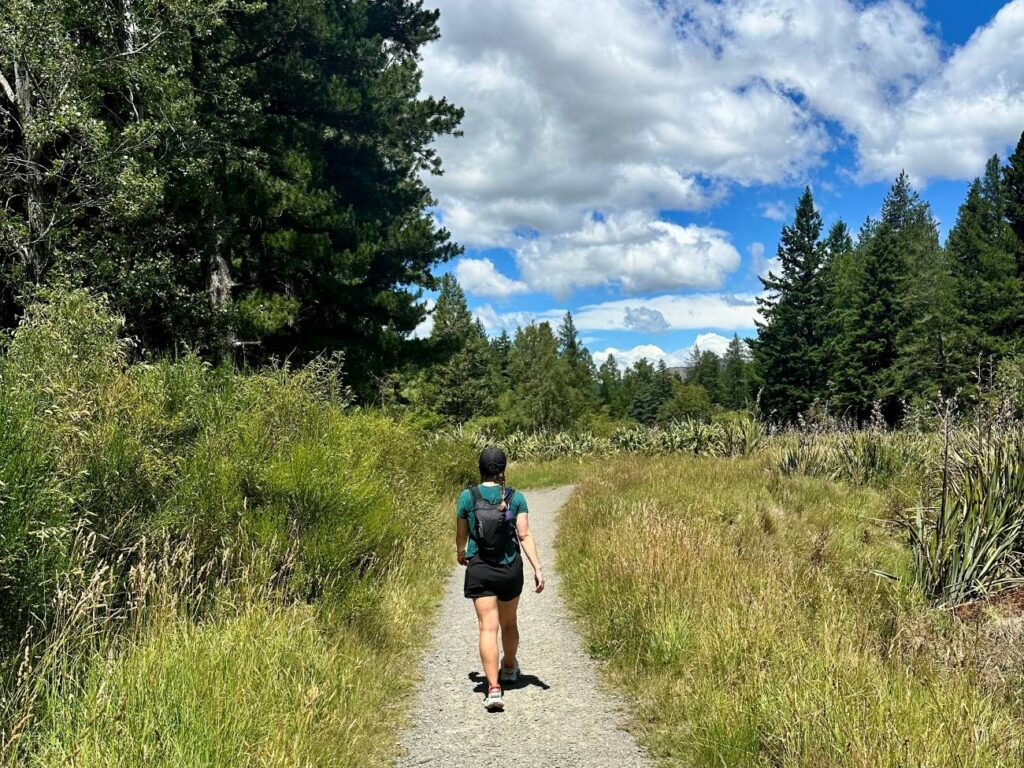
Choose a walk, waterfront, park, market, or neighbourhood where you can wander without needing constant navigation. Keep your phone in your bag, or use airplane mode for a defined period if that feels safe.
You can still take photos if you want to. The only rule is not to post them yet. Let the walk belong to you first.
Lunch: Practice Eating Alone Without Your Phone
Choose somewhere you can sit down properly. Put your phone away while you eat, even if it is only for the first ten minutes.
Solo meals can feel uncomfortable because there is no obvious social role to hide inside. That discomfort is not a sign that anything is wrong. It is often just unfamiliarity. Give yourself a little time to arrive. Notice the food, the room, the pace, and whether your body needs rest before the afternoon.
Afternoon: Use Your Phone For Practical Solo Travel Support
Use your afternoon check-in window to reply to important messages, confirm your next route, check transport, or handle any practical admin. Once that is done, close the apps you used.
This is intentional phone use. You are not pretending the phone is unnecessary. You are using it clearly, then returning to the trip.
Evening: Keep One Meaningful Solo Travel Moment Offline
Choose one evening moment to experience without live sharing. It might be dinner, a viewpoint, a beach walk, a night market, or the first hour back at your accommodation.
Take a photo if you want one, then put the phone away. Some moments feel different when they are allowed to exist before they are turned into content.
Night: Replace Scrolling With A Calmer Wind-Down
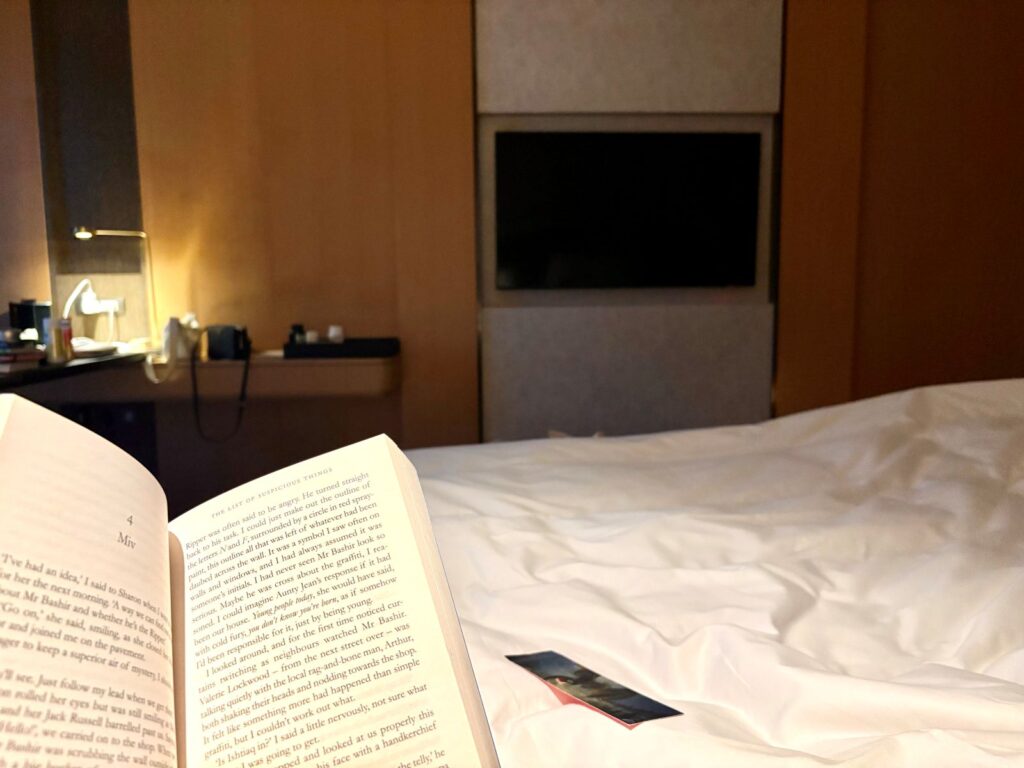
Before bed, avoid using social media as your final activity. Pack for the next day, shower, stretch, read, or write a few lines about what you noticed. Your phone can stay nearby for safety, alarms, or white noise, but it does not need to close the day for you.
Perhaps you could try journaling how you felt during the day using your phone less. When we realise that we are living in the present more, it can make the next day easier to start this routine again.
A scroll-free bedtime is not a moral achievement. It is a way of lowering the volume before sleep.
When A Digital Detox Is Not The Right Goal For Solo Travel
There are days when reducing phone use should not be the priority. If you are arriving late, navigating an unfamiliar transport system, dealing with a delay, feeling highly anxious, managing a health issue, or needing support from someone at home, use the phone.
The same applies if you have accessibility needs, safety concerns, or a destination where you need live information. A realistic digital detox should make travel feel more grounded, not less safe.
This is especially important on a first solo trip. You do not need to make the experience harder to prove that you are independent. Keep the support you need. Once you feel more settled, you can experiment with small phone-light windows.
How To Know Your Soft Digital Detox Travel Is Working
The best measure is not whether you reached a perfect screen-time number. It is whether your phone feels more like a tool and less like the centre of the trip.
You might notice that you check messages less reactively. You may remember more sensory details from the day. You may feel less pressure to post in real time. You might use maps without falling into social media afterwards. You may wind down more easily at night, compare less, or feel more present during meals and walks.
A soft detox is working when you feel supported, not cut off. It should give you more contact with the trip, not more pressure to follow rules.
A Soft Digital Detox Can Help Solo Travel Feel More Grounded
Digital detox travel does not need to be extreme to be meaningful. For anxious travellers, the most supportive approach is often a softer one: keep the tools that help you feel safe, and reduce the habits that pull you out of the present.
You do not have to switch off completely. Start with one meal, one walk, one check-in window, or one scroll-free bedtime. Small boundaries can change the way a solo trip feels.
If this is your first solo trip, the aim is not to prove that you can travel without support. It is to give yourself enough space to notice the trip while still feeling safe. For more psychology-informed travel guides, you can explore the wider Nomadic Balance approach to travelling well. Your phone can still come with you. It just does not have to lead.
This article is for general informational purposes only and is not intended to replace personalised medical, psychological, or professional advice.