14 Easy Ways to Reduce Screen Time While Travelling
Travel is often imagined as freeing: new places, fewer responsibilities, and a break from routine. Yet many of us spend a significant portion of our trip using screens. Between navigating, messaging, taking photos, checking bookings, and scrolling through social media in airport lounges, travel screen time can quietly take over.
This guide offers gentle, realistic ways to reduce screen time while travelling, without giving up safety, convenience, or connection. There’s no pressure to go fully offline. The aim is to simply look up a little more often and feel more present while you’re away.
Why Travel Screen Time Creeps Up So Easily
Phones are genuinely useful while travelling. They help us feel oriented, reassured, and connected, especially in unfamiliar places. The challenge isn’t using your phone, but how easily purposeful use slips into habitual scrolling, particularly when you’re tired, overstimulated, or waiting around.
Small adjustments tend to work better than strict rules. The following ideas are designed to fit around real travel needs, rather than fight against them.
14 Easy Ways to Reduce Screen Time While Travelling
1. Download Everything Before You Leave
Offline maps, boarding passes, hotel details, a translation app, and saved restaurant lists reduce the need for constant searching. Fewer “quick checks” often means fewer accidental scroll sessions when your brain is already overloaded.
2. Make Aeroplane Mode Your Default
When you don’t need data, for example, walking, museum visits, cafés, switch aeroplane mode on. Many travellers are surprised by how relieving this feels once it becomes a habit.
3. Use a Real Camera
Using a camera instead of your phone naturally limits how many photos you take and avoids the familiar loop of photo → notifications → scrolling. Your photos tend to be more intentional, and your attention and presence stay in the moment.
4. Try a Morning “No-Scroll Window”

Give yourself the first 10-30 minutes after waking up without your phone. Daylight, gentle movement, journalling, or practising some simple gratitude phrases can help you align yourself before the digital world steps in. You may like to read our 10-Minute Morning Routine for Travel guide for more suggestions.
5. Keep Your Phone in Your Bag, Not Your Pocket
Out of sight really does reduce automatic checking. If having your phone in your pocket feels safer, a zipped pocket helps create a pause before unlocking it.
6. Remove Apps or Turn Off Unnecessary Notifications
Social apps are often the biggest source of unplanned scrolling. On a recent trip, I removed Instagram from my home screen and didn’t open it once; not because of discipline, but because it simply wasn’t there. Timers can also help create softer boundaries (for example, 15 minutes per day).
7. Create Shared No-Phone Moments (Especially When Travelling With Others)
If you’re travelling with someone, agreeing on a few no-phone moments can reduce friction and help you stay present together. These don’t need to be rigid rules. Simple shared understandings often work best, for example:
- No phones during meals
- Photos at the start of an activity, then away
- First coffee of the day without screens
- Messages are checked once in the morning and once in the evening
These moments often become the memories that stick, precisely because your attention isn’t split. Read more about this in Travelling With Other People: How to Stay Connected Without Losing Presence guide.
8. Create Simple Offline Time Blocks

Choose a window, for example, 1 pm to 4 pm, where your phone stays away unless needed for navigation, tickets, or safety. Time-based boundaries are often easier than constant self-monitoring.
9. Buy a Local SIM or E-SIM Only If You Need It
Limited data can help support a digital detox while travelling. Planning in the morning using Wi-Fi, downloading maps, and relying on offline access is often enough. Many attractions also offer free Wi-Fi. If you’re driving, keep maps on, but try to use data for navigation only.
10. Carry a Small Notebook Instead of Using Your Notes App
Write down restaurant ideas, plans, and reminders by hand. A paper notebook reduces phone pick-ups and could turn into a travel keepsake.
11. Use Your Phone With Intention
Before unlocking your screen, ask: “What am I opening this for?” If the answer is unclear, lock it again. This single pause interrupts autopilot scrolling.
12. Replace Scrolling With a Simple Ritual

When the urge to scroll appears, try swapping it for:
- People-watching
- Journalling
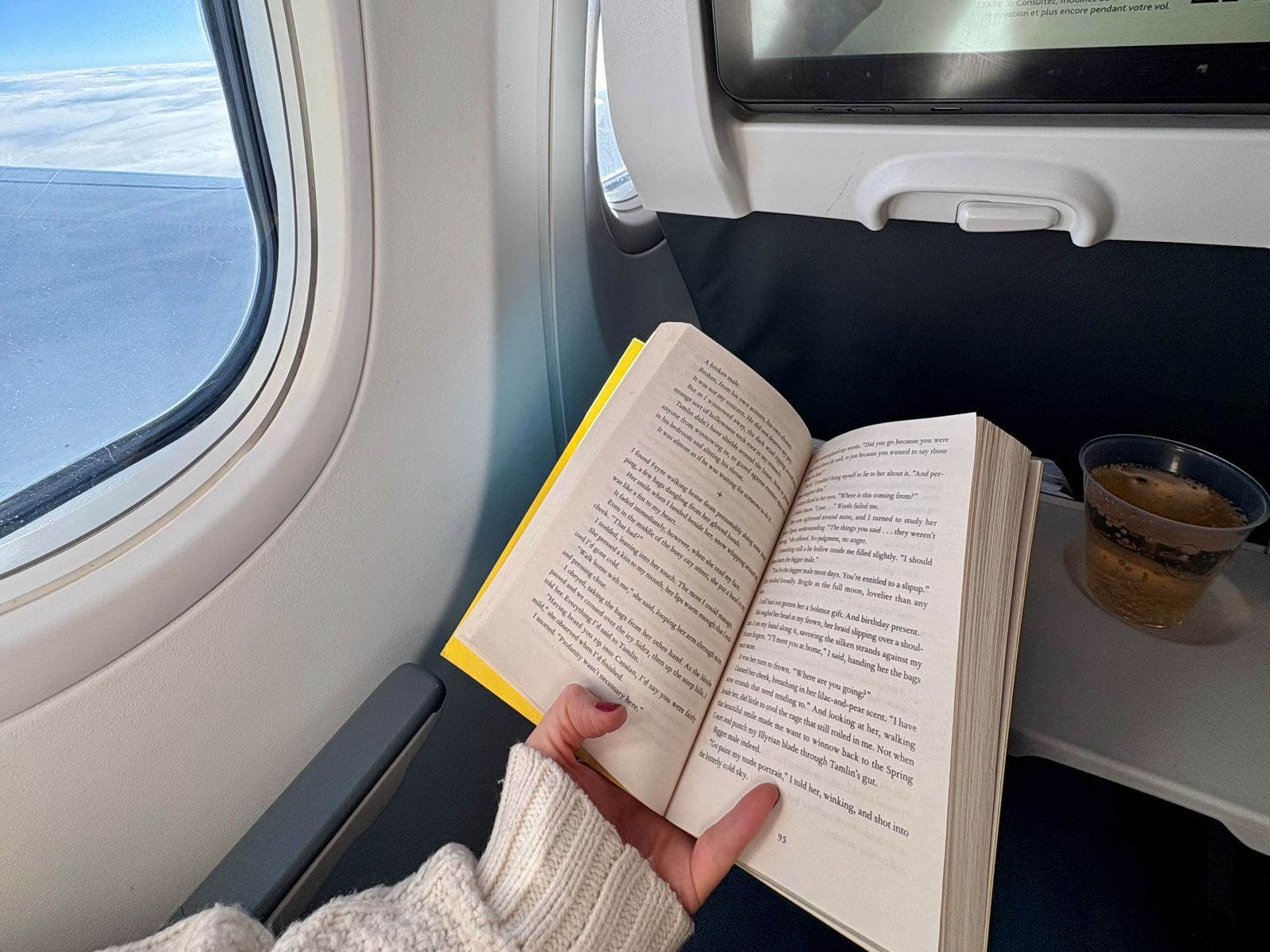
- Reading
- Audiobooks
- Gentle breathing
- Sorting photos offline
Replacement can work better than restriction.
13. Use an Analogue Map (or Print Your Google Maps Area)
Paper maps slow you down in a good way and keep your attention outward. I like the Lonely Planet maps, which are especially useful and include local context beyond directions.
14. Give Yourself Permission to Be Unreachable
This is a holiday, a time to reset and recharge. Rest often feels like doing very little.
- You don’t need to check notifications constantly
- Most messages can wait
- You don’t need to respond instantly
- You don’t need to be online all day
Let close contacts know how to reach you if needed (for example, WhatsApp or iMessage), and allow yourself to step back from other platforms.
What You Notice When You Look Up

Reducing screen time while travelling doesn’t require drastic changes, but a few gentle habits that make it easier to stay present. The less time spent looking down, the more space there is to notice where you are and how you feel.
Presence doesn’t come from perfect digital discipline. It comes from choosing, again and again, to live in the moment surrounding you.
This article is for general informational purposes only and is not intended to replace personalised medical, psychological, or professional advice.