Why Being on Your Phone Feels Comforting When Travelling

Many people expect travel to make them feel more present. New places, fewer routines, fewer responsibilities.
Yet a familiar moment keeps happening. You’re sitting somewhere objectively beautiful, and your hand reaches for your phone before you’ve really taken it in.
This often comes with a quiet layer of guilt. You might tell yourself you should be more grateful, more disciplined, more curious. But this pull towards your phone isn’t a failure of mindful travel. It’s a very human nervous system response to being away from what’s familiar.
When you travel, almost everything that usually helps your body and mind feel settled is disrupted at once. Reaching for your phone is one of the fastest ways to regain a sense of comfort and stability, even if only briefly.
Understanding why being on your phone feels comforting when travelling can make it easier to stay present, without turning your trip into a forced digital detox.
Table of Contents
Why Travel Pulls You Away From Presence

Travel is stimulating in ways we don’t always notice. You’re taking in new places, making more decisions than usual, and adjusting to unfamiliar streets, social norms, languages, beds, sounds, and daily rhythms, often all at once.
From a nervous system perspective, this means your attention is working harder than usual. Presence requires spare capacity, and travel often reduces it.
This is why staying present while travelling can feel surprisingly effortful, even on trips you’ve looked forward to for months.
Curious to explore the science behind this?
This blog draws on established behavioural science research and applies these principles to travel contexts. Sources are linked in our Evidence & Further Reading section.
How Phones Regulate Emotion While You’re Away
Phones can be surprisingly effective at regulating emotion. When you travel, your brain is taking in more new and unpredictable information than it’s used to. Even positive experiences add strain. Your phone offers a quick sense of relief from that mental load.
Scrolling, messaging, watching something familiar, or checking updates can quickly soften discomfort, boredom, overwhelm, or social unease. The shift is often immediate.
The important thing to notice is that feeling comforted isn’t the same as feeling present. The relief may not last long, which is why the urge to check often comes back again and again.
Why Familiarity Feels Safe in Unfamiliar Places
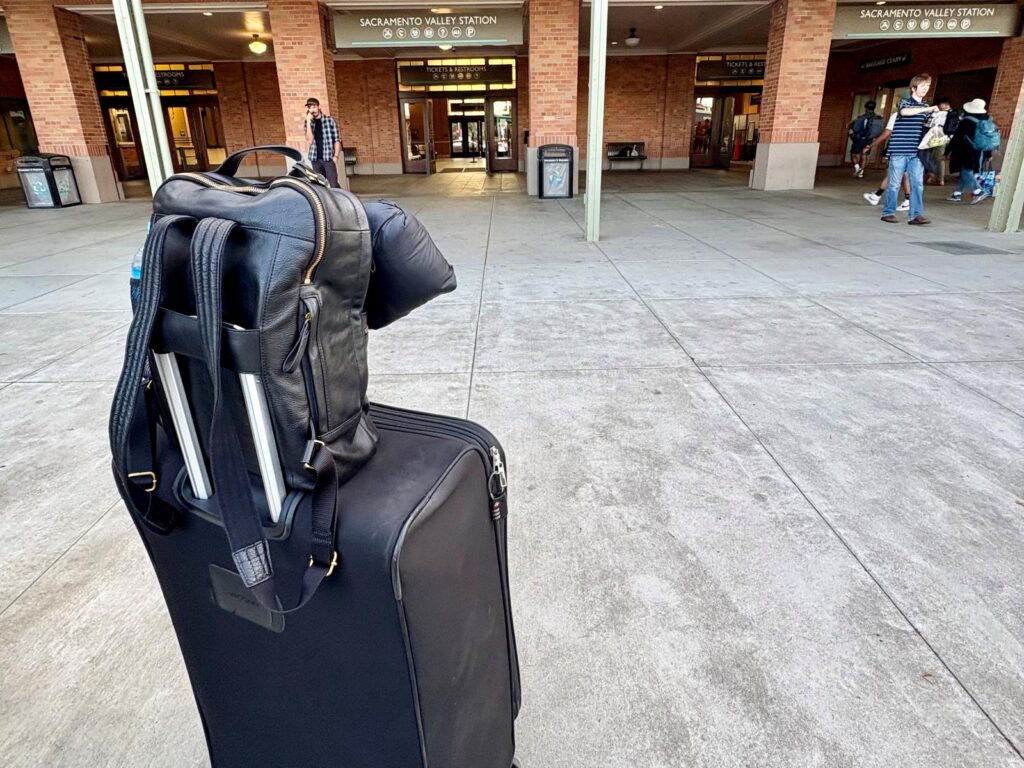
When you travel, a lot of the things that usually help you feel settled disappear at once. Language, routines, social roles, and even your sense of confidence can feel a little less steady.
Your phone is one of the few things that stays the same. The same apps, the same layout, the same familiar rhythms. That predictability can feel surprisingly grounding when everything else is changing.
Reaching for it isn’t a weakness; it’s your nervous system looking for something familiar to hold onto.
Phones as Social and Psychological Anchors
Even when travelling with others, there are many in-between moments. Waiting, walking alone, navigating uncertainty, or sitting quietly in unfamiliar social settings.
Phones offer a low-effort connection during these gaps. Messages, familiar voices, and known social worlds are available without needing confidence, shared language, or emotional energy.
This can feel especially noticeable when travelling with other people. Shared moments can quietly slip away when everyone starts using their own phone to self-soothe at the same time.
If you’re curious about how this plays out in group trips, Travelling With Other People: How to Stay Connected Without Losing Presence explores how shared attention shifts on the road, and how to protect it without forcing constant togetherness.
Why Phones Can Pull You Out of the Moment
Being present requires tolerance for pauses, uncertainty, quiet, and mild discomfort. Travel already stretches this capacity. Phones smooth the edges of waiting and unfamiliarity, making travel feel easier but sometimes flat.
Over time, moments may blur, not because they weren’t meaningful, but because attention was repeatedly redirected before it could settle. This may be one reason people return home with photos, but fewer felt memories.
How to Stay Present While Travelling Without Forcing a Digital Detox
Presence rarely improves through restriction alone. Trying to reduce screen time while travelling through willpower can backfire. Attention increases when the nervous system feels safe enough, not when it feels deprived.
Support Regulation Before Reducing Screen Time
Rather than thinking in terms of phone reduction, it can be more helpful to think about supporting your attention. When your body feels more settled, the pull towards your phone often softens on its own.
This idea sits at the heart of Mindful Travel: How to Stay Present While Travelling, which explores presence as something that grows from feeling safe and supported, rather than something you have to force through discipline.
Use the Phone Intentionally, Not Reactively
Phones are genuinely useful while travelling: navigation, safety, coordination, and planning. The shift is noticing why you’re reaching for it.
A small pause before unlocking can help. One breath. One glance around. Often, that’s enough to decide whether you actually want to check or whether something else could meet the same need.
Create Familiarity Without the Screen
Rather than removing the phone, replace the function it’s serving. Repeating routines can help. The same café each morning, a familiar walking route or a consistent place to sit and write or read.
Sensory grounding matters too: temperature changes, local sounds, the feeling of your feet on the ground. Some travellers find it helpful to carry a physical object that signals continuity, like a journal, perfume, or something small from home.
Choose Travel Structures That Reduce Cognitive Load
Presence becomes much easier when your environment doesn’t demand constant adjustment. Slower itineraries, fewer transitions, and more stable accommodation reduce mental load. When you’re not constantly orienting yourself, attention has more space to rest.
This is one reason longer stays and familiar routines often feel more relaxing than fast-paced trips.TrustedHousesitters Review (2026): A Wellbeing-Focused Way to Travel looks at how routine and responsibility can support regulation and presence while you’re on the road.
Presence Grows When You Feel Safe Enough to Look Up

Wanting comfort while travelling is completely normal. Reaching for your phone is often your nervous system responding to change, not a sign that you’re travelling the wrong way.
Understanding why being on your phone feels comforting when travelling can shift how you relate to those moments. It’s less about self-control and more about noticing what your attention is asking for.
Presence isn’t about getting rid of your phone completely. It’s about making a bit more room for your attention to land elsewhere. When safety, familiarity, and connection are supported, the urge to check often eases on its own, and presence tends to follow, without effort or force.