Hiking in Switzerland As A Travel Reset: Why It Can Feel So Regulating
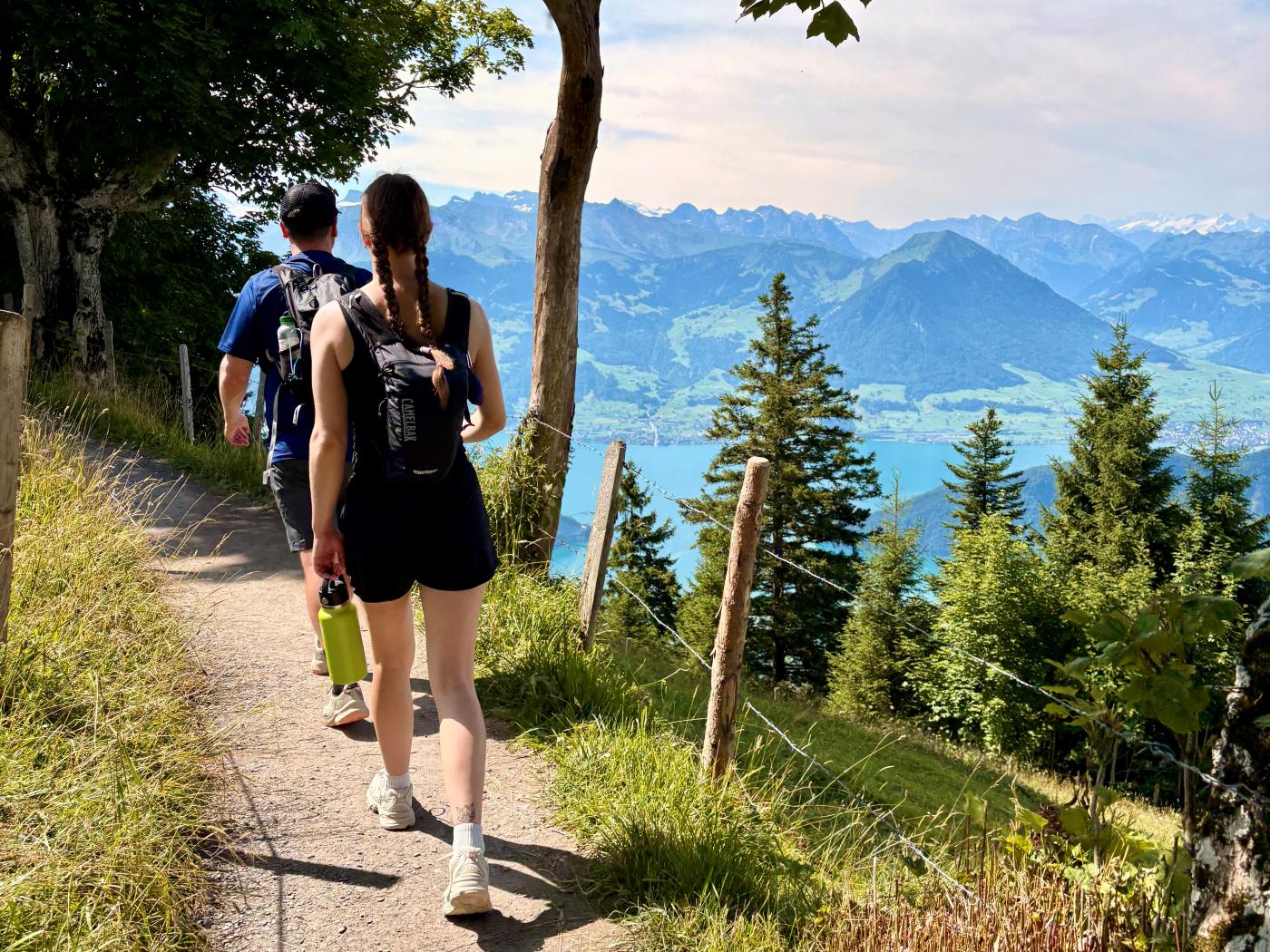
Hiking in Switzerland sits on many people’s bucket lists, usually for the scenery, the trails, and the experience of being in the Alps. What is less often considered is how it changes the way travel actually feels.
Rather than focusing on what you see, it can be more useful to notice what changes in your body. You might check your phone less, move at a slower pace, or find it easier to sit still without needing to fill the time. These small shifts tend to reflect how much your environment is asking from you.
In busier destinations, like large cities, that demand tends to stay high; you are constantly navigating, deciding, and responding. In Switzerland, particularly when you are out on a trail, that demand often eases.
That is part of what makes hiking in Switzerland feel different. It is not only the scenery. It is the way the environment places less pressure on your attention, which can make it easier to settle into the experience. After a short period of walking, it can feel like your attention is not being pulled in as many directions.
Table of Contents
This is part of the wider lens at Nomadic Balance, where travel is approached through how it feels in your body rather than just what you see or do. Switzerland happens to offer many of the conditions that make that kind of experience easier to access: open space, quieter sensory environments, water, trees, mountain views, and walking routes that often feel accessible rather than overwhelming.
Why Hiking in Switzerland Can Feel So Regulating
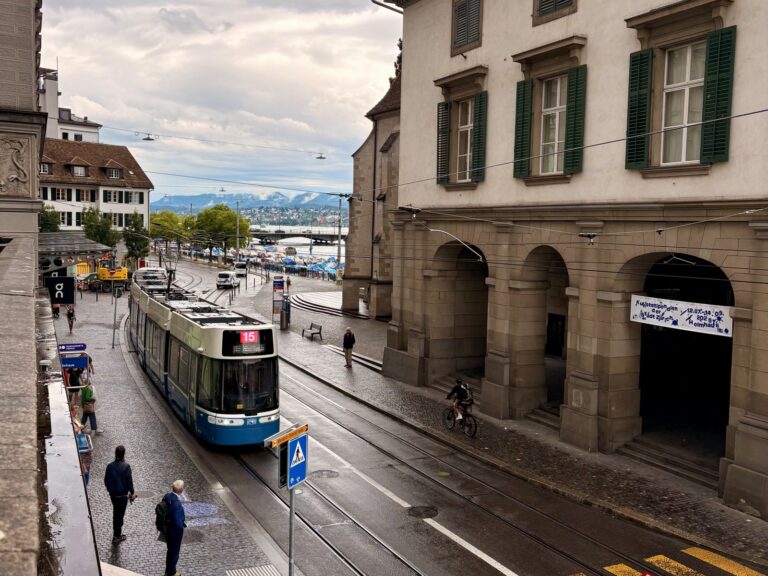
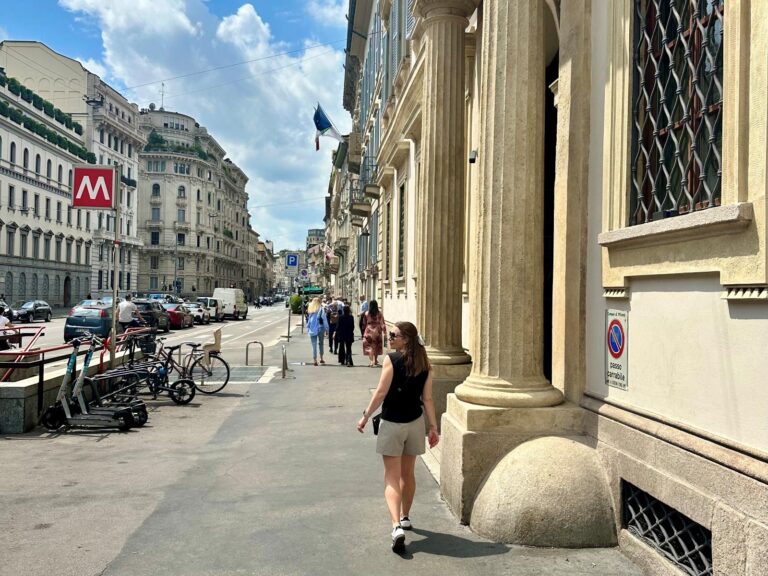
The difference becomes clearer when you compare it with more stimulating environments. In busy cities, your attention is continuously being directed. You are navigating transport, reading signs, filtering noise, responding to crowds, and making dozens of small decisions without really noticing how much effort that takes.
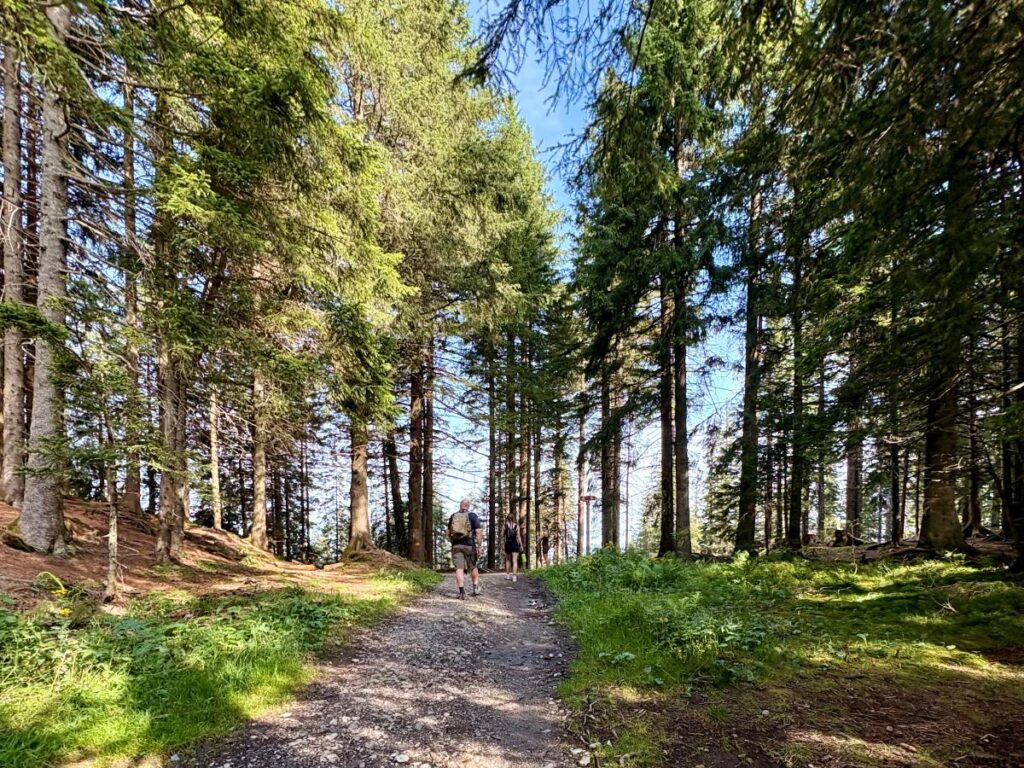
By contrast, alpine environments often ask less of you. There is usually more visual space, less crowding, and a slower rhythm built into the surroundings. When you are on a lake path, a forest trail, or a well-marked mountain walk, your attention can soften rather than stay in constant problem-solving mode.
This is also where blue and green space matter. Lakes, rivers, forests, and mountain landscapes are not just beautiful backdrops. They can give your system a chance to recover during travel. They create the conditions for less sensory overload and a steadier sense of presence.
Seen this way, hiking in Switzerland does not need to be framed as an ambitious outdoor activity. It can be understood as a more deliberate way of resetting while you travel. You are not only going for a hike. You may also be giving your nervous system a quieter environment in which to recover.
What Nature Exposure Can Do To Your Brain And Body
Research tends to point in the same direction here. Natural settings, particularly those with elements like water, trees, and open space, are associated with lower perceived stress and improved cognitive functioning compared with more built, high-stimulation environments.
Two of the main frameworks used to explain this are Stress Recovery Theory and Attention Restoration Theory. While they approach the question slightly differently, they point towards a similar idea: some environments allow both your nervous system and your attention to rest in ways that are harder to access elsewhere.
What this usually looks like is a gradual shift rather than a dramatic one. You may notice that your thoughts feel less scattered, that it is easier to focus on one thing at a time, or that you feel less pressure to constantly engage with what is around you.
This is partly because natural environments tend to place fewer demands on directed attention. Instead of needing to actively process and respond to multiple inputs, your attention is held in a more passive way. You are still noticing what is around you, but you are not required to act on it in the same way.
Over time, this can help restore cognitive capacity and help your body settle into a calmer state, particularly if you have been moving through more demanding environments beforehand.
Curious to explore the science behind this?
This blog draws on established behavioural science research and applies these principles to travel contexts. Sources are linked in our Evidence & Further Reading section.
Stress Reduction And Cortisol Regulation
Spending time in green environments has been associated with lower levels of cortisol, the body’s primary stress hormone, as well as broader reductions in perceived stress.
This does not depend on doing anything intense. Gentle walking, particularly in quieter natural settings, appears to be enough to begin shifting how your body feels.
You may not experience this as a clear before-and-after moment. It is usually more gradual than that. Breathing may feel a little slower, your thoughts a little less urgent, and the sense of being on edge less constant.
This is one reason hiking in Switzerland can work so well for travellers who are already feeling mentally tired. The benefit is not that Switzerland has unique evidence of its own in this context, but that its landscapes often make it easier to access the kinds of natural settings that research has already linked with stress reduction.
Attention Restoration And Cognitive Reset
When you are travelling, your attention is rarely at rest. Even on slower days, there is usually something to organise, navigate, or decide.
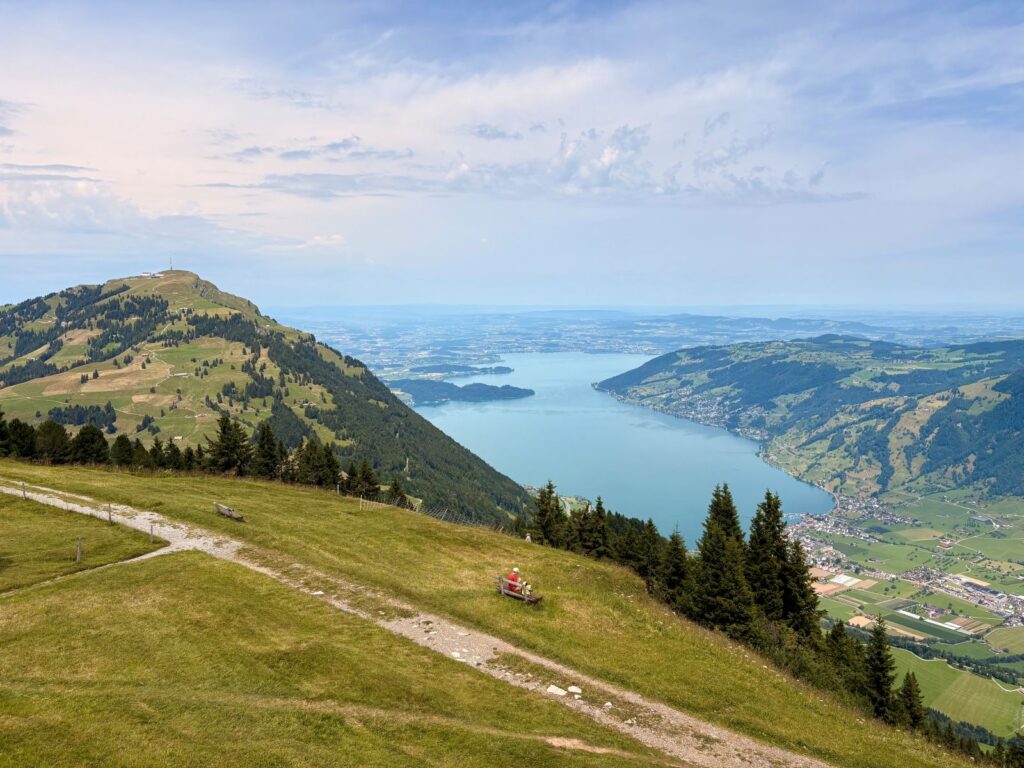
Natural environments can shift that pattern without needing much from you. Instead of requiring focused, directed attention, they allow what is often described as soft fascination. You notice what is around you, but you are not being asked to respond to it.
Light reflecting on water, movement through trees, and distant sounds in the background can hold your attention without demanding anything from it. Over time, this can make it easier to think clearly again. Decisions feel less effortful, and it becomes easier to stay with what you are doing rather than constantly anticipating the next step.
This helps explain why nature and mental wellbeing are so often discussed together, and why hiking in Switzerland can feel mentally restorative even when the walk itself is fairly simple.
Why Water Can Feel More Calming
Many people notice a distinct difference when they are near water compared with other environments.
Research into blue space suggests that water-based environments are often associated with stronger feelings of restoration and wellbeing, although the exact mechanisms are still being explored.
Part of it may be the consistency. Water tends to move in predictable, continuous ways, and visually it creates a more stable field of attention. There is less interruption, which can make it easier for your mind to settle.
This is one reason lake routes can be such a good entry point for hiking in Switzerland for beginners. Walking alongside a lake or river often feels steady in a way that is hard to replicate elsewhere. There is less need to adjust or react, and that alone can make things feel a little easier mentally.
How To Use Hiking in Switzerland As A Travel Reset
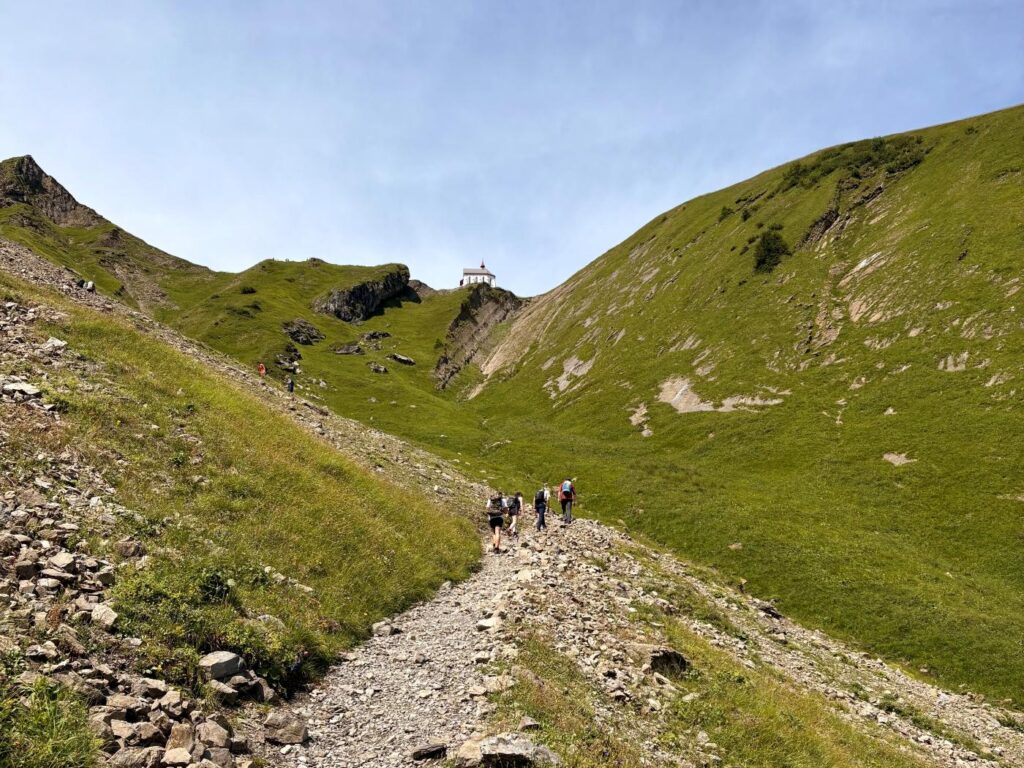
When you approach it differently, hiking in Switzerland becomes less about distance or achievement and more about how you move through the environment.
Before you go, it helps to choose routes that require very little decision-making, especially if you are already feeling mentally tired. Well-marked Swiss hiking trails or straightforward lakeside paths reduce the need to constantly check maps or plan your next step. If your brain already feels full, even minor decisions can make the day feel more effortful.
While you are walking, allowing your pace to slow down slightly can make a noticeable difference. It often feels counterintuitive at first, particularly if you are used to trying to make the most of your time. A regulating walk tends to feel different from a productive one. It creates more space for silence, longer pauses, and fewer inputs.
Reducing inputs can also help. This might mean taking fewer photos, leaving music off for a while, or simply allowing longer stretches without interruption. It is not about removing enjoyment, but about giving your attention space to settle.
Afterwards, it is easy to move straight back into stimulation. I have found that when I do that, the sense of calm fades more quickly. If you can, giving yourself a short buffer helps. Sitting by the water, eating something simple, or pausing before opening your phone again allows the shift to carry through a little longer.
The Best Types Of Swiss Hiking Trails For Mental Reset
Not all hikes create the same experience. Some demand more from you physically and mentally, while others feel more restorative. If your goal is regulation rather than challenge, it helps to think less about famous routes and more about the kind of environment your system actually needs.
Lake Walks
Lake walks are often one of the most accessible ways to experience hiking in Switzerland. Routes around lakes such as Lucerne or Geneva are often flatter and easier to follow, which means you can move without needing to think too much about where you are going.
That can make them especially helpful when your energy is low, but you still want to be outside. They offer many of the benefits of nature exposure without asking much from you in return.
Forest Trails
Forest environments tend to change how a place feels in a very immediate way. Light is filtered, sound is softened, and the space feels more contained. For travellers who feel overstimulated or mentally scattered, that softer sensory environment can be particularly helpful.
There is research suggesting that time spent in forest environments is associated with reduced stress and improved mood, even without structured activity. In the Swiss context, this does not mean every forest trail is automatically therapeutic. It simply means that Swiss hiking trails often make these kinds of environments easier to access as part of an ordinary trip.
Alpine Panoramas
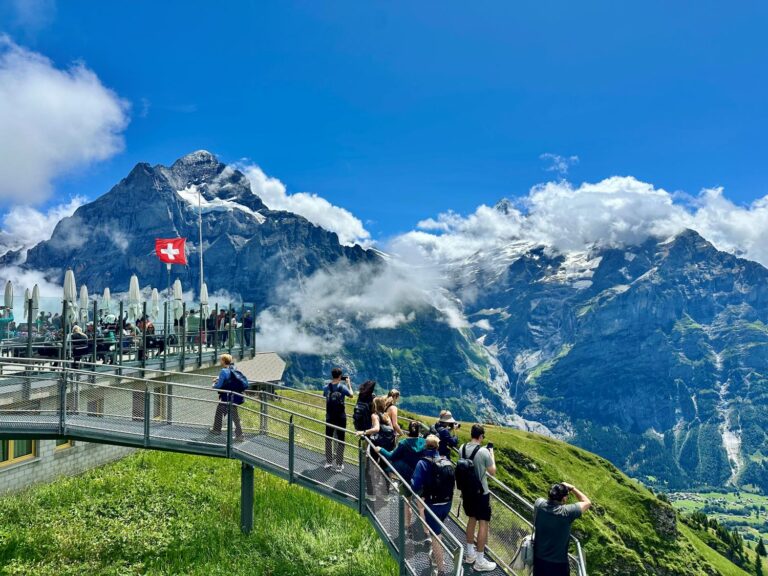
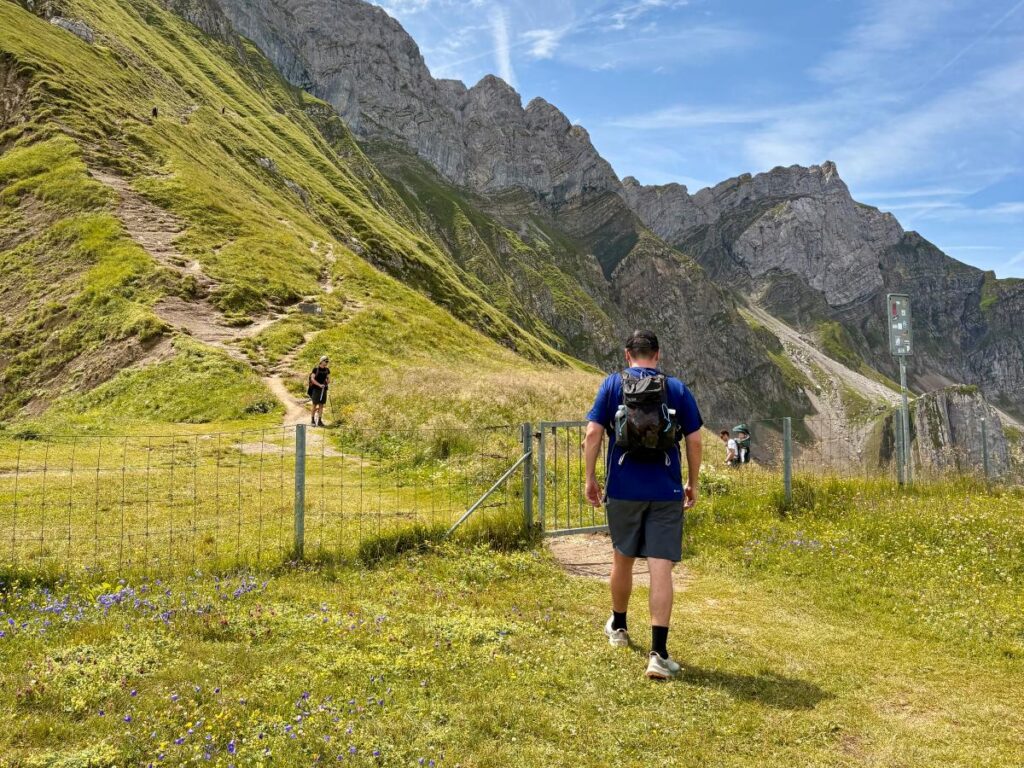
Higher altitude environments offer a different kind of experience. The scale of the landscape can create a sense of distance from everyday concerns, and sometimes that shift in perspective is part of what feels relieving.
Research into awe suggests that these environments can change how you relate to your thoughts, making them feel less immediate or overwhelming. That does not mean mountains solve stress, but it does help explain why some of the best hikes in Switzerland leave people feeling mentally clearer as well as physically refreshed.
What To Pack For A Low-Stress Day Of Hiking in Switzerland
Packing can either add to decision-making or reduce it. When you are trying to make hiking in Switzerland feel regulating, it helps to think about packing as a way to reduce future cognitive load. The less you need to improvise later, the easier the day usually feels.
That often means keeping things simple and consistent. Water, familiar food, weather-appropriate layers, and an offline map or pre-downloaded route are usually enough. A low-decision setup leaves more space for the walk itself to feel calm.
The aim is not to optimise performance. It is to make the experience feel easier to move through.
When You Do Not Feel Like Hiking in Switzerland
It is common to feel some reluctance to go on a hike, especially if you are already tired or overstimulated.
That resistance is often a sign that you need something with lower effort, not that you need to push harder. Travel can easily turn every good idea into something performative, and hiking is no exception.
In those moments, it helps to reduce the threshold. A shorter walk, even twenty minutes by water or through a quiet area, can still provide many of the benefits associated with being in natural environments. For some travellers, that smaller, easier version is what makes the difference between forcing a plan and actually receiving the reset they needed.
I have found that starting smaller often makes it easier to continue naturally, without forcing it.
How To Build Hiking in Switzerland Into Your Travel
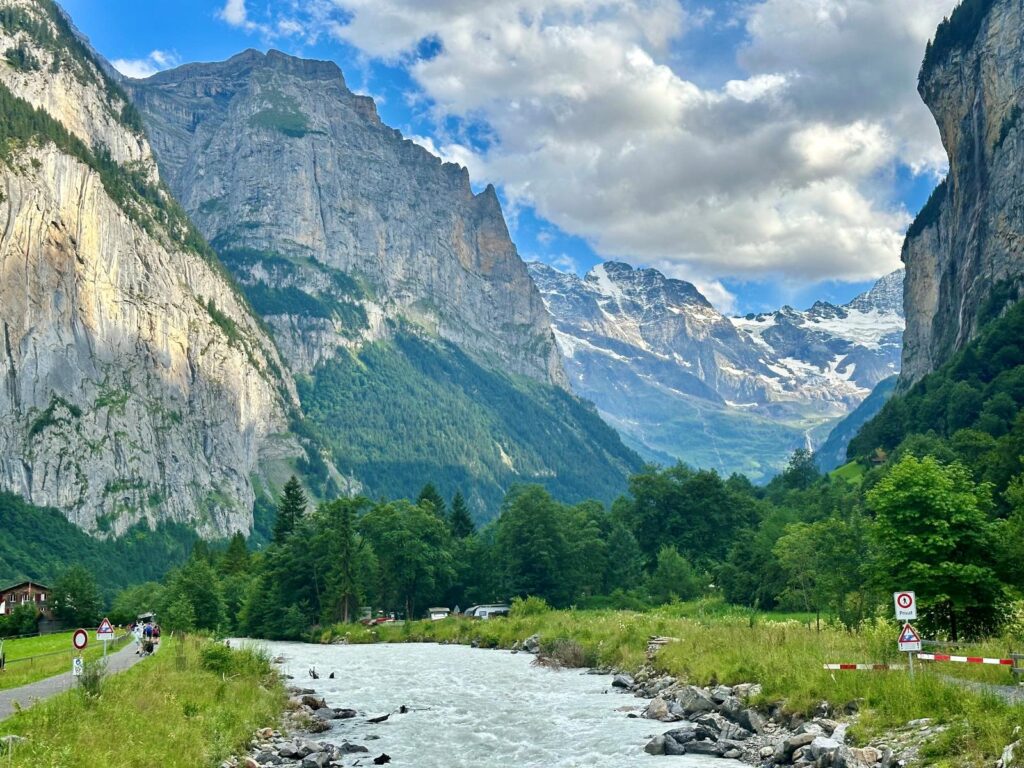
Rather than treating hiking in Switzerland as a one-off activity, it tends to work better as part of how you move through your trip.
During more stimulating periods of travel, regularly stepping into quieter environments can help balance the overall load. This does not need to be rigid. It might simply mean that every few days, especially on a busier itinerary, you make space for a lake walk, a forest path, or a quieter half-day outdoors.
This also links naturally with the broader role of green space in travel. If you already think about rest, sleep, food, and screen use as part of your regulation while away, time outdoors can sit alongside those practices rather than apart from them.
Over time, that changes the experience from something that gradually drains you into something that feels easier to stay present in.
This article is for general informational purposes only and is not intended to replace personalised medical, psychological, or professional advice.