How To Use Public Transport Abroad Without Feeling Overwhelmed
Public transport is often framed as the cheaper option to use when travelling. While that is usually true, it misses a more useful question: how does it make a day actually feel?
When you are travelling, sometimes it is not just about getting from A to B. It is about how much effort each decision takes, how stimulated you feel, and whether you have space to settle into where you are.
At the right moments, using public transport while travelling can subtly take pressure off your day. It can make things feel simpler, slower, and easier to move through, without needing to plan for that actively.
It can also become part of a broader way of supporting your travel wellbeing, rather than just your itinerary.
Table of Contents
Why Using Public Transport While Travelling Feels Easier Than You Expect
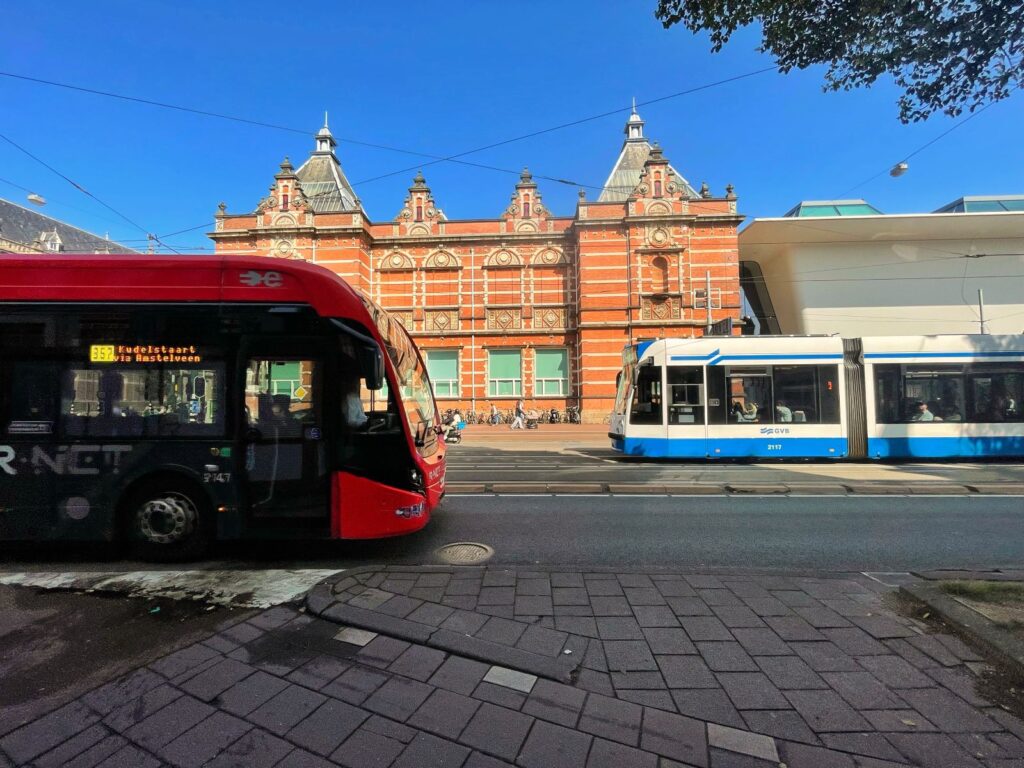
A lot of travel fatigue does not come from big moments. It comes from the accumulation of small decisions. Things like where to go next, how to get there, or whether this is the quickest option. These decisions are manageable at home, but in a new place, your brain is already working harder than usual.
Public transport can help remove some of those decisions. Routes are fixed, and stops are clear; the system has already made many of the decisions for you.
You still need to make some decisions, like choosing where you are going, but you are no longer solving every step of the way. That shift is subtle, but it often feels like a bit of relief once you’re in it.
How Public Transport Reduces Travel Stress And Decision Fatigue
When everything around you is new, your attention is constantly engaged: streets, signage, language, it all adds up. This is where public transport travel tips often focus on logistics. But the more useful benefit is what happens internally.
You are not navigating traffic or checking directions every few minutes. You are not making micro-adjustments in real time. Instead, you can take a seat and look out the window, or just stand and move with everything around you without needing to think too much about it.
I’ve found that even a short train or bus ride can feel like a reset point in the middle of the day. Not because anything dramatic changes, but because you are no longer actively managing everything.
Curious to explore the science behind this?
This blog draws on established behavioural science research and applies these principles to travel contexts. Sources are linked in our Evidence & Further Reading section.
Why Public Transport Helps You Feel Calmer While Travelling

Some travel days can feel intense. There are loud noises, lots of movement, big crowds, and constant novelty. This can all build up, and what is often missing are natural pauses.
Public transport creates these pauses without needing to plan them. You may be lucky and get a window seat to take in the scenery of a new place. Or you may stand and have a few minutes of not having to engage. That small space, where nothing is really required of you, is often enough for your attention to settle a little.
That shift from doing to observing is small, but it changes how the day feels. You notice it more afterwards than in the moment.
How Public Transport Helps You Experience A City More Naturally
When you walk through a city, you notice the minor details, driving or taking a taxi moves you quickly between points, and public transport sits somewhere in between.
It moves through neighbourhoods at a pace that lets you notice things without trying. You start to see how areas connect and observe where people live, not just the main tourist attractions.
You begin to notice patterns, like how busy the morning commute can be and how quiet it becomes later. You’re not just moving through the city; you start to get a feel for how it actually works.
Saving Money While Using Public Transport Abroad
Cost still matters, even if it is not the main focus. Using frequent taxis or rideshares can create small, repeated spending decisions throughout the day. Even when affordable, they add a layer of background consideration.
Using public transport abroad changes that structure. Costs are usually predictable, often capped, and easier to account for. That predictability means you’re not constantly weighing up whether something is ‘worth it,’ which is one less thing to think about.
It is less about saving money and more about removing those ongoing calculations in the background. Knowing what to expect can feel just as valuable as the savings themselves.
How Public Transport Supports A Slower, More Manageable Travel Pace
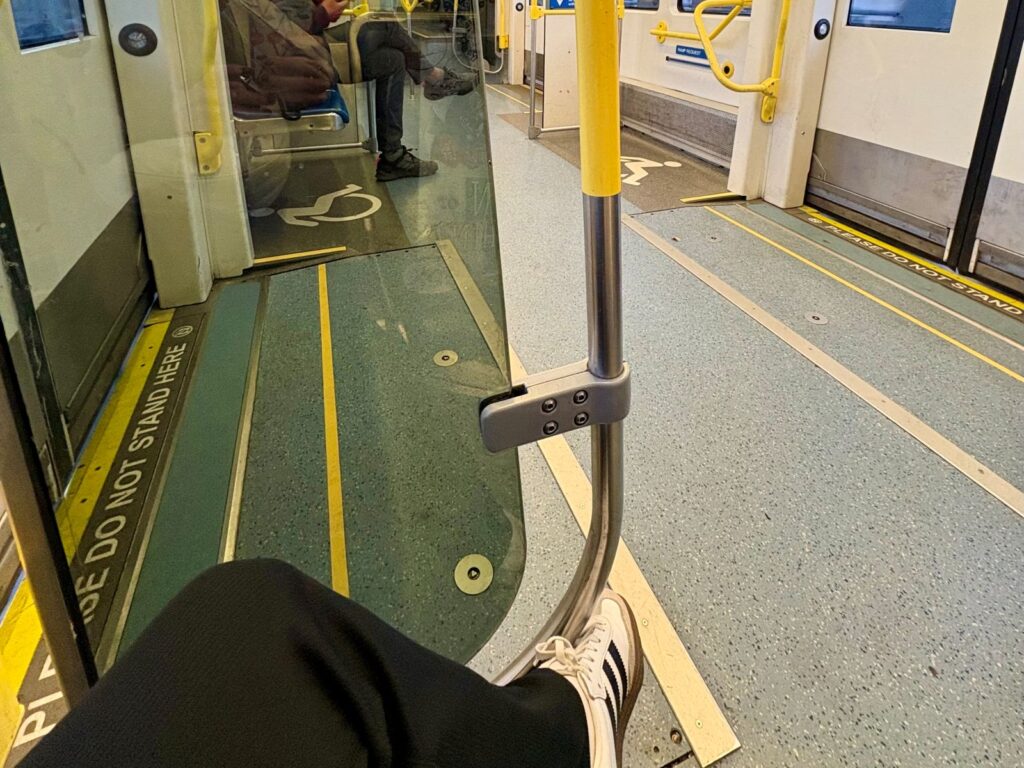
When you rely on taxis or direct routes, it becomes easy to fit more into a day than you actually have capacity for. Public transport introduces natural limits. You work with routes and timing rather than optimising every movement.
At first, this can feel a bit inefficient, but it often settles into a better rhythm than you expect. You spend longer in fewer places and move with a bit more intention. This introduces the concept of slow travel, and it becomes easier to actually take in where you are.
Why The First Journey Feels The Hardest
For many people, the most difficult part of using public transport while travelling is not the system itself, but the first time you try to use it.
Before that first journey, everything feels uncertain. You might be looking at maps you do not fully understand, trying to work out ticket options, or wondering if you are about to get on the wrong train. Even simple things like where to stand or how to pay can feel unclear.
If you do make a mistake, it’s okay. I’ve caught the wrong train before; it’s more common than you think. If that happens, get off at the next stop and head back the other way. It often becomes a small thing you might laugh about later on.
Once you have used public transport once, the pressure usually drops. You start to recognise patterns, understand how stops are announced, and how the system works. What felt unclear becomes familiar much faster than expected.
The first journey is often the only one that feels genuinely effortful. After that, it tends to become one of the easier parts of the day.
If you’re planning, you can explore our public transport guides by destination to get familiar with how different systems work before you arrive.
When Public Transport Isn’t The Best Option While Travelling
Although there are lots of benefits to public transport, it’s not always the most supportive choice. After a long flight, when you are tired or overstimulated, learning a new system can feel like too much. The same applies in places where signage is unclear or routes are complicated.
Crowded or poorly ventilated services can also shift the experience in the opposite direction. Although it’s fun to experience a rush hour once, you don’t always want to be in that intense environment.
Sometimes, time matters more, such as early departures, late arrivals, or tight connections. In these instances, direct transport may be a better option and ease travel anxiety.
The aim is not to always choose public transport. It’s more about recognising when it will make things feel easier, and when it probably won’t.
Five Simple Public Transport Travel Tips For First-Time Users
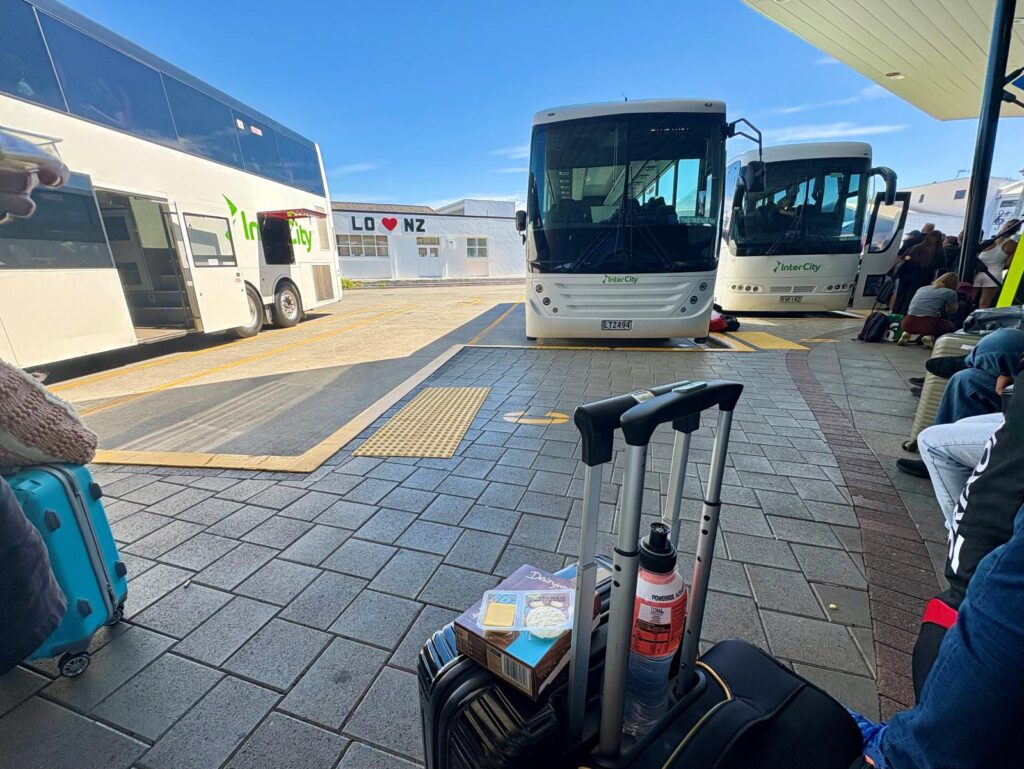
Before you arrive, check one or two key routes rather than trying to understand the entire system. For example, plan your trip from the airport to your accommodation.
Before arriving, you can also quickly search how to pay for the form of public transport you plan to use. Many systems now allow you to pay with your mobile wallet, making things very easy on arrival.
It can also help to download an offline map or save key stops, so you are not relying on data when you first arrive.
Start with shorter, low-pressure journeys to build familiarity before relying on it for important timings.
If you feel overwhelmed, switch to a simpler option for that trip. You can always come back to it later. There is no need to get it perfect straight away.
These small adjustments make using public transport abroad feel much more manageable, especially at the start of a trip.
A More Sustainable Way To Move Through A Place (Without Overthinking It)
There is often a quiet tension when travelling between wanting to explore and being aware of our environmental impact. I know it is something that is often in the back of my mind while travelling.
Public transport is one of the simplest ways to reduce that feeling. Choosing a lower-emission way to travel can bring your decisions a little closer to your values, without requiring extra effort or planning.
That sense of alignment can ease some of the background tension, while also making your day feel simpler and less mentally demanding, often alongside the added benefit of lower costs.
FAQ: Using Public Transport While Travelling
Is it hard to use public transport in another country?
It can feel confusing before you try it. Most travellers find that once they complete one journey, it becomes much easier to understand how everything works.
How do I use public transport abroad for the first time?
Start with a simple route, ideally at a quieter time of day (not during work rush hours). Knowing your stop and following your journey on a maps app can help you feel more certain without needing to memorise anything in advance.
Is public transport safe when travelling?
In many cities, public transport is a normal part of daily life and widely used by locals, though safety and comfort can vary depending on location and time of day. I usually avoid it late at night if I’m on my own.
Is public transport better than taxis or rideshares (Uber, Lyft, etc.) when travelling?
It depends on the situation. Public transport often feels less mentally demanding once you are familiar with it, while taxis and rideshares can be more supportive when you are tired, short on time, or overwhelmed being somewhere new.
What if I feel overwhelmed using public transport?
That response is common, especially at the start of a trip, or if you’re not used to using it at home. Taking one shorter journey first can help ease that feeling.
Do I need to plan every route?
Not usually. Understanding one or two key routes is often enough to get started. Most systems become easy to navigate once you are using them.
A Simpler Way To Move Through Your Day
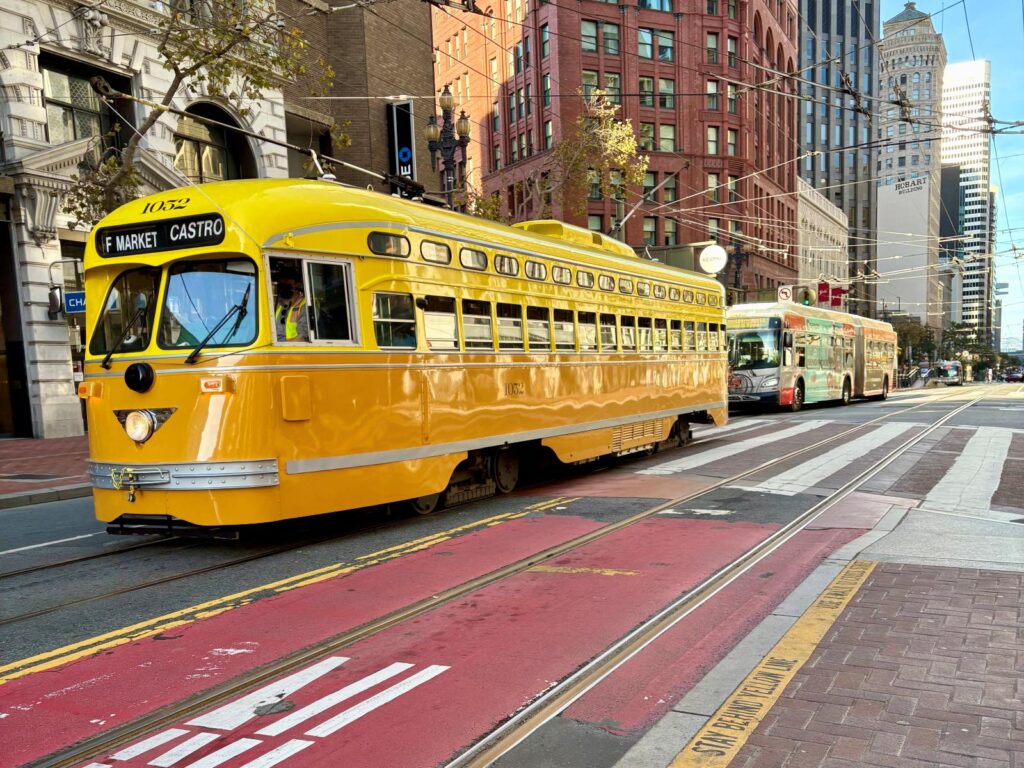
Public transport is often treated as a compromise; you take it because you have to. But in the right context, it can make a day feel lighter, less managed, and less rushed.
You are still moving, still exploring, still getting where you want to go. But with fewer decisions, less pressure, and more space to actually notice where you are.
You do not need to rely on it for every journey. But using it at the right moments can shift the tone of how travelling feels. Sometimes, that small shift is what makes a place feel more manageable and more enjoyable, too.