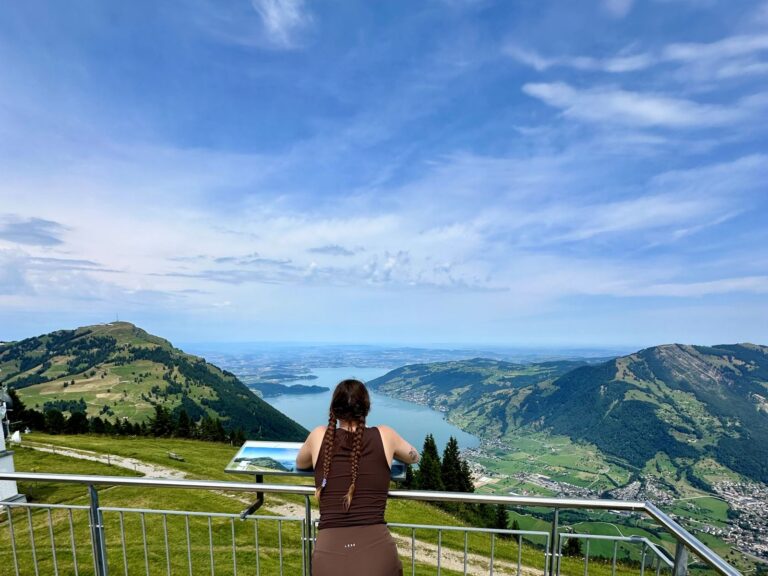
Grounding Practices for Travelling: How to Stay Present When Everything Changes

Travel is often meant to feel energising, but for many people it can quietly feel like the opposite.
Between unfamiliar beds, constant decisions, navigation, notifications, and new surroundings, your attention can scatter quickly. You might notice you’re technically there, but not fully in your body. Days blur, moments slip past, and you arrive somewhere beautiful, feeling oddly unanchored.
That experience isn’t a failure of gratitude or mindfulness. It’s a predictable response to constant environmental change, and it’s exactly why grounding practices for travelling can be so helpful.
Table of Contents
Why Travel Can Leave You Feeling Ungrounded
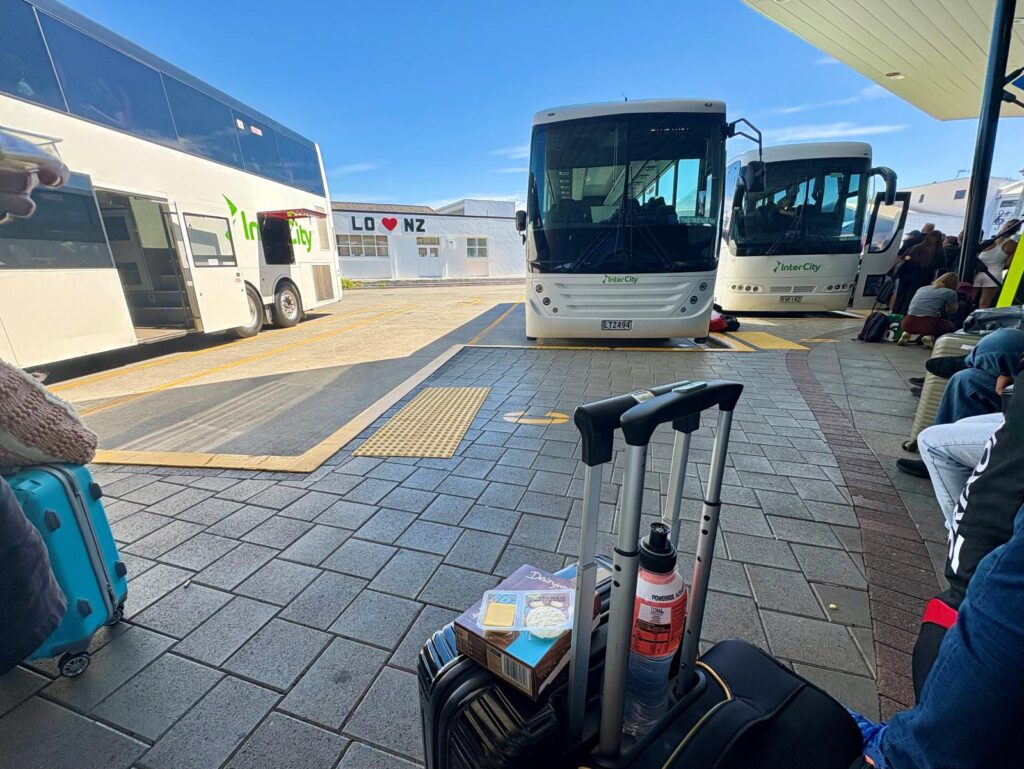
When you travel, many of the things that usually support orientation disappear at once. Familiar cues, predictable rhythms, and environmental signals that help your system settle are suddenly gone.
As predictability drops, mental load rises. Attention becomes more effortful and more outward-focused, pulled towards navigation, decision-making, and monitoring what’s unfamiliar. This state is useful for logistics and safety, but it makes staying in the moment harder.
Over time, this constant scanning can contribute to restlessness, fatigue, low-level anxiety, and a subtle sense of disconnection from the experience of being there.
Curious to explore the science behind this?
This blog draws on established behavioural science research and applies these principles to travel contexts. Sources are linked in our Evidence & Further Reading section.
What Grounding Practices for Travelling Actually Are

A grounding practice is a small, repeatable behaviour you carry with you across locations. It isn’t a routine to optimise, a productivity habit, or a spiritual exercise. Instead, it’s a simple action that introduces continuity into changing environments.
Grounding practices for travelling work because they give your system something familiar to return to. Rather than eliminating novelty, they create a stable reference point within it. Even a small sense of sameness can make it easier for attention to settle and for experiences to register more fully.
The Psychology Behind Grounding While Travelling
Grounding is easier in predictable environments. When predictability drops, your attention tends to stay on high alert, scanning what’s around you rather than feeling anchored in your body.
Small, repeated cues can interrupt this pattern. When the same action happens in different places, the brain begins to associate it with orientation and safety rather than novelty alone. Over time, this supports attention shifting out of constant alertness and into a more settled state.
This is why grounding practices don’t need to be impressive. Their effectiveness comes from familiarity and repetition, not intensity.
When Grounding Practices for Travelling Matter Most
Grounding tends to be most useful at moments when attention naturally scatters:
- Arrival days, when your system is overloaded with new input
- Transit days, when your body is moving faster than your mind
- Mornings, before external demands take over
- Evenings, when stimulation accumulates
- Subtle moments of unease, disconnection, or low-level anxiety
You don’t need grounding all day. But having something familiar available at these points can make a noticeable difference.
Types of Travel Grounding Techniques

Grounding practices can work through the body, the senses, time, or attention itself. What matters less is how they work, and more whether they’re easy to repeat wherever you are.
If it depends on a specific setting, mood, or amount of energy, it often won’t survive travel.
Morning Anchors
The same first action each morning, regardless of location. This might be getting natural light before reaching for your phone or sitting quietly for one minute before starting the day. Nothing to achieve – just something you repeat.
Sensory Anchors
A consistent taste, smell, or texture. The same tea, a familiar snack, or a particular perfume. Sensory repetition can help attention settle quickly, especially in unfamiliar places.
Movement Anchors
One small, familiar movement you do daily. Stretching your neck, standing barefoot for a moment, or walking the first block without headphones.
Evening Closures
A simple action that signals the day is complete: rinsing your face slowly, laying out clothes for the next day, or writing a few lines about where you are.
These practices should feel almost boring. If they feel effortful, they’re too big.
If you’d like a structured example, our A 10 Minute Morning Routine to Help You Adapt to Travel (and Feel Grounded Anywhere) shows how a single daily anchor can support steadier days on the road.
How to Choose the Right Grounding Practice for Travelling
Start by noticing how travel usually dysregulates you. Some people feel scattered in the morning. Others feel ungrounded after long transit days or overstimulated by evenings. Choose a practice that gently supports those moments rather than trying to fix everything.
Grounding practices for travelling work best when they’re consistent but low-stakes. You’re not trying to build discipline – you’re creating familiarity.
Common Mistakes With Grounding While Travelling
A common mistake is turning grounding into another productivity tool. Adding too many practices at once often makes them feel like work, which usually leads to abandoning them altogether. It can also take time to notice subtle effects.
Grounding tends to work subtly through repetition, rather than through immediate results. Staying calm and consistent is often enough.
How Grounding Practices for Travelling Support Presence Over Time

Presence isn’t something you achieve in a single moment; it accumulates. Each time you repeat a grounding practice, you create a familiar place for your attention to come back to. Over days and weeks, these add up. Rather than forcing mindfulness, grounding supports attention gently and repeatedly.
I’ve noticed that when something familiar stays constant, even briefly, experiences tend to feel less rushed and more anchored, without needing to “try” to be present.
When Travel Feels Unsettling, Grounding Gives You a Way Back
Travelling well isn’t about staying present all the time. Everyone drifts, especially in unfamiliar places, busy days, or moments when your system feels overloaded. What matters is having a way back.
Grounding practices for travelling offer a way back when everything else is changing. A small, familiar reference that helps travel feel less like a blur, and more like something you’re present for as you move through new places.