Green Spaces In Ireland: Where To Go For A Restorative Trip
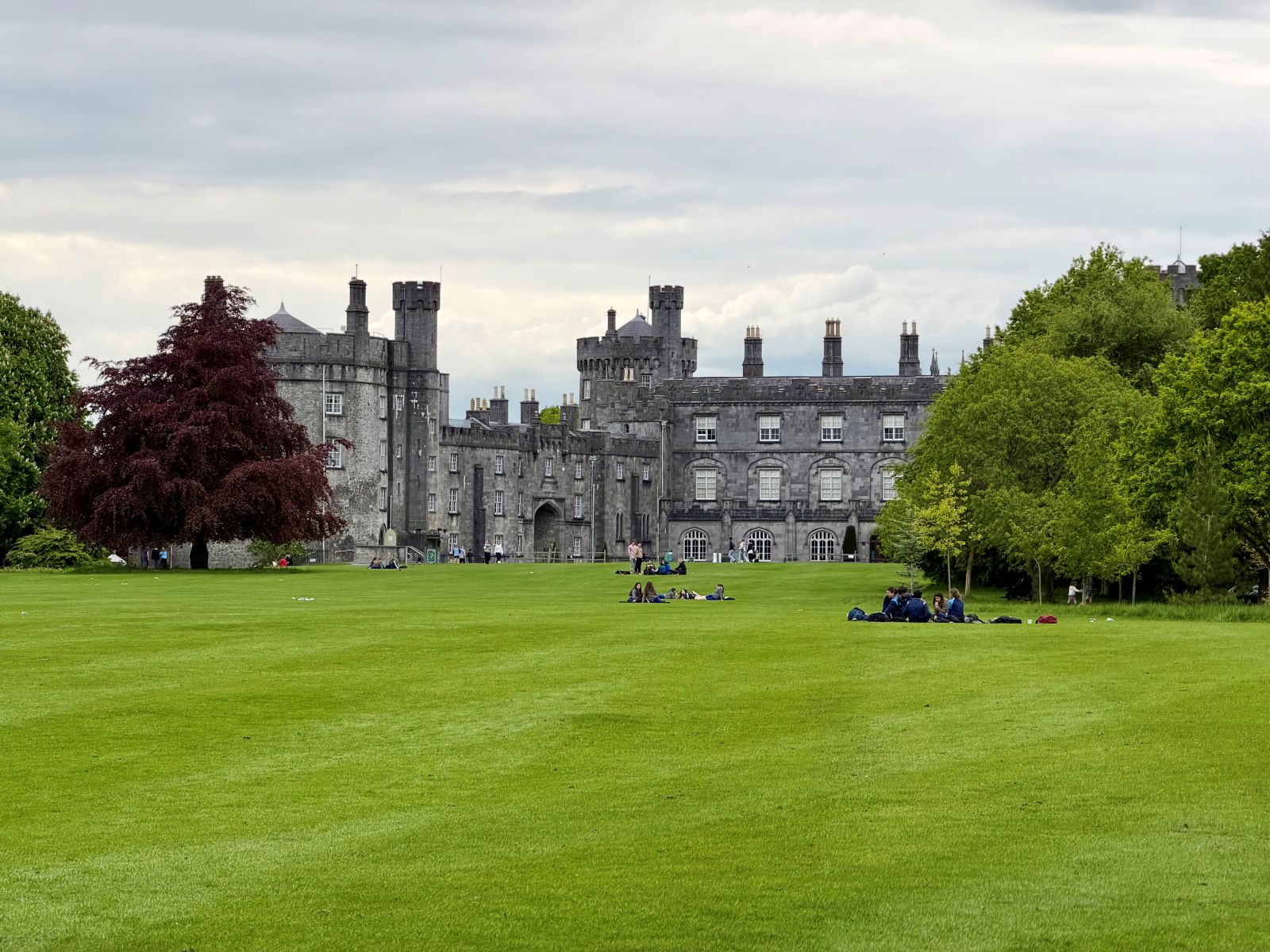
Ireland was one of the greenest countries I have ever visited. That may sound obvious, given its rolling fields, dramatic countryside, and vivid landscapes, but what stood out was how constant the greenery felt. It was not limited to national parks or famous viewpoints. It appeared beside rural roads, around castle ruins, behind beaches, through village streets, and throughout the journeys between the places we had planned to visit.
When we travelled there recently, the green spaces became one of the main experiences of the trip. We drove through open countryside, stopped in small villages, walked along the coast, and often paused just because the scenery gave us a reason to.
That is what made Ireland feel so restorative. Nature did not feel like another attraction to schedule. It surrounded many of the places we were already visiting and made it easier to slow down without having to plan a dedicated hiking holiday.
Green spaces in Ireland can take many forms, including woodland, gardens, lakes, farmland, grassy cliffs, coastal paths, and wide stretches of countryside. Many of them can be experienced through short walks, scenic drives, or unplanned stops rather than long or difficult hikes.
This guide explores some of the best green spaces in Ireland for different travel styles, along with practical ways to include more nature in your itinerary without turning it into another checklist.
For a broader look at how Ireland’s scenery, slower pace, coastal routes, and everyday experiences can support a calmer holiday, read our guide to Ireland wellness travel.
Why Green Spaces Can Make Travel Feel More Restorative
Green spaces are natural places such as parks, forests, gardens, fields, and coastal landscapes. They can make travel feel calmer by offering a break from busy streets, constant decisions, and tightly packed itineraries.
In Ireland, these spaces are not limited to national parks. Rolling fields, woodland, gardens, mountain scenery, grassy cliffs, and open valleys often form part of the journey itself.
For a deeper look at the psychology and research behind why natural environments can support wellbeing, see our guide to the benefits of green spaces.
Curious to explore the science behind this?
This blog draws on established behavioural science research and applies these principles to travel contexts. Sources are linked in our Evidence & Further Reading section.
How To Choose The Right Green Space For Your Trip
The most restorative place will depend on what helps you feel relaxed and settled.
Some people prefer sheltered woodland, gardens, and clearly marked paths. Others feel calmer beside open coastlines, mountain landscapes, or wide stretches of countryside. You may want a long walk, or you may prefer outdoor places that can be enjoyed without much physical effort.
It can help to think about the kind of landscape you enjoy most, how far you are comfortable walking, and whether you prefer remote surroundings or easy access to cafés, facilities, and accommodation. You may also want to consider how much rural driving feels manageable, whether unpredictable weather adds interest or creates stress, and how often you are willing to change accommodation.
There is no need to experience every type of Irish landscape in one trip. Choosing one or two priorities will usually create a calmer and more coherent itinerary.
Killarney National Park For Accessible Woodland And Lakes
Killarney National Park is one of the easiest places to experience several kinds of Irish landscape within a relatively small area.
The park combines woodland, lakes, waterfalls, mountain views, gardens, and historic buildings. This variety makes it a good choice for first-time visitors, groups with different interests, and travellers who want easy access to nature without committing to a full-day hike.
You could walk through woodland, pause beside one of the lakes, and explore the grounds around Muckross House within the same day. There are shorter walks as well as more demanding routes, so you can adapt the experience around your energy, the weather, and how much time you have.
Killarney itself can become busy during popular travel periods. If you are looking for a quieter experience, consider staying outside the busiest part of town, walking earlier in the day, or visiting the most popular areas later in the afternoon.
How We Experienced Killarney:
Stay for at least two nights rather than treating Killarney as a quick stop. Dedicate one day to Killarney National Park, then keep the second flexible for a scenic drive, a shorter walk, or more time around the lakes.
County Clare For Green Cliffs, Coastal Paths, And The Burren
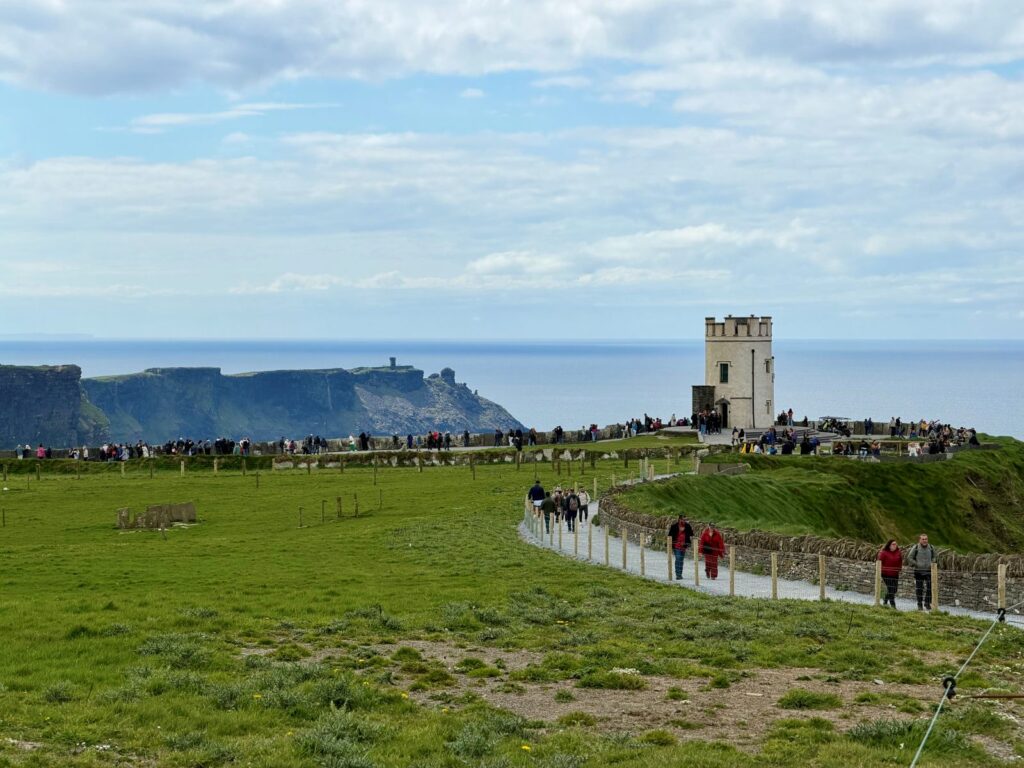
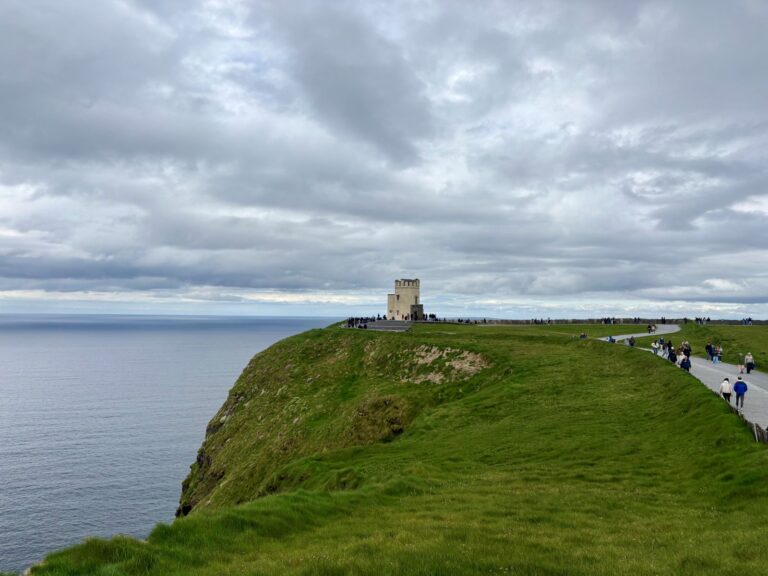
County Clare is one of the best places to experience Ireland’s Atlantic coastline, and the Cliffs of Moher are the obvious highlight.
They are also one of the country’s most popular attractions, so the main visitor areas can feel busy. I still think they are well worth seeing. The scale of the cliffs, the open sea, and the surrounding landscape make them one of the most memorable green spaces in Ireland.
It is worth checking the weather before you go, as fog, strong wind, and heavy rain can affect both visibility and how comfortable the visit feels. A clearer day will give you the best chance to appreciate the full view, although the cliffs can still feel dramatic in more changeable conditions.
If you find crowds overwhelming, visit earlier in the day, allow time to walk beyond the first viewpoints, or include other coastal stops in County Clare as part of the same trip. The Cliffs of Moher can still be a highlight without being the only dramatic coastal scenery you see.
The wider county also offers beaches, farmland, traditional villages, coastal walks, and the distinctive limestone landscape of the Burren. This makes Clare a strong choice if you prefer several shorter outdoor experiences rather than one long or demanding hike.
Our Cliffs of Moher Tip:
Arrive at the Cliffs of Moher earlier in the day to avoid the largest crowds. If that is not possible, knowing in advance that the main viewpoints can be busy may make the experience feel less overwhelming when you arrive.
Allow at least a couple of hours for your visit so you can take in the scenery, explore beyond the first viewpoint, and enjoy the cliffs without feeling rushed.
County Kerry For Scenic Drives And Varied Landscapes
Although Killarney National Park is within County Kerry, the wider county offers a different experience through its coastal roads, beaches, small towns, and Ring of Kerry route.
Mountains, woodland, beaches, lakes, farmland, and coastal scenery can all feature within one trip. This makes Kerry a good choice for travellers who want variety and enjoy combining walking with scenic driving.
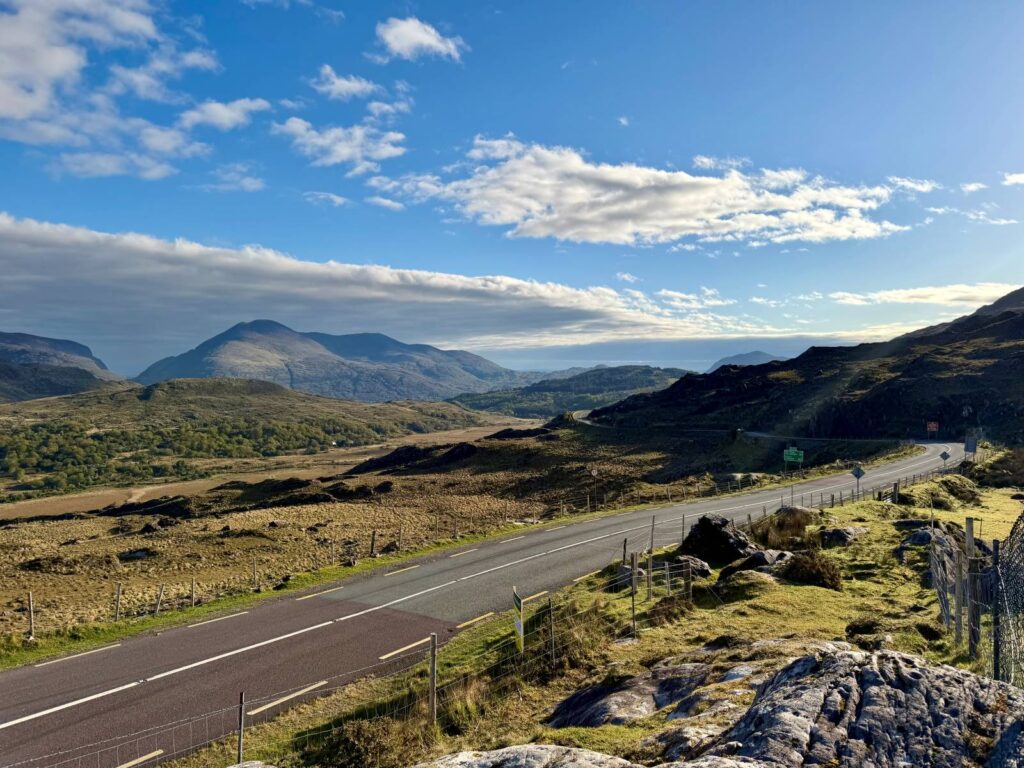
The Ring of Kerry is the best-known road-trip route, but trying to complete it too quickly can make the day feel more tiring than enjoyable. Narrow roads, navigation, traffic, and repeated stops still require energy, even when the surroundings are beautiful.
The route is more rewarding when approached slowly. You do not need to stop at every viewpoint. Choosing fewer places gives you more time to walk, sit, explore smaller towns, and notice the landscape rather than repeatedly getting in and out of the car.
How We Drove the Ring of Kerry:
Spend a couple of nights in the area so you have a full day to experience the Ring of Kerry and explore its smaller towns and scenic stops without rushing.
We started the loop early and drove clockwise, in the opposite direction to many of the tour buses. At times, we had entire stretches of the route to ourselves, which made the scenery feel even more special.
Other Green Spaces In Ireland To Consider
We focused our trip on Killarney, County Kerry, and County Clare, but other parts of Ireland may also suit a green space-focused itinerary. Wicklow offers mountains, lakes, woodland, and gardens within easier reach of Dublin, while Connemara is known for open landscapes, lakes, and a greater sense of remoteness. Donegal may appeal to travellers looking for dramatic coastal and mountain scenery with fewer crowds. I have not visited these regions personally, so I recommend researching current driving times, accommodation, and walking options before adding them to your route.
Castle Gardens For An Easier Day Outdoors
Some of the most accessible green spaces in Ireland can be found around castles, historic houses, and estates.
These sites may include formal gardens, lawns, woodland paths, lakes, rivers, and walled gardens. They are useful on days when you want to spend time outside but do not have the energy or interest for a long walk.
Castle gardens also work well when travelling with people who enjoy different things. One person may be interested in history and architecture, while another prefers the grounds and natural setting.
The gardens around Muckross House in Killarney, Powerscourt Estate in Wicklow, Kylemore Abbey in Connemara, and Glenveagh Castle in Donegal can all be incorporated into wider regional itineraries.
Irish Beaches For Green And Blue Space Together
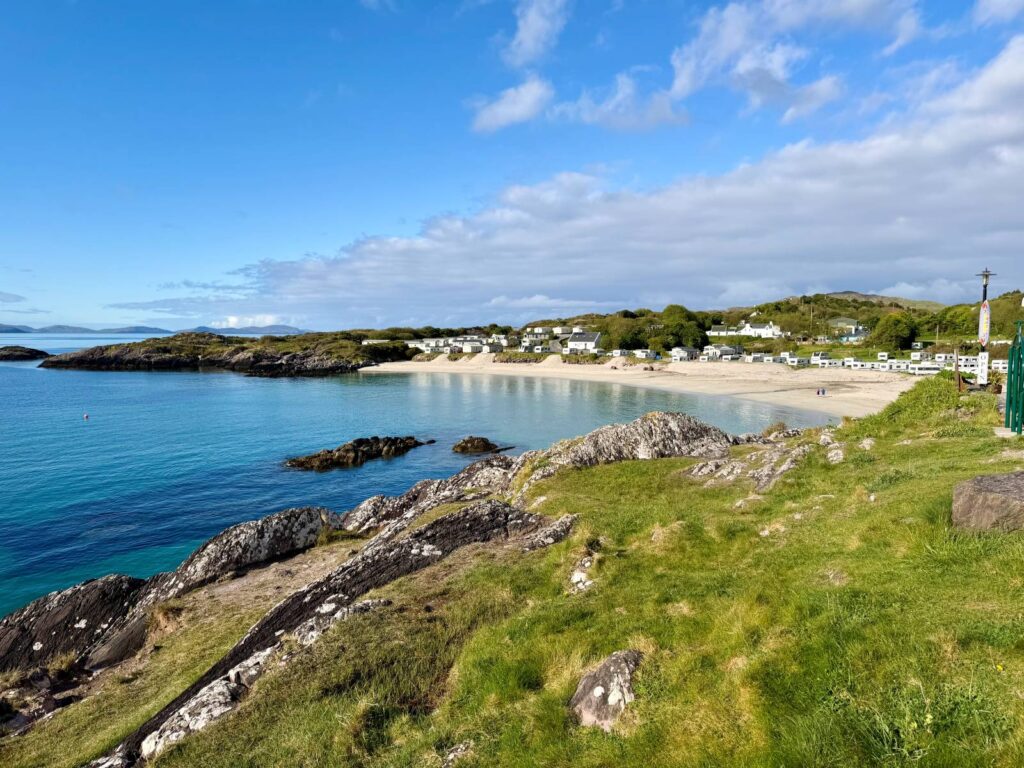
Ireland’s beaches were an unexpected highlight for me, as they are not necessarily the first thing that comes to mind when planning a trip there. They were, however, genuinely beautiful.
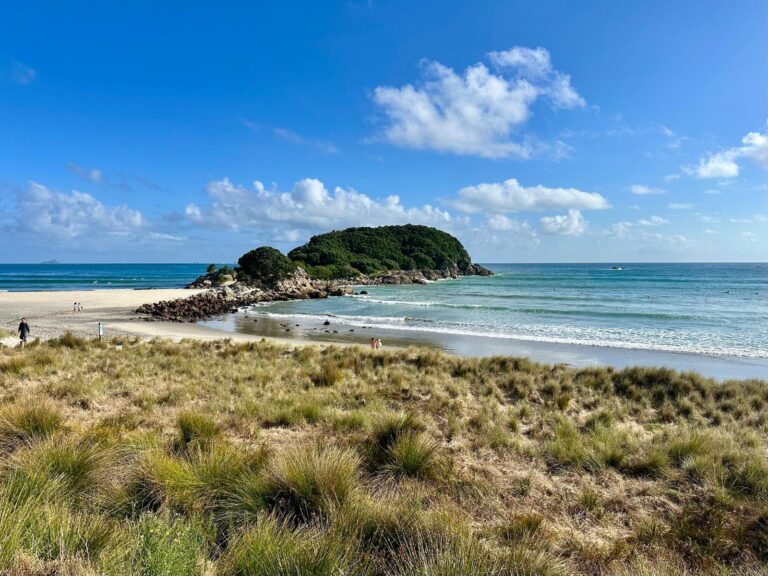
Many are backed by dunes, cliffs, grass, or farmland, creating a striking combination of green and blue space. Walking beside the sea offers a different sensory experience from woodland or gardens, particularly when there is open sky and enough room to move without following a fixed route.
The weather may not always encourage sunbathing, but that can leave the beaches feeling quieter and less focused on doing anything in particular. You can walk, watch the conditions change, and stay for as long as feels right.
Coastal areas in Clare, Kerry, Galway, Mayo, and Donegal offer plenty of opportunities to combine beach walks with the rest of a road trip. One of the highlights of our own journey was making unplanned stops along the coast and discovering beautiful views, particularly around the Ring of Kerry.
Green Spaces Within Irish Cities
A trip focused on green space does not have to exclude Ireland’s cities.
Dublin has several large parks and gardens that offer a welcome break from its busier streets. St Stephen’s Green is central and easy to include between other activities, while Phoenix Park offers far more space and can become a destination in its own right. The National Botanic Gardens are another good option for slower outdoor time without leaving the city.
In Cork, Fitzgerald’s Park and the riverside areas provide a quieter contrast to the centre. Galway’s smaller size also makes it easy to move between urban streets, coastal spaces, and the nearby countryside.
Urban parks can be especially useful at the beginning or end of a trip, when you may not have time for a national park but still want a break from continuous sightseeing.
If you are planning to stop for something to eat, keep an eye on the seagulls. We saw one take a sandwich straight out of someone’s hand, so they are clearly very confident around food.
How To Plan A Green Space-Focused Ireland Trip
Finding beautiful scenery in Ireland is easy. The key is giving yourself enough time to enjoy it without turning the trip into a race between viewpoints.
Choose fewer bases and stay for at least two nights where possible. This reduces time spent packing, checking in, and driving between regions, while giving you more flexibility when the weather changes.
Allow more time for rural journeys than the map suggests. Ireland’s smaller roads can be narrow, winding, and slower to navigate, but they are also where some of the best scenery appears. We found that leaving extra time made it easier to stop when something caught our attention and enjoy the drive without watching the clock.
It is also worth preparing for mixed conditions. We were fortunate not to experience much rain, but we still packed waterproof layers, warm clothing, shoes with good grip, and spare socks. Even on sunny days, the wind could feel cold, particularly along the coast, so layers made a noticeable difference.
Who Will Enjoy A Green Space-Focused Ireland Trip?
A green space-focused trip through Ireland may suit you if packed city itineraries leave you drained or you prefer landscapes, gardens, small towns, and scenic drives to long attraction lists.
It is also a good fit if you enjoy walking but do not want every day to involve a demanding hike, and you are comfortable adapting plans around the weather. A mixed itinerary can work well if you still want some city energy, with time in Dublin followed by a slower stay in Kerry, Clare, or Wicklow.
Ireland’s Green Spaces Are Part Of The Journey
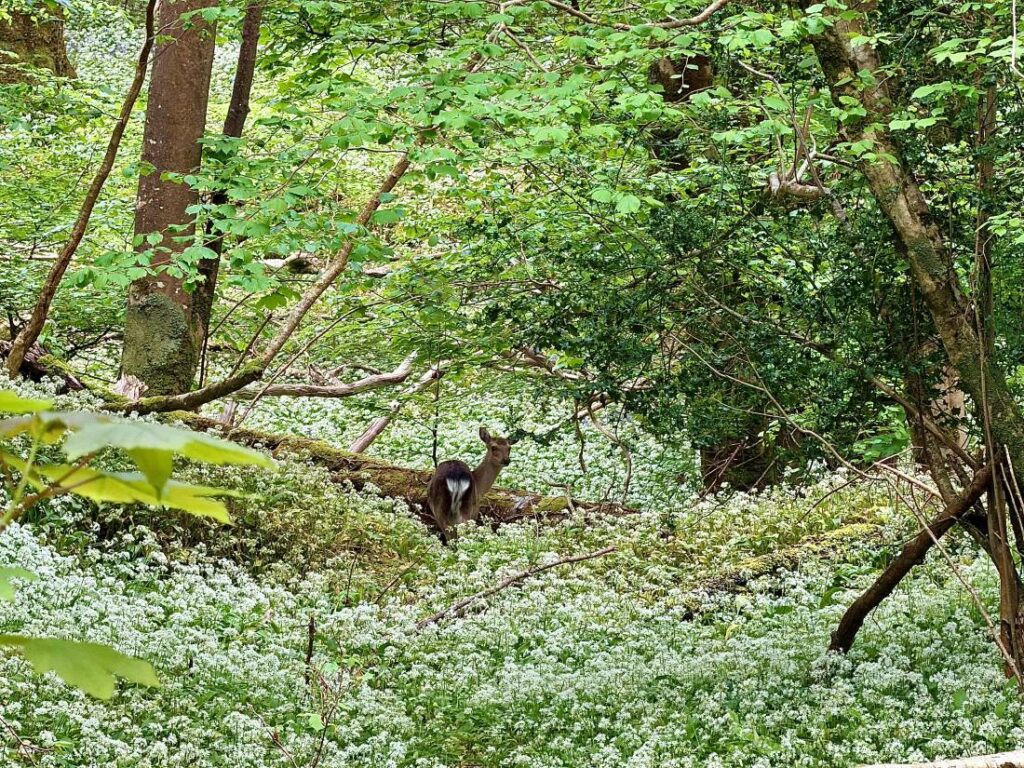
Ireland’s most restorative green spaces are not limited to famous national parks. They appear in woodland, castle gardens, rural roads, grassy cliffs, beaches, villages, farmland, and the everyday scenery between major destinations.
That is what made the country feel so different to me. Nature was not something we experienced once and then left behind. It remained present throughout the trip.
Killarney National Park, the wider County Kerry region, and County Clare worked particularly well together. Killarney gave us woodland, lakes, and easy access to the national park. Kerry brought scenic roads, beaches, and dramatic coastal views, while Clare combined cliffs, farmland, and Atlantic scenery.
Staying longer in each area gave us time to enjoy those differences without rushing between them. Driving often became part of the experience too, especially when we allowed time for smaller roads, unplanned stops, and views we had not expected to find.
Experiencing the benefits of green space does not require a major hike or an empty wilderness. In Ireland, we found that a short woodland walk, an evening beside the coast, or an unplanned stop among green fields was often enough to leave us feeling more restored than when we arrived.
For more practical, psychology-informed travel ideas, explore the latest guides on Nomadic Balance.
This article is for general informational purposes only and is not intended to replace personalised medical, psychological, or professional advice.