Walking While Travelling: Benefits For Body And Mind
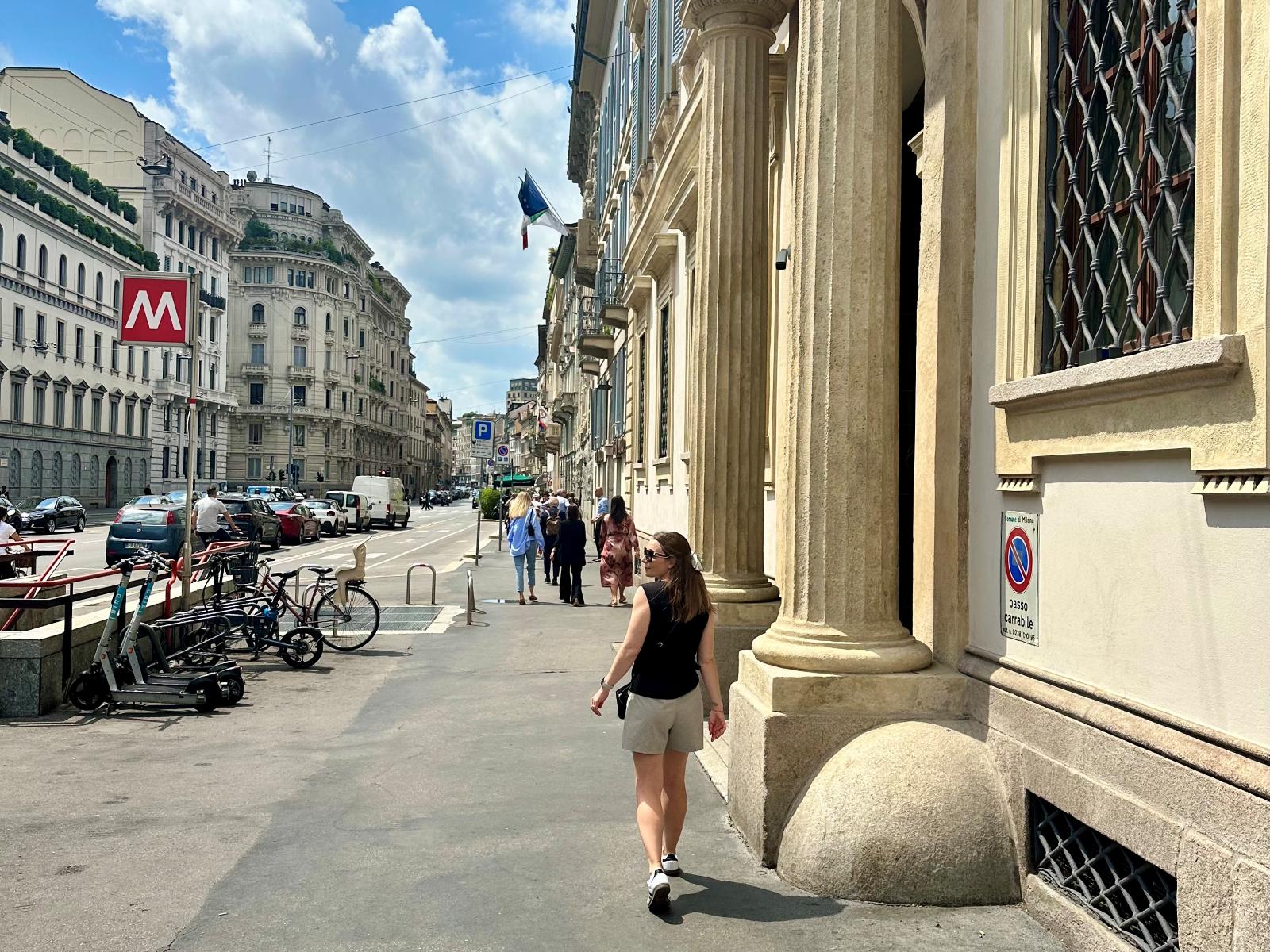
Most travel advice treats exploring cities on foot as something that just happens. You walk because the museum is five streets away. You walk because the metro stop is closed. You walk because the old town is pedestrianised. Or, as I’ve experienced, you get a little lost and take a detour.
Walking while travelling is not just a by-product of sightseeing. It is one of the simplest, most accessible tools for supporting your body and mind on the road and can become the infrastructure that supports your travel wellbeing.
When routines disappear, time zones change, and your nervous system is processing more new things than usual, walking becomes more than a way to get from A to B. It offers rhythm and can lower cognitive noise. It can give your body something familiar and balancing when everything else is new.
The health benefits of walking have been studied extensively. This article draws from those studies. Please note these are not travel-specific studies, but the concepts are applied to a travel environment.
Why Walking While Travelling Matters More Than You Think
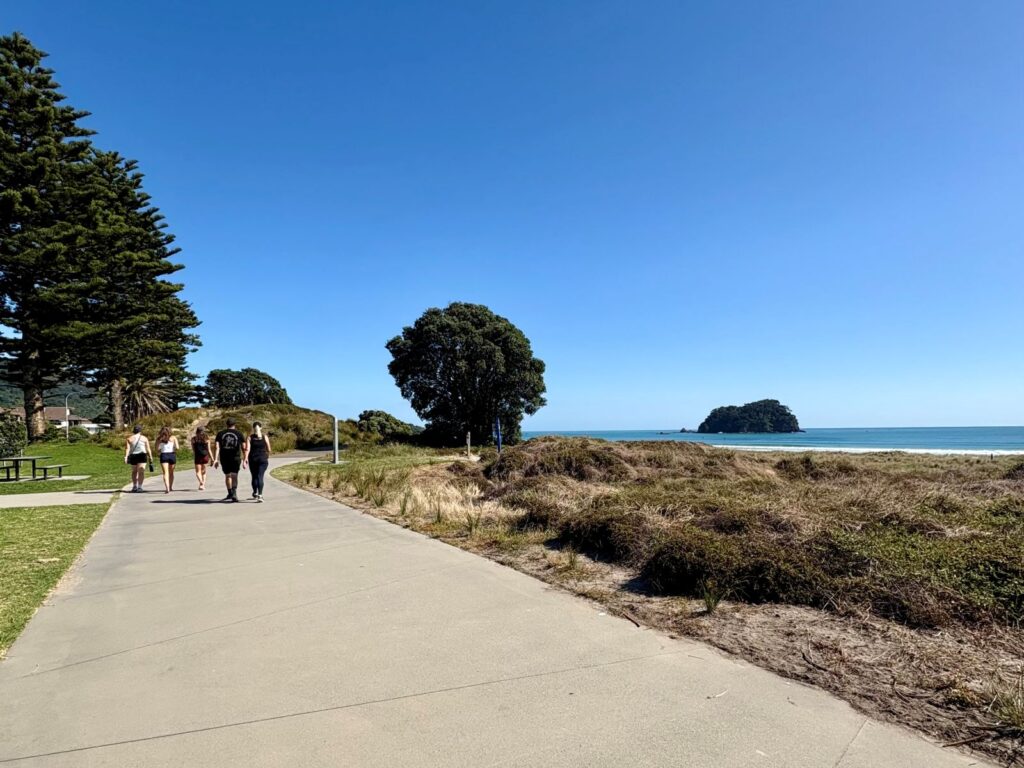
Travel not only changes your location, but it also increases the number of decisions you make in a day.
From the moment you arrive, you are constantly choosing, for example, which exit to take, which train line makes sense, where to eat, whether a street feels safe, or whether a café is worth stopping in. None of these decisions feels significant on its own. However, together they add up and can require cognitive effort.
As the day progresses, that effort can start to catch up with you. You might feel slightly stretched or mentally drained, and although you are not necessarily anxious or unhappy, you may feel as though your mind has been “on” for longer than usual. Walking may help ease that feeling.
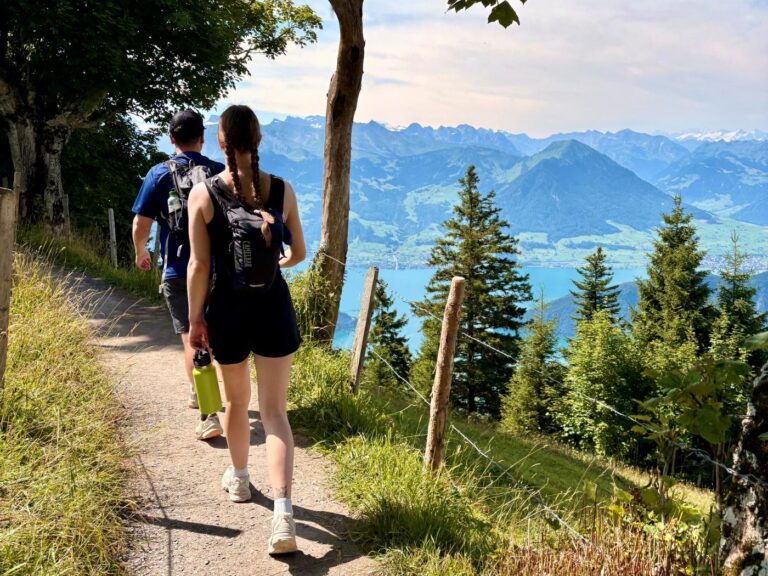
The rhythm of walking gives your mind one continuous, manageable focus. The goal isn’t to try to see everything. You are simply placing one foot in front of the other and allowing the environment to unfold at a natural pace.
Walking doesn’t remove the complexity of travel; however, it can help your body and mind process it.
The Physical Health Benefits Of Walking While Travelling
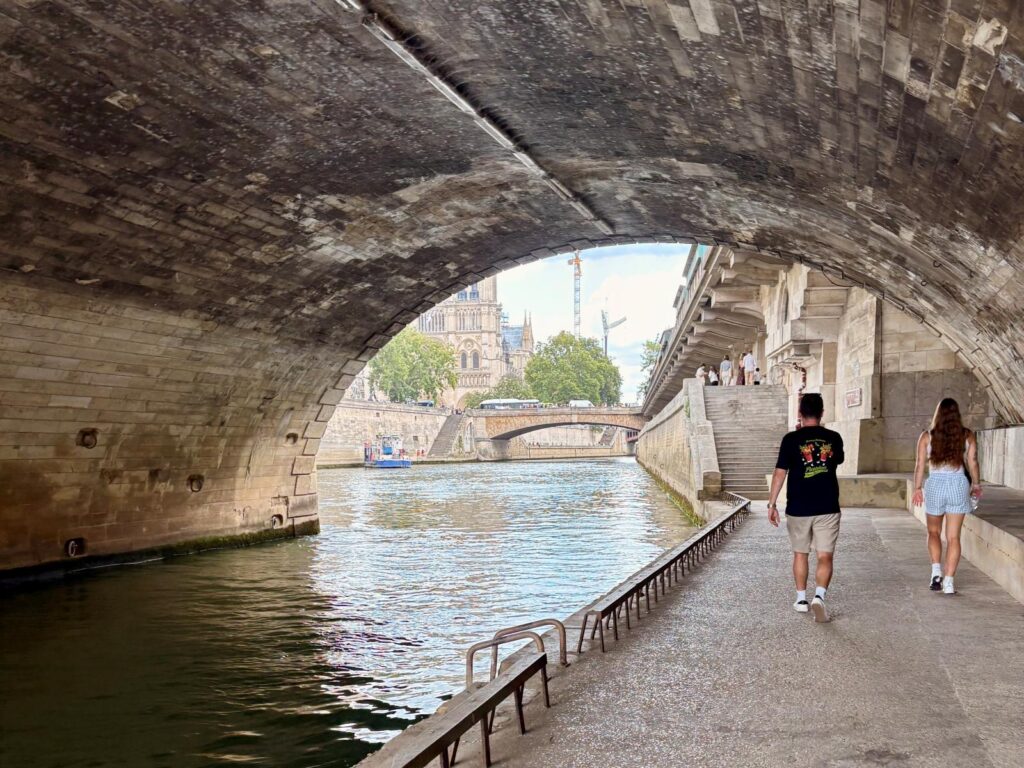
Large observational studies suggest that health risks decline when people move from very low daily step counts to around 4,000 steps per day, with benefits continuing progressively at higher levels depending on age. The most significant gains appear when someone shifts from almost no movement to moderate, consistent movement. This suggests that consistency matters more than occasional extremes.
City travel often supports this naturally. Walking between neighbourhoods, navigating markets, or moving from restaurants to museums, the steps accumulate without turning into a formal workout.
I am generally an active person, and the gym doesn’t always make it into my travel plans. I have found that walking keeps me feeling physically balanced in a way that feels familiar from home. It is not about training, but maintaining a baseline that helps my body recognise its usual rhythm.
You do not need to recreate your full home routine abroad to support your health. Moderate daily walking can act as a reliable foundation.
Curious to explore the science behind this?
This blog draws on established behavioural science research and applies these principles to travel contexts. Sources are linked in our Evidence & Further Reading section.
Walking For Mental Health On City Trips
Physical activity is associated with a lower risk of depression in large observational studies, and even small amounts appear to offer benefits. Short bouts of movement have also been linked in experimental studies to improvements in mood and executive function.
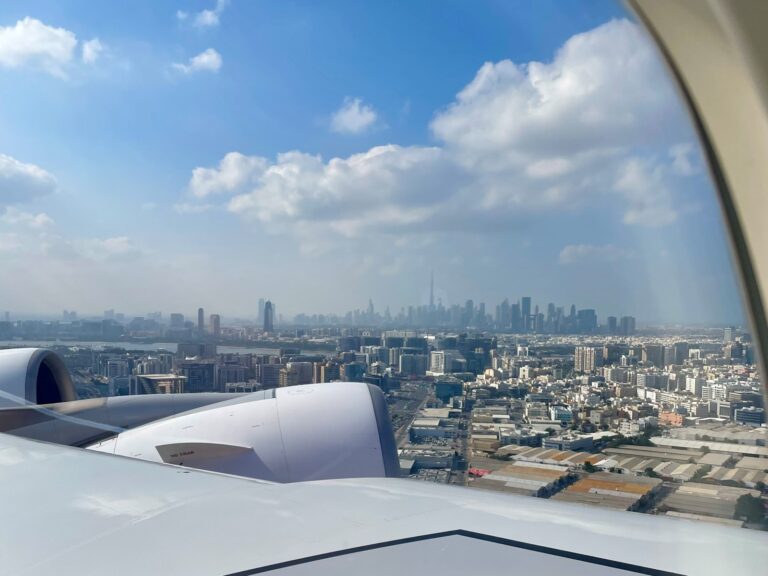
Travel often brings long-haul flights, disrupted sleep, and crowded environments. After hours of sitting on a plane, your body can feel compressed and slightly out of sync.
A casual walk soon after arrival, especially if you can step into fresh air and daylight, can make a noticeable difference. A 20–30 minute walk can function as a reset.
After a flight or a crowded morning, stepping outside and walking at an even pace often feels different from staying indoors and scrolling. As you move, the steady rhythm of your steps and the subtle left-right motion of your body create a simple pattern your mind can follow. Watching the streets pass by gives you something consistent to settle into.
Green And Blue Space Walking While Travelling
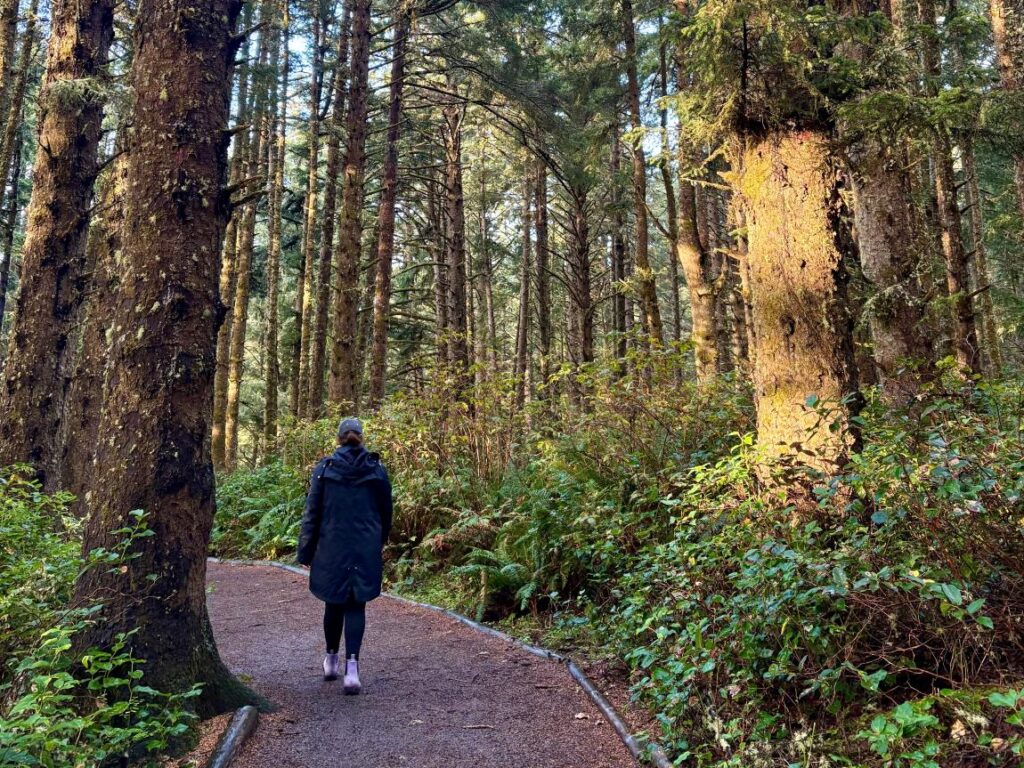
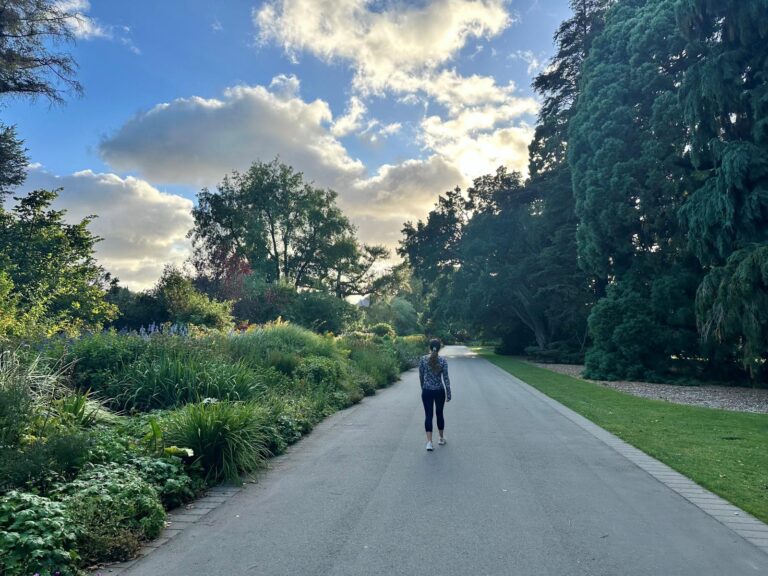
There is a noticeable difference between walking along a busy commercial street and walking beside water or through trees.
In highly built-up areas, your attention is constantly being pulled. Even when you are enjoying yourself, your brain is still filtering and responding. Green and blue spaces tend to ask less of you.
When you walk through a park, along a canal, or beside the sea, the visual field often feels softer. There are fewer sharp signals demanding action. The pace of the environment slows. Water in particular creates a steady sensory backdrop: repetitive, continuous, and relatively predictable.
Research suggests that natural environments may reduce rumination and support short-term restoration. These findings are not specific to travel, and they do not promise a dramatic transformation. However, they do suggest that the setting you walk through influences how restorative that walk feels.
In practical terms, this means that choosing a tree-lined route instead of a main road, or adding a short waterfront segment to your day, can change how your body experiences the same amount of movement.
Walking Enhances Cognitive Flexibility And Perspective
Some research suggests that people tend to think more creatively while walking than while sitting still, and that clearer thinking can linger for a short time afterwards.
That makes intuitive sense when you travel, as you are already seeing things differently. Familiar assumptions loosen. Walking seems to help ideas link up more easily, almost without trying.
This can matter when you are absorbing a new culture, turning over a personal decision, or simply making sense of what the day has felt like.
Walking As A Daily Regulation Anchor
Across these strands of research, a consistent pattern appears. Moderate daily movement supports physical stability. Consistent activity is linked to mood protection. Short bouts of walking can shift stress states, and natural environments may deepen restoration. Travel disrupts your daily routine, and walking while travelling can become the one predictable part of an otherwise unfamiliar day.
Travel disrupts your daily routine. Walking while travelling can become the one predictable part of an otherwise unfamiliar day.
How To Intentionally Practise Walking While Travelling
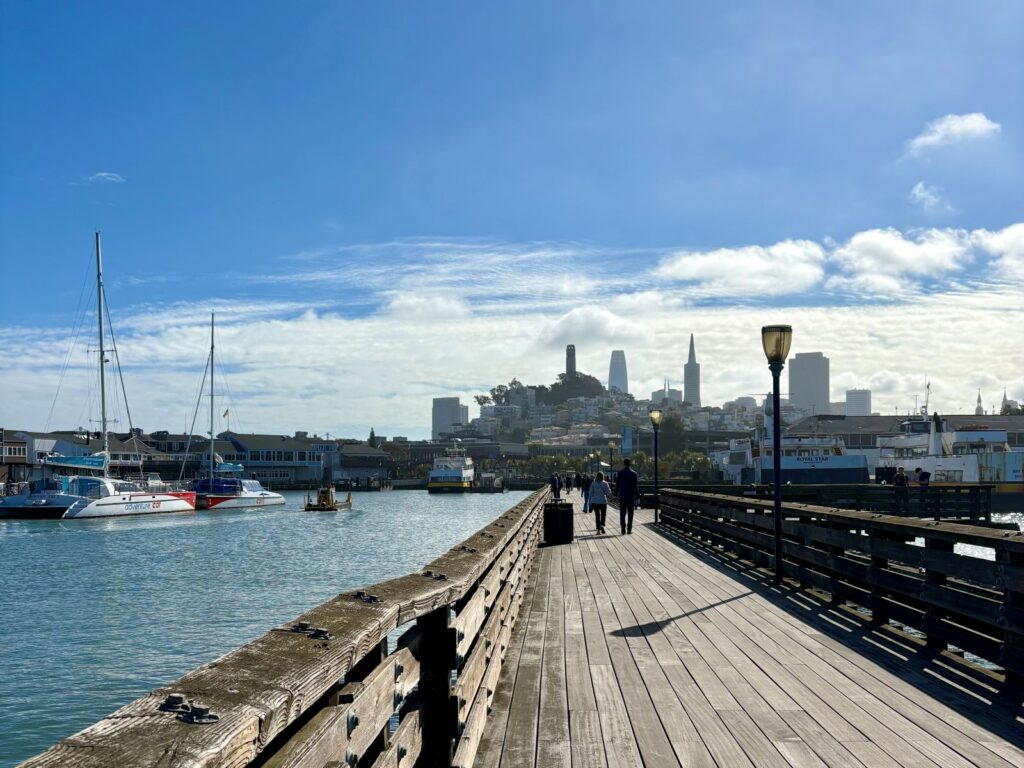
Walking while travelling doesn’t have to be a task to manage; it can be incorporated into your travel days with little effort.
On arrival day, consider taking a slow orientation walk around your accommodation area. There does not need to be a goal beyond noticing where you are and how the streets connect. It often helps a new place feel more familiar surprisingly quickly.
On busier sightseeing days, try building in one unhurried stretch of walking that is not about getting somewhere efficiently. Even 15 minutes at a steady, comfortable pace can create a shift in how the rest of the day feels.
When planning routes, it can also help to zoom out slightly on the map. If there is a park, canal, waterfront, or tree-lined street nearby, a small adjustment to include it can change the feeling of the walk without adding distance.
Every so often, notice how you feel before and after walking. There is no need to analyse it closely. A simple mental check-in is enough. Over time, you may start to see the pattern for yourself.
The Value Of Walking While Travelling
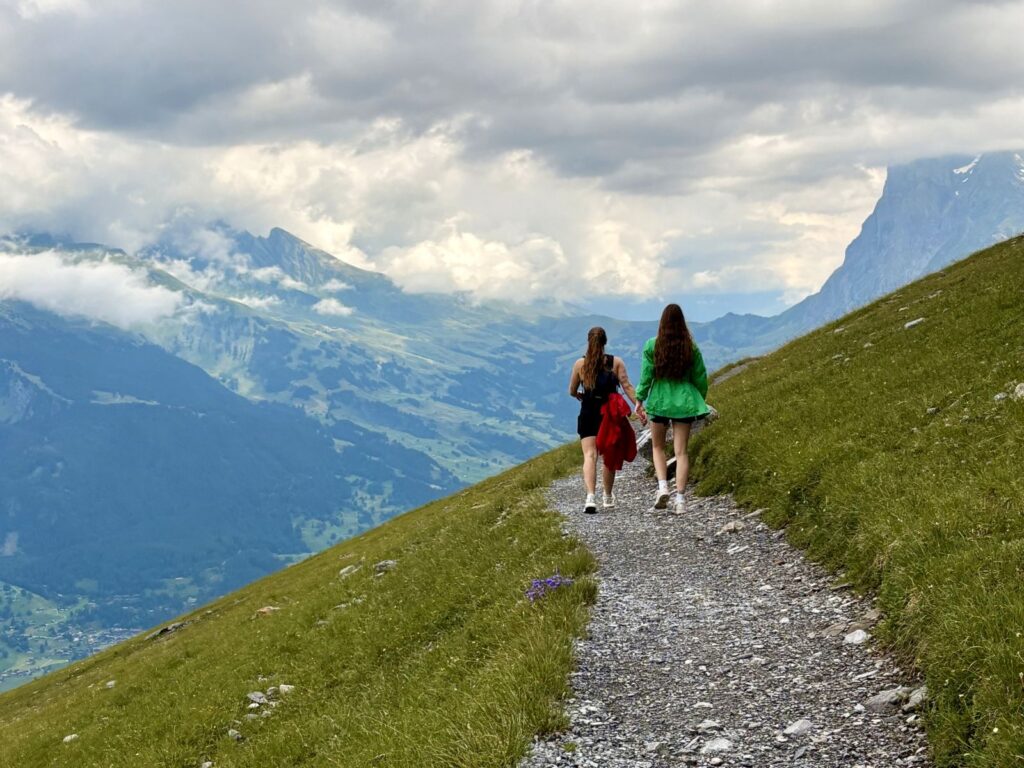
Walking is simple, which is precisely why it is easy to overlook.
In a travel culture that leans towards intensity and optimisation, walking while travelling offers something steadier. It supports physical stability without turning movement into a workout. It creates mental space without demanding formal reflection. It allows experiences to unfold at a pace your body can keep up with.
I have found that when your body settles into that steady pace, a place often begins to feel less overwhelming and more familiar. There is more mental space, allowing you to feel more ready to explore.