Switzerland Is Expensive – How To Manage Travel Budget Anxiety (With Real Daily Costs)
Switzerland is one of the few destinations where the cost of the trip doesn’t fade into the background in the way it often does elsewhere.
You don’t just notice it when you book. You keep noticing it, from when you arrive to when you check a menu, hesitate over a coffee, or look up a train price. The awareness shows up repeatedly throughout the day, in small but persistent ways that are hard to fully switch off.
Before I went, I expected Switzerland to be expensive. What I didn’t expect was how much mental space that awareness would take up once I was there. I found myself calculating, comparing options, and second-guessing decisions more often than I wanted to, even in places I had been genuinely looking forward to.
It’s not dramatic, but it changes the tone of the trip. It becomes harder to relax into where you are when part of your attention is still tracking what everything costs and whether each decision feels justified.
Switzerland is expensive, but the bigger challenge is learning how to travel there without the cost shaping every decision you make.
Table of Contents
How Expensive Is Switzerland for Tourists? (Real Daily Costs)
Switzerland is consistently expensive, often in ways that become very noticeable once you arrive and start making everyday decisions.
A realistic daily budget looks roughly like:
- Budget: CHF 120–180 per day (tight, with trade-offs)
- Mid-range: CHF 180–300 per day
- Comfortable: CHF 300–450+ per day
Typical costs quickly reinforce that:
- Coffee: CHF 4–6
- Casual meal: CHF 20–40
- Train tickets: CHF 20–80+ depending on distance and route
- Accommodation: CHF 120–300 per night
Even something familiar can feel unexpectedly high. The most expensive McDonald’s I’ve ever had was in Zurich, which stood out because it’s usually the kind of place you go to keep costs down while travelling.
The challenge, though, isn’t just the cost itself. It’s how repeatedly being exposed to those prices starts to shape your decisions and your attention throughout the day.
Why Switzerland Feels So Expensive When You’re There
In Switzerland, the cost doesn’t sit somewhere in the background in the way it often does in other countries.
You notice it repeatedly when you check a menu, book a train, or decide whether to stop somewhere spontaneously. There are fewer obvious low-cost options to balance things out, which means that sense of awareness doesn’t really switch off at any point.
I noticed this shift quite quickly. When I was mentally adding things up or comparing alternatives, even simple moments felt slightly interrupted, as though part of my attention was elsewhere. It became noticeably harder to settle into the experience in a relaxed way.
Why Financial Anxiety Starts Before You Even Arrive
For most people, the expectation that Switzerland will be expensive is already there well before the trip begins.
That expectation often starts shaping behaviour early. You begin evaluating decisions more carefully, questioning whether something will be “worth it” before you’ve even experienced it, which subtly changes how you approach the trip from the outset.
Once that way of thinking starts, it tends to carry through the rest of the trip. Small decisions, like where to eat, whether to take a train, or whether to add an activity, can start to feel more significant than they actually are.
The Psychology Behind Financial Stress While Travelling
This reaction isn’t random. There are a few well-studied behavioural patterns that may play a role in how this experience develops over time.
Loss aversion likely plays a role here, where the discomfort of spending can feel stronger than the satisfaction of what you receive in return, especially when prices are consistently high.
On top of that is decision fatigue. Constantly evaluating meals, transport, and activities, often multiple times a day, gradually uses up mental energy in a way that isn’t always obvious at first.
Over time, it can start to feel like you’re trying not to “lose” money rather than just enjoying the trip, which shifts your focus away from what you’re doing and onto what each decision is costing you.
Curious to explore the science behind this?
This blog draws on established behavioural science research and applies these principles to travel contexts. Sources are linked in our Evidence & Further Reading section.
Why Switzerland Feels More Stressful Than Other Expensive Places
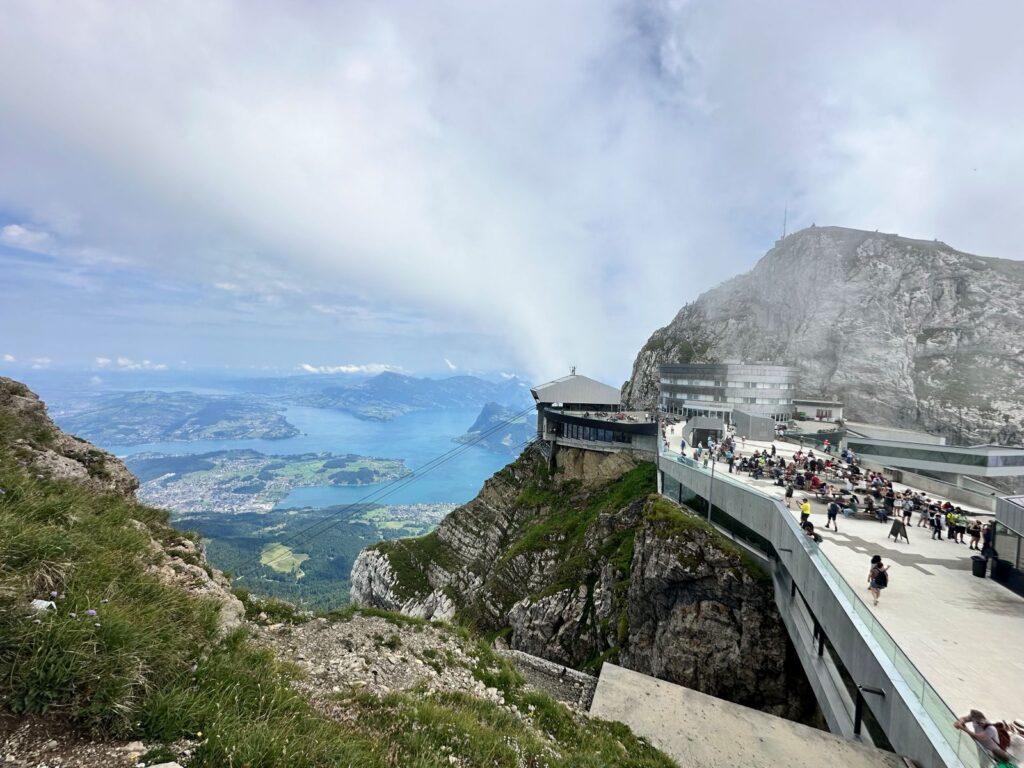
Many destinations are expensive, but Switzerland tends to feel different because the costs are both high and consistently so across most categories.
There are fewer easy ways to rebalance during the day. In other countries, you might offset an expensive meal with something cheaper later on, but in Switzerland even the lower-cost options are still relatively high, which keeps that awareness active.
By contrast, I found that somewhere like Dubai can also be expensive, but the pricing is more uneven. You can spend a lot on hotels, restaurants, or experiences, but you can also find relatively low-cost food, transport, or everyday options in between. That variation gives you natural breaks from spending, which helps reduce how often you think about money.
In Switzerland, that kind of contrast is harder to find. The baseline cost stays high across most decisions, which means there are fewer moments where your mind gets to switch off from evaluating what things cost.
That consistency is what makes the experience feel more mentally demanding over time, rather than just occasionally expensive.
How To Think About Spending In Switzerland Without Overthinking It
A more useful approach is to shift the focus away from reducing cost at every step and towards understanding what actually feels worth it to you personally.
Before the trip, it helps to decide what matters most. That might be scenery, time outdoors, specific train routes, or simply having a slower, less structured pace.
Once that is clear, spending decisions tend to feel more stable. You are no longer judging each choice in isolation, but in relation to what you came for in the first place.
How To Budget For Switzerland Without Constantly Thinking About Money
Instead of setting a strict budget that requires constant tracking, it is often more effective to create a daily comfort range that gives you structure without forcing repeated recalculation.
From there, it helps to make a few key decisions in advance so you are not constantly weighing up options throughout the day. This might mean deciding early on which one or two experiences you genuinely want to prioritise, keeping food simple for most meals so it becomes routine rather than a repeated decision, and having a clear approach to transport so you are not checking prices or routes each time you need to move around.
I found that once these choices were made ahead of time, the rest of the trip felt noticeably calmer, because I wasn’t going back over the same decisions again and again or trying to optimise everything in the moment.
Is The Swiss Travel Pass Worth It If You’re Trying To Save Money?
On paper, the Swiss Travel Pass is not always the cheapest option when you compare individual journeys.
But in practice, it can remove a significant amount of mental effort that comes from constantly checking prices and planning routes.
We chose to buy the Swiss Travel Pass, and while we knew it might not be the absolute lowest-cost option, it removed the need to calculate every journey individually. That alone made a noticeable difference to how the trip felt day to day. It made it much easier to jump on a bus or train without the added stress of paying each time.
In a destination like Switzerland, that trade-off, paying slightly more in exchange for fewer decisions, often makes sense.
Switzerland Budget Tips That Actually Reduce Money Stress
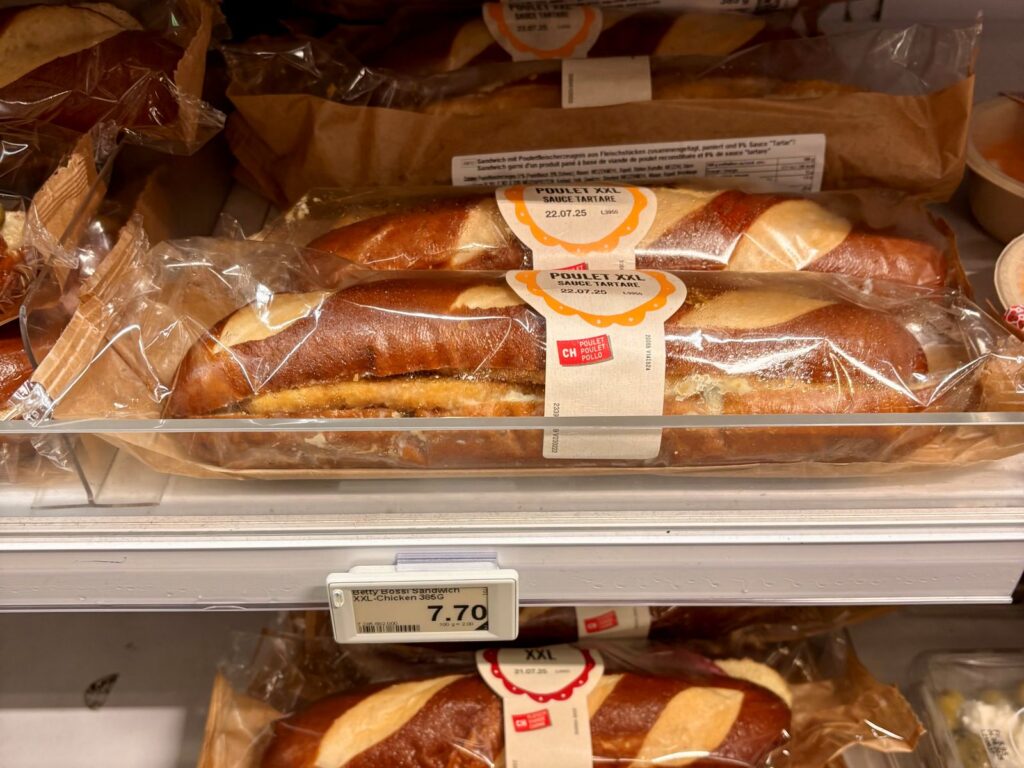
The most effective strategies tend to be simple, particularly when they reduce the number of daily decisions you need to make rather than just lowering costs.
Shopping at supermarkets like Coop or Migros, instead of eating out for every meal, can bring food costs down from around CHF 25–40 to closer to CHF 8–15, which adds up quickly over multiple days.
Our group ended up relying on Coop for most of the trip. It didn’t feel restrictive. Instead, it became routine, and that consistency made us feel slightly better about the overall cost. The consistency of shopping at Coop removed the need to keep reassessing options every time we were hungry.
Booking an Airbnb with a kitchen had a similar effect. Having the option to cook not only reduced cost-related anxiety, but also made it easier to eat well while travelling.
At the same time, Switzerland naturally supports lower-cost experiences. Some of the most memorable parts of the trip, walking by lakes, watching the landscape from trains, or spending time in the mountains, don’t require much additional spending.
What’s Actually Worth Spending Money On In Switzerland
Some experiences in Switzerland feel distinctly different from what you might find elsewhere.
Scenic train routes, access to mountain areas, and time spent around lakes tend to stand out in a way that makes the cost feel more clearly justified, particularly when those are the reasons you chose the destination in the first place.
I noticed that when spending was directed towards these types of experiences, there was far less second-guessing afterwards, compared to everyday expenses where hesitation showed up more easily.
Although Switzerland felt very expensive, I certainly have no regrets about travelling there because the experiences were worth it.
How Expensive Is Eating Out In Switzerland Really?
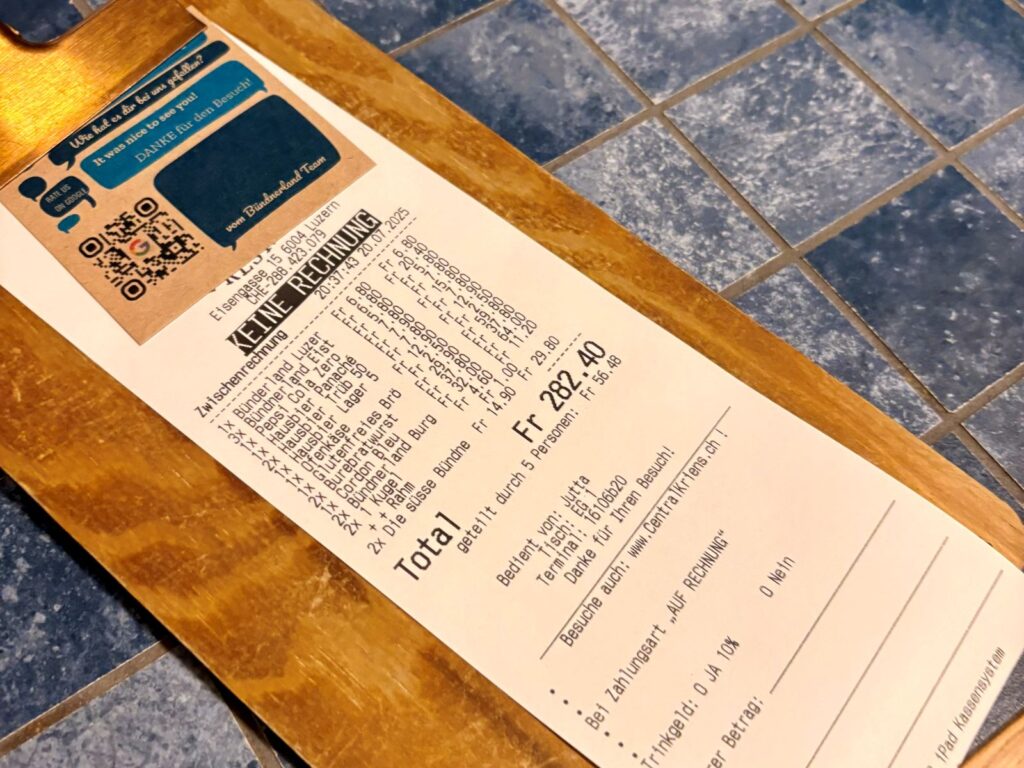
Eating out is often where the cost feels most visible and hardest to ignore. Coming from New Zealand, the cost of eating at a restaurant felt roughly triple the price.
We chose to eat out for our final meal in Switzerland without going over the top, and for five of us, the cost of the meal was almost CHF 300, which made it very clear how quickly costs can add up even with moderate choices.
It wasn’t a bad experience, but making that decision intentionally, rather than repeating it throughout the trip, made it easier to enjoy.
How To Stop Thinking About Money While Travelling In Switzerland
Travel financial anxiety is easier to deal with when we set some boundaries around decisions once they’ve been made.
After you’ve chosen something, for example a meal, an activity, or a route, it helps to avoid going back over it mentally, even if that feels tempting in the moment.
The loop of “was that worth it?” tends to create more stress than the cost itself, because it keeps your attention tied to the decision rather than the experience.
Once you’ve made a decision, letting it stand creates more space to actually be present in where you are.
What To Do If You’re Already Stressed About Money While Travelling
If the stress is already there, it can help to deliberately plan a lower-cost day where fewer decisions are required.
Walking, spending time by a lake, having a supermarket meal, or avoiding making additional plans reduces both spending and the need to constantly evaluate options. It doesn’t seem like much, but it can feel surprisingly relieving.
Even a single day like this can reset the feeling of the trip and give your attention a chance to settle again.
The Goal Isn’t To Spend Less: It’s To Think About It Less
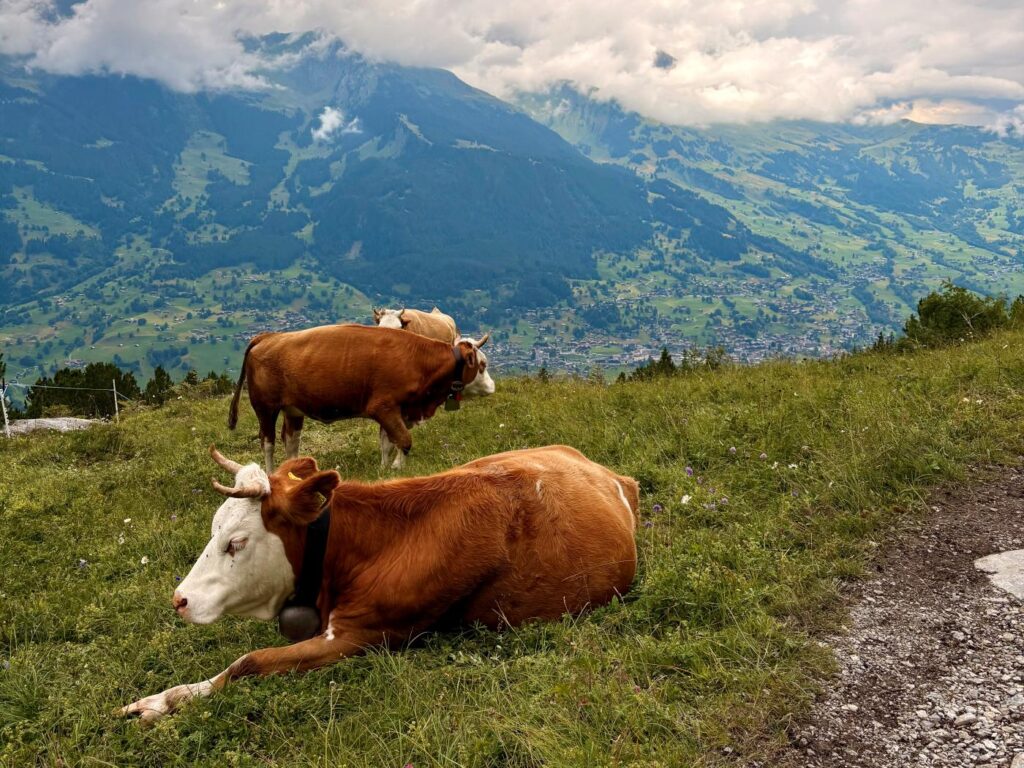
Switzerland is a very expensive place to travel, and no matter how many budget strategies you use, it is unlikely to feel cheap.
But the experience changes when money stops being something you are constantly tracking in the background. The goal is not to eliminate spending decisions entirely, but to reduce how often they interrupt your attention.
Once that happens, it becomes much easier to be present in the places you came to see in the first place. With some planning, and a level of acceptance around the cost, you can travel more freely and enjoy the country for what it is.
This article is for general informational purposes only and is not intended to replace personalised medical, psychological, or professional advice.