New York Public Transport Guide: Getting Around The City Without The Stress

Using public transport in a new city isn’t just about getting from A to B. It involves unfamiliar systems, fast-moving crowds, new signage, and the pressure of not wanting to make a mistake. In a city as intense as New York, it’s completely normal to feel hesitant at first, even if you’ve travelled widely before.
This New York public transport guide focuses on helping you get around the city in a way that feels clear, manageable, and low-effort, so transport supports your day rather than draining it before you arrive at your destination.
Table of Contents
Understanding How New York City Is Laid Out

Before choosing a transport mode, it helps to understand how New York itself is structured.
Manhattan follows a grid system. Avenues run north to south, while streets run east to west, most of them numbered in order. Once this clicks, navigation becomes far more predictable. You don’t need to memorise every stop; having a rough sense of direction already reduces mental load.
This matters because uncertainty is one of the biggest sources of travel stress. When you can roughly place yourself on the map, decision-making becomes lighter and movement feels less reactive.
New York is also highly walkable, especially within Manhattan. Walking often becomes the starting point that helps everything else make sense.
Choosing The Right Transport For Your Day

There’s no single “best” way to get around New York. Different transport options place different demands on your attention and energy.
Sometimes the fastest route is useful. Other times, choosing a slower or simpler option makes the rest of the day feel easier. Thinking this way removes pressure; you’re not trying to optimise transport perfectly, but choosing what fits best with how you are feeling that day.
The NYC Subway
What it feels like
Fast, busy, and information-dense. The subway can feel intense at first, but it’s highly consistent once you understand the basics.
When it works best
For longer distances, especially north–south travel in Manhattan. It’s most comfortable when you’re reasonably alert and not rushing. Peak commuter hours add noise and crowding.
What to know
The subway runs 24/7 and connects four of the five boroughs. Payment is simple using OMNY with any contactless debit or credit card, including Apple Pay. A single fare covers your journey across the system, with free transfers.
Helpful tip
Check your route once before entering the station rather than repeatedly underground. Fewer decisions below ground means less mental fatigue.
NYC Ferries
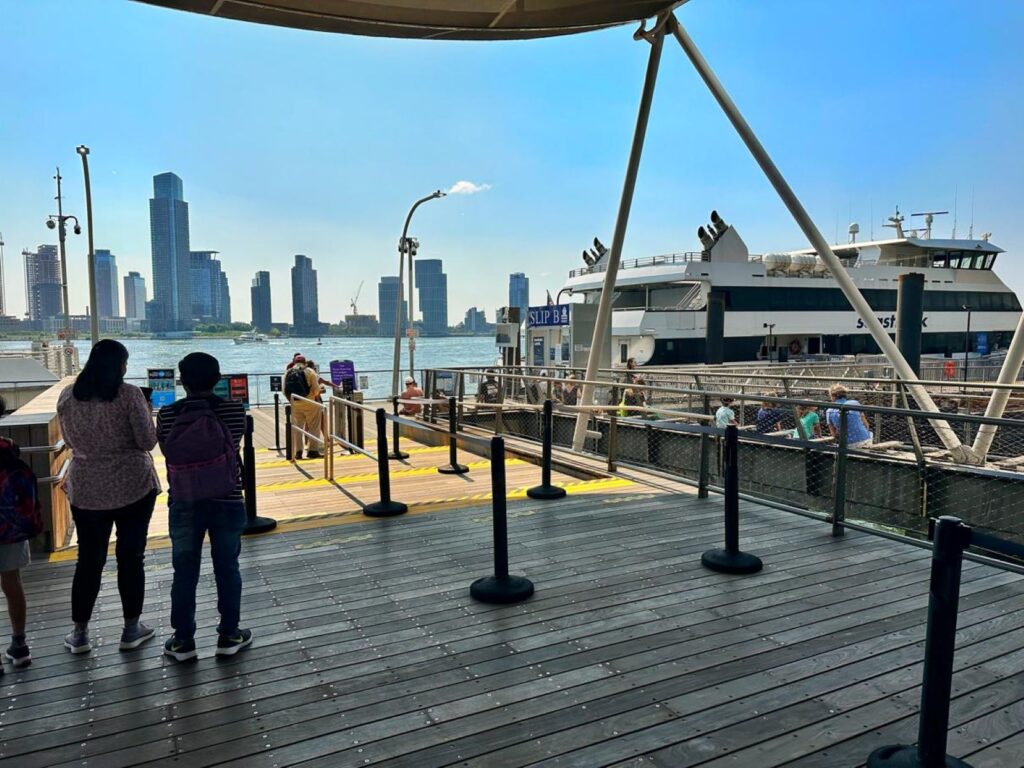
What it feels like
Open, spacious, and noticeably calmer than road or underground travel.
When it works best
When you want a break from crowds or visual clutter, or when you’re moving between waterfront areas.
What to know
Ferries cost slightly more than the subway and run less frequently, so timing matters more. Tickets can be bought via the app or at vending machines.
Helpful tip
If possible, sit or stand outside. Open views and fresh air often make this one of the most restorative ways to move through the city.
Buses In New York
What it feels like
Slower and more observational. Staying above ground reduces disorientation.
When it works best
For shorter journeys, especially across town, or when you want to see where you’re going rather than rush.
What to know
Buses use the same OMNY payment system as the subway. Travel times vary with traffic, but routes are often direct.
Helpful tip
Buses feel best when you’re not time-pressured. Removing urgency makes them far more enjoyable.
Biking In New York City
What it feels like
Active and engaging. It requires attention but offers autonomy and steady movement.
When it works best
When you have physical energy and want to move at your own pace, especially in parks or along waterfront routes.
What to know
Citi Bikes are widely available with short-term rental options across the city.
Helpful tip
Stick to routes with dedicated bike lanes where possible. Feeling physically safe frees up mental space.
Yellow Cabs And Rideshares
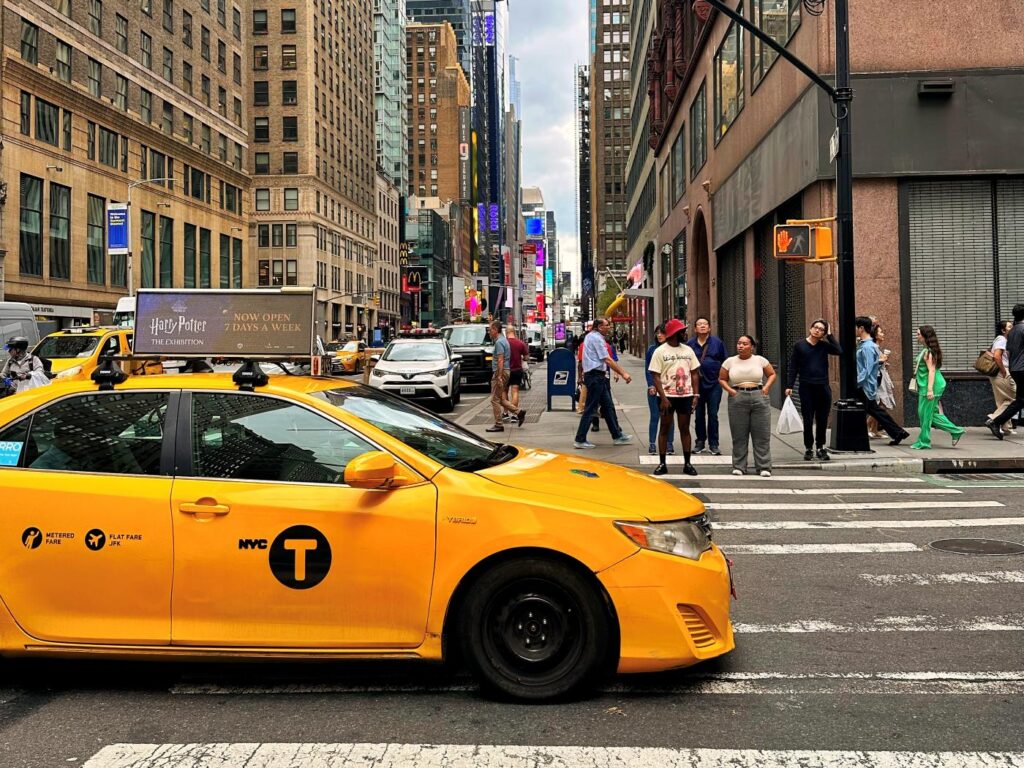
What it feels like
Contained and low-effort. Once you’re inside, there’s very little to manage.
When it works best
With luggage, late at night, or when you’re mentally drained.
What to know
More expensive than public transport, but sometimes worth it as a support option rather than a default.
Helpful tip
Using a cab strategically isn’t a failure; it’s a way of protecting your energy when it matters. And, if it happens to be a yellow cab, you’re experiencing an iconic New York moment, too.
Walking In New York City

Walking is often the most reliable way to get around. The grid layout makes navigation intuitive, and movement helps you stay oriented.
It works best when distances are reasonable, and your body still has capacity. Pushing through fatigue tends to backfire, so if you need it, switching modes partway through the day canbe the smarter choice.
Why Public Transport Can Feel Easier Than Driving
Using public transport and walking in New York isn’t just practical; it can also reduce the mental load of moving through the city.
When you’re not responsible for navigating traffic, watching road signs, or managing parking, your attention is freed up. You can look around, notice neighbourhoods, and let the city unfold rather than concentrating on getting your driving right.
Public transport can also offer a sustainability benefit. Choosing public transport or walking reduces your environmental footprint, which for some travellers can ease the background tension of climate-related concern while travelling. Small choices that align with your values often bring a sense of internal consistency, even on short trips.
In a city where driving can feel effortful, letting someone else handle the movement can make the journey feel more like part of the experience rather than a task to complete.
Safety And Confidence On Public Transport
Safety concerns often peak before experience, especially in cities with strong media narratives.
In practice, staying aware, unhurried, and intentional goes a long way. Keep valuables secure, trust your instincts, and choose busier routes when needed. If you’re travelling alone at night, switching to a busier line or a cab can support both comfort and confidence.
How People Tend To Use The System
New York’s transport system is designed to be used flexibly rather than perfectly. Routes overlap, alternatives are usually nearby, and there’s rarely a single “correct” way to get somewhere.
You’ll often find yourself walking part of the way, taking whatever arrives first, and adjusting as you go – that’s entirely normal here.
You don’t need to master the system immediately. Letting go of that expectation reduces self-consciousness and makes moving through the city feel far easier.
Making Transport Part Of The Experience
Public transport in New York isn’t just functional. It’s often where your energy either recovers or can disappear.
Choosing transport that fits your day, rather than defaulting to what seems most efficient, can change how the entire experience feels. Whether you’re underground, on the water, or walking the grid, transport becomes part of how you experience the city, not something to endure.