How To Manage Festival Financial Anxiety (When It All Feels Too Expensive)
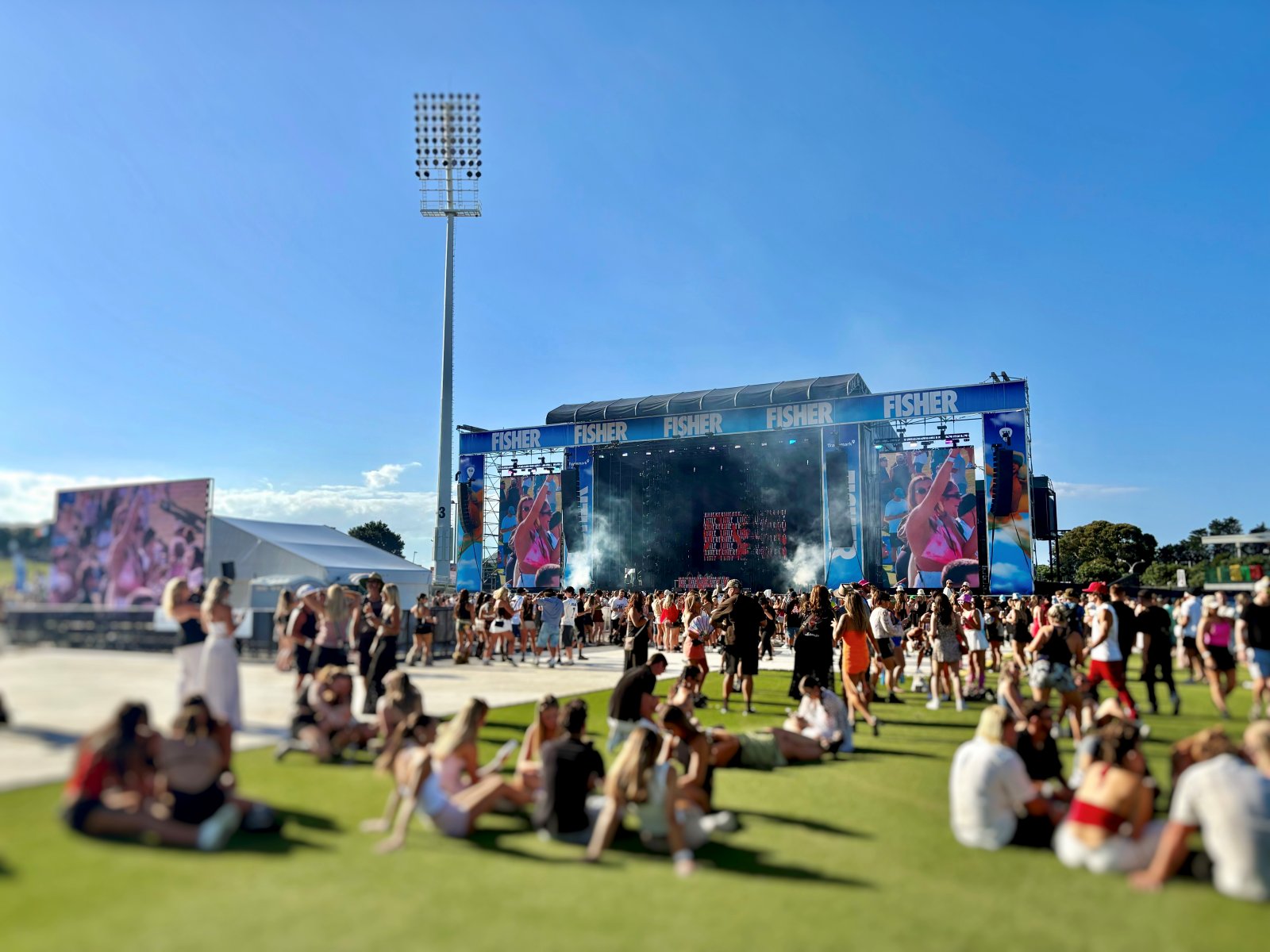
Festival financial anxiety is something many people experience before, during, and after an event, even if they don’t always call it that. It often starts as a quieter thought: Can I actually afford this? Or a moment of hesitation when the total cost begins to add up (flights, tickets, food, accommodation, outfits, and everything in between), until the experience starts to feel more expensive than expected.
If you’ve ever checked your bank account mid-festival, wondered if you’ve spent too much, or felt an underlying tension during what’s supposed to be a fun weekend, you’re not alone. For some people, it can even show up as guilt around money or a question of whether it would have been easier not to go at all. What we often describe as “festival financial anxiety” isn’t just about the numbers; it’s shaped by uncertainty, social pressure, and the fear of missing out.
This guide looks at how to approach festival spending in a way that reduces that underlying stress, not by cutting back on the experience, but by making your decisions feel intentional, predictable, and fully yours.
While research looks more broadly at financial anxiety rather than festivals specifically, the patterns translate clearly: when money, identity, and belonging become tightly linked in a highly visible setting, stress increases. Research shows that financial stress is shaped as much by perception and social context as by income itself.
If you are interested in learning more about ways to support your wellbeing in general while you are away from home, you can find more on our Nomadic Balance home page.
Table of Contents
Why Festivals Feel So Expensive (And Why It Causes Financial Anxiety)
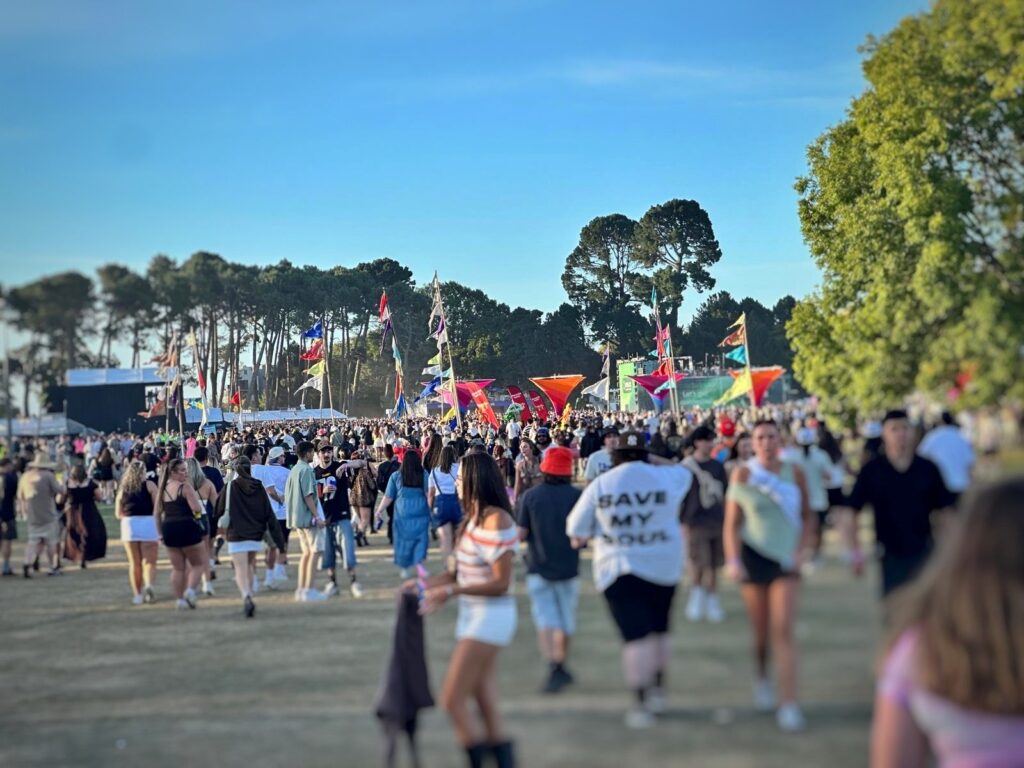
Festivals aren’t just events. They’re high-energy, socially intense spaces where money starts to feel tied up with how you’re seen, how you’re participating, and whether you’re doing it “right.”
Spending Is Compressed
Costs that would normally be spread across weeks or months arrive all at once. Even if you’ve saved, that concentration can still feel destabilising, even if you planned for it.
Financial stress isn’t only about totals. It’s about timing, predictability, and perceived control. When money leaves quickly and repeatedly, your nervous system often reacts before your rational brain catches up.
Spending Becomes Public
At festivals, money stops being private: where you stay, what you wear, whether you upgrade to VIP, what you’re drinking. It can all start to signal something about status, freedom, ease, or belonging.
Even if no one is actively judging, the visibility alone can increase financial anxiety at festivals. When choices feel socially exposed, they carry more weight than they would at home.
Social Comparison Intensifies
You’re surrounded by people who appear relaxed and unbothered. Restraint can begin to feel risky, not just financially, but socially.
I’ve noticed this myself: even when I’m clear on what I want to spend, it can still feel uncomfortable being the one who opts out. Not because I can’t afford it, but because once comparison creeps in, everything can start to feel heavier than it needs to be.
Social media can amplify this further, especially at large festivals where aesthetics are heavily documented.
This is why money stress at festivals often feels confusing. It isn’t purely mathematical; it’s relational. It’s about how money interacts with identity, visibility, and nervous system load.
Curious to explore the science behind this?
This blog draws on established behavioural science research and applies these principles to travel contexts. Sources are linked in our Evidence & Further Reading section.
If you want a more detailed breakdown of how to approach festivals in a way that supports your wellbeing, not just financially, but mentally and physically, you can explore the full festival and concert guides here.
Before The Festival: Reduce Anxiety Before It Starts
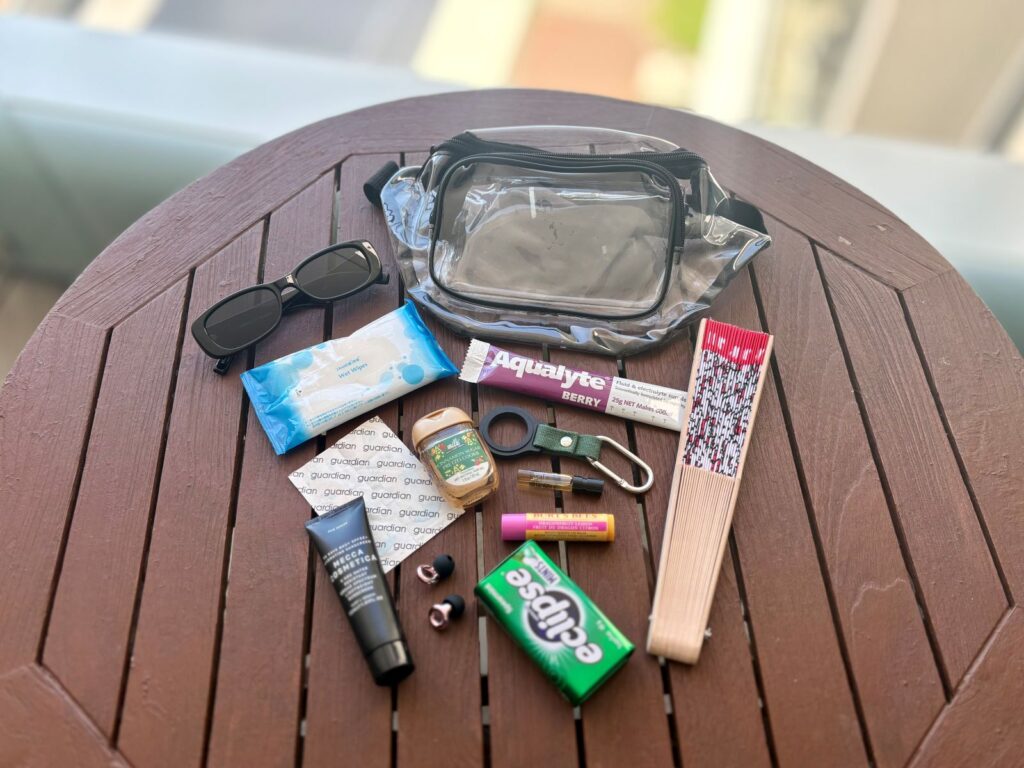
Most festival money stress begins before you even arrive. The brain struggles most when costs feel undefined and morally loaded. Am I being sensible or boring? Careful or missing out? Can I afford it?
A helpful reset is to separate spending from identity. Before you go, take five minutes to decide what spending means to you at this festival. Not a full budget, just a sentence.
For example:
I’m willing to spend on food and rest, not on upgrades.
I care more about comfort than aesthetics.
I want to enjoy the music without worrying about every small cost.
This kind of intention increases your sense of control. It reduces decision fatigue and makes it easier to say no later without spiralling or self-judgment.
If you feel like anxiety isn’t just related to the festival experience, you may be interested in reading our article on First-Time Travel Anxiety.
During The Festival: Managing Spending Pressure In The Moment
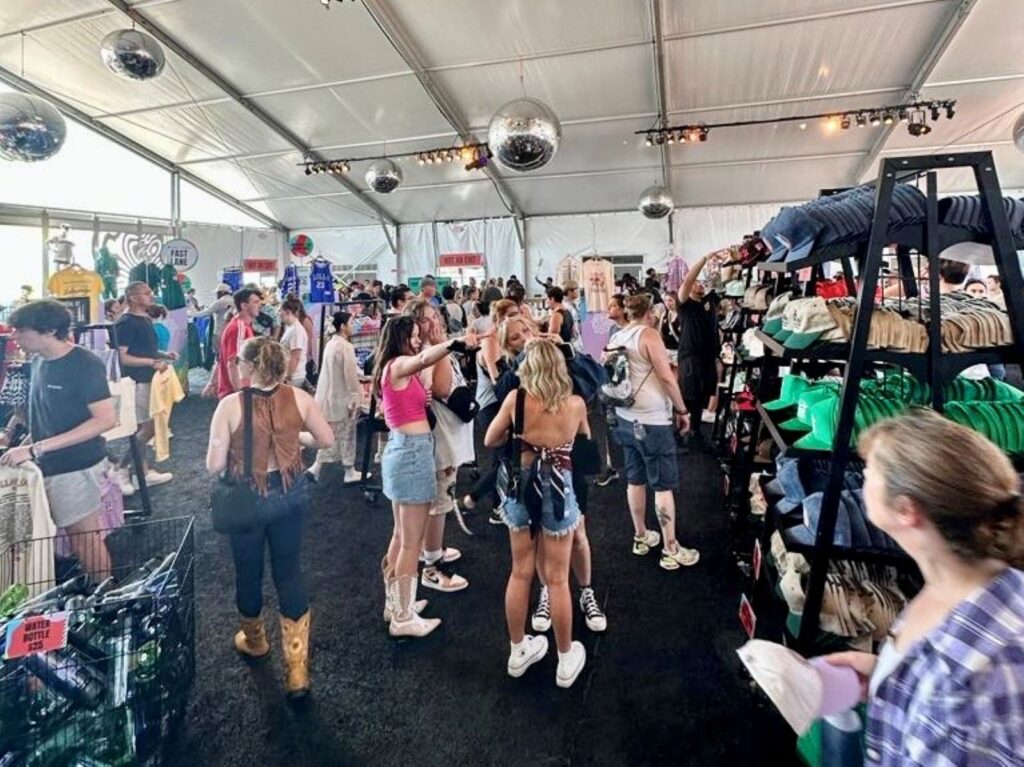
Most overspending at festivals doesn’t come from desire but from discomfort. You’re tired, overstimulated, or perhaps feeling a little left out. Everyone else seems to be buying, upgrading, or doing something.
In these moments, spending can serve as a way to regulate your emotions: to smooth over awkwardness, ease comparison, or restore a sense of belonging.
Instead of asking “Do I want this?”, try asking “What just happened in my body or environment?”
Often, the answer is hunger, thirst, heat, sensory overload, or comparison. Delay helps more than denial. “I’ll think about it after the next set” is often enough for the urge to pass, especially if it’s not something your body genuinely needs.
Social spending scripts can help too. You don’t owe explanations. Simple phrases may reduce pressure:
“I’m pacing myself today.”
“I’m good with what I’ve got.”
“I’m here for the music right now.”
These small phrases can reduce festival spending pressure without turning money into a debate.
If you’re noticing that tiredness or overstimulation is driving spending decisions, our guide to wellbeing at festivals explores how to pace yourself without burning out.
Spending Money On Festival Outfits And Aesthetics
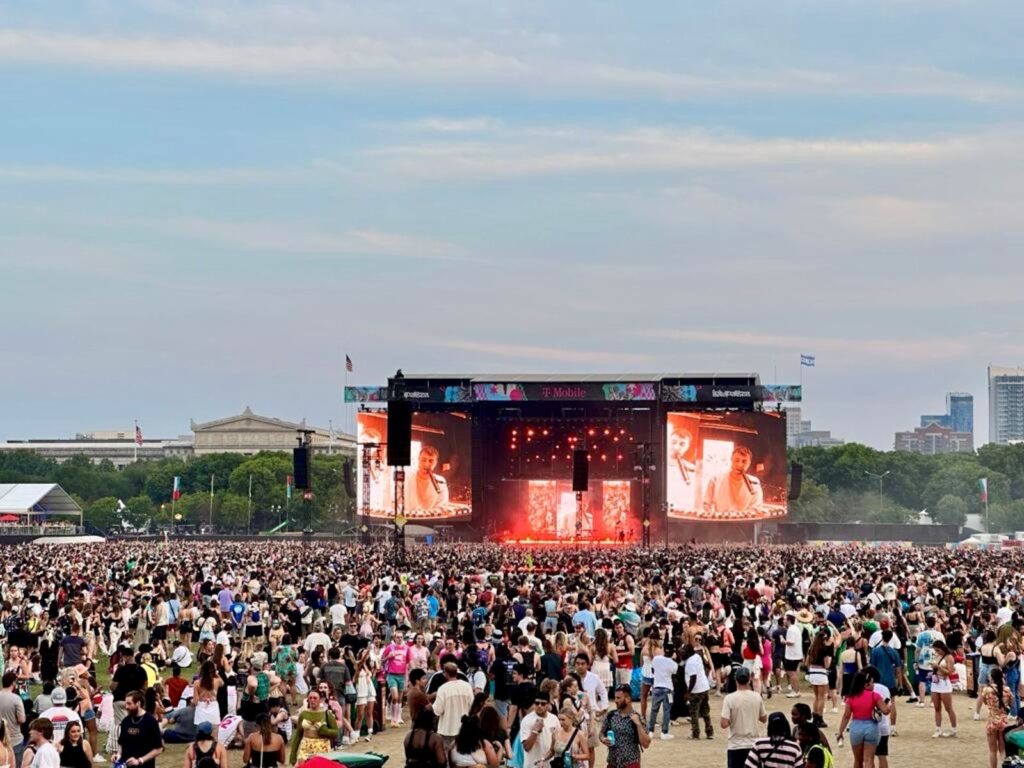
Festival culture subtly treats outfits as proof of participation. Especially at large events that dominate social media, like Coachella, aesthetics can feel like part of the ticket price. This creates a specific kind of anxiety. Not exactly about money, but about being seen as doing it “right”.
It can help to remember that clothing isn’t a moral signal, repeating an outfit doesn’t mean you care less, and choosing comfort over looks isn’t a failure.
Unless fashion is the main reason you’re attending, let comfort be your baseline. Choose one outfit you can stand, walk, and dance in without constantly adjusting it. Add small accessories if you want something playful. That balance can often feel better than a full wardrobe overhaul.
When your body feels physically comfortable, it can lower stress, and festival financial anxiety may soften too.
After The Festival: Handling Post-Festival Money Guilt
Post-festival money shame is common. It often shows up as self-criticism. “Why did I spend that much? I should have been more careful.”
This keeps the stress response active long after the event ends. Instead of immediately judging yourself, try a neutral review within a week. Look for information, not punishment. Did spending actually support your experience? What didn’t change your enjoyment at all?
Even one insight is enough, for example, you may have felt calmer when you ate regularly, or you enjoyed it more once you stopped comparing yourself to everyone else.
This kind of reflection builds self-trust, which can be one of the strongest buffers against future financial anxiety at festivals.
A Calmer Way To Think About Spending
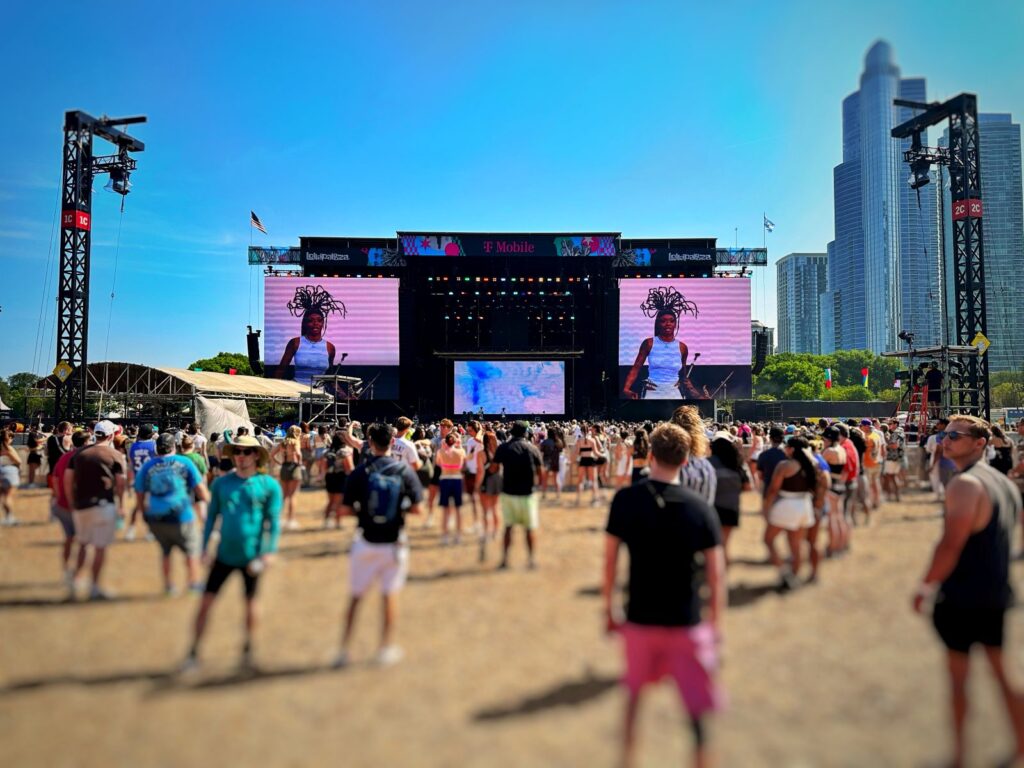
If festivals leave you feeling financially unsettled, it doesn’t necessarily mean you’re bad with money. It often reflects the environment itself—a highly stimulating, socially visible space where spending can feel easier, faster, and harder to track than it does at home.
The goal isn’t to spend perfectly or constantly question what you can afford. It’s to feel regulated enough to actually be there; to hear the music, feel the crowd, and stay present in the experience you chose.
A little emotional preparation beforehand can reduce festival financial anxiety and make space for what you’re really there for: the experience itself.
This article is for general informational purposes only and is not intended to replace personalised medical, psychological, or professional advice.